



Challenges
The company needed to launch B2B customer portals across countries, business units, and brands without building each portal from scratch. Every portal needed a shared foundation for authentication, content management, integrations, and page building, while country teams retained control over local branding, languages, consent requirements, and content.
Reliable content syndication was essential to this portal factory. During the migration from Acquia Content Hub v1 to v2 and v3, asymmetric multilingual content prevented that syndication from working.
Different language versions of the same page could contain different paragraph structures. Acquia Content Hub expected every translation to use the same structure. When it processed asymmetric paragraph translations, deserialization failed and content was lost or did not import.
This limitation blocked reliable multilingual content syndication across the company’s portals.
Approach
The team treated the Content Hub migration as a core requirement of the portal factory. They traced the import failure to how Content Hub serialized multilingual paragraph fields with asymmetric structures.
They validated the limitation and developed a solution that preserved each language version independently. They tested it against real content snapshots before applying it across the portal estate.
Solution
Portal foundation
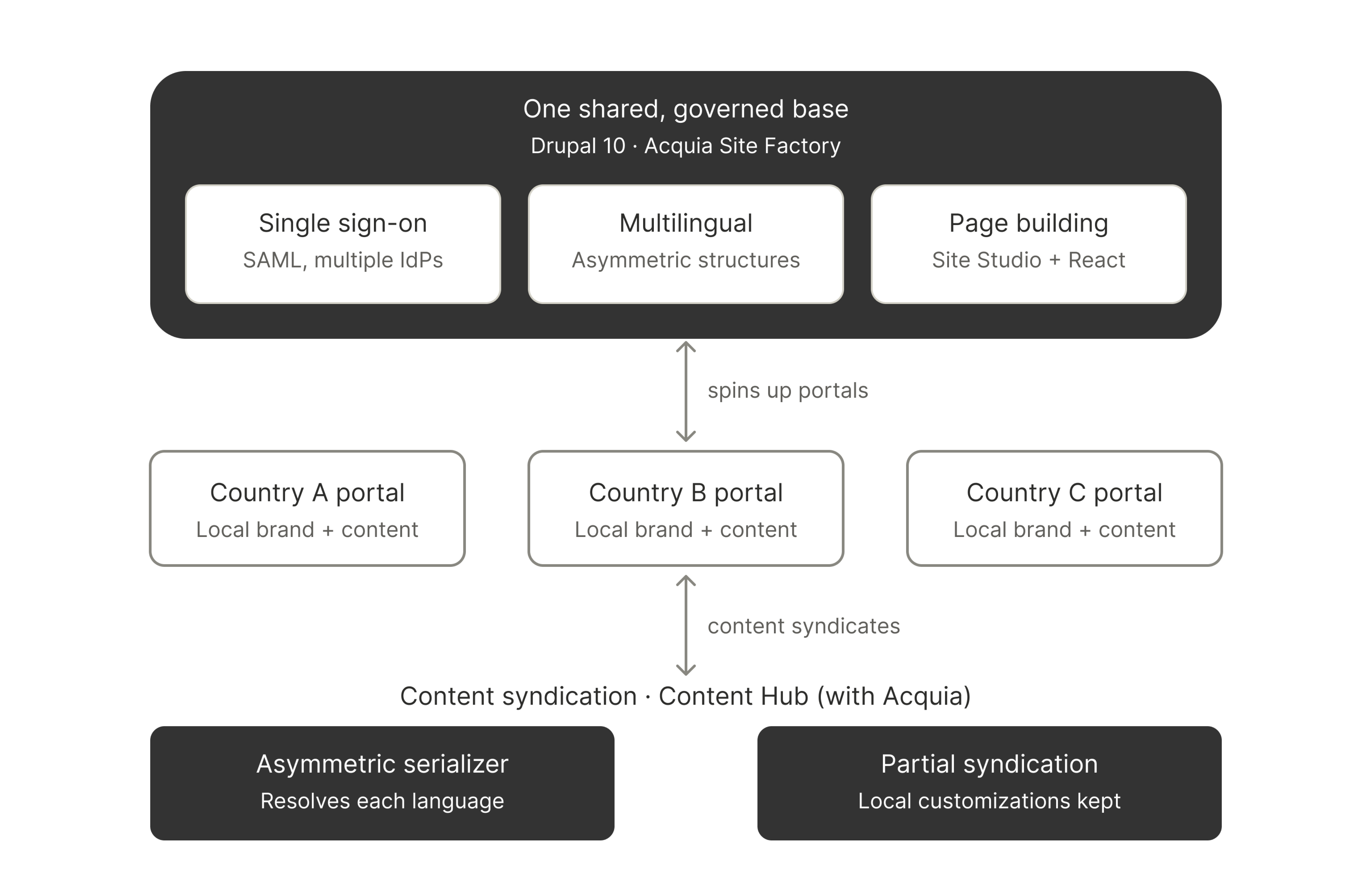
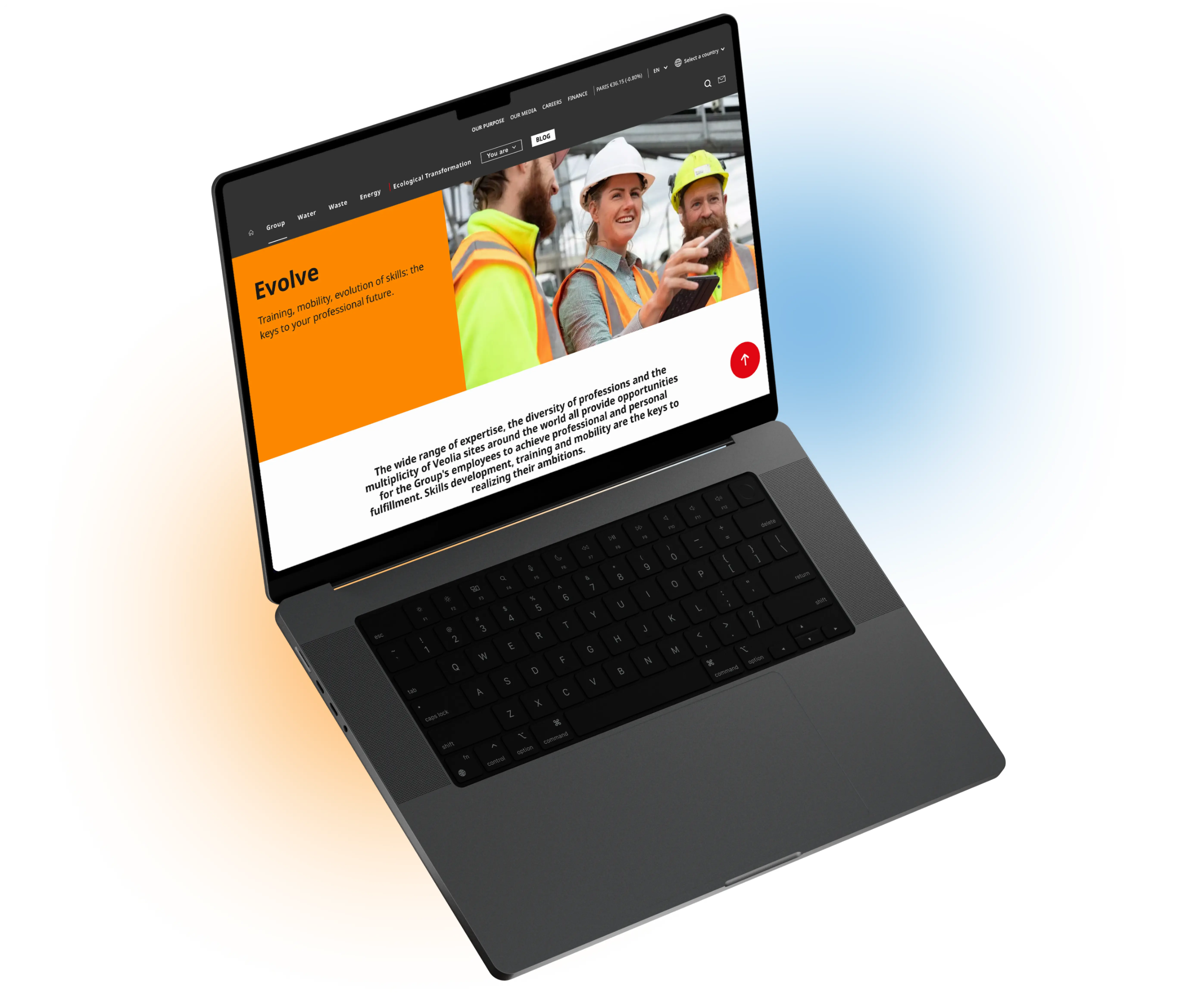
The team built a Drupal 10 distribution on Acquia Site Factory as the shared base for every country portal. Each portal inherits the same architecture and core capabilities while allowing local teams to configure branding, languages, content, and country-specific requirements.
Content migration and syndication
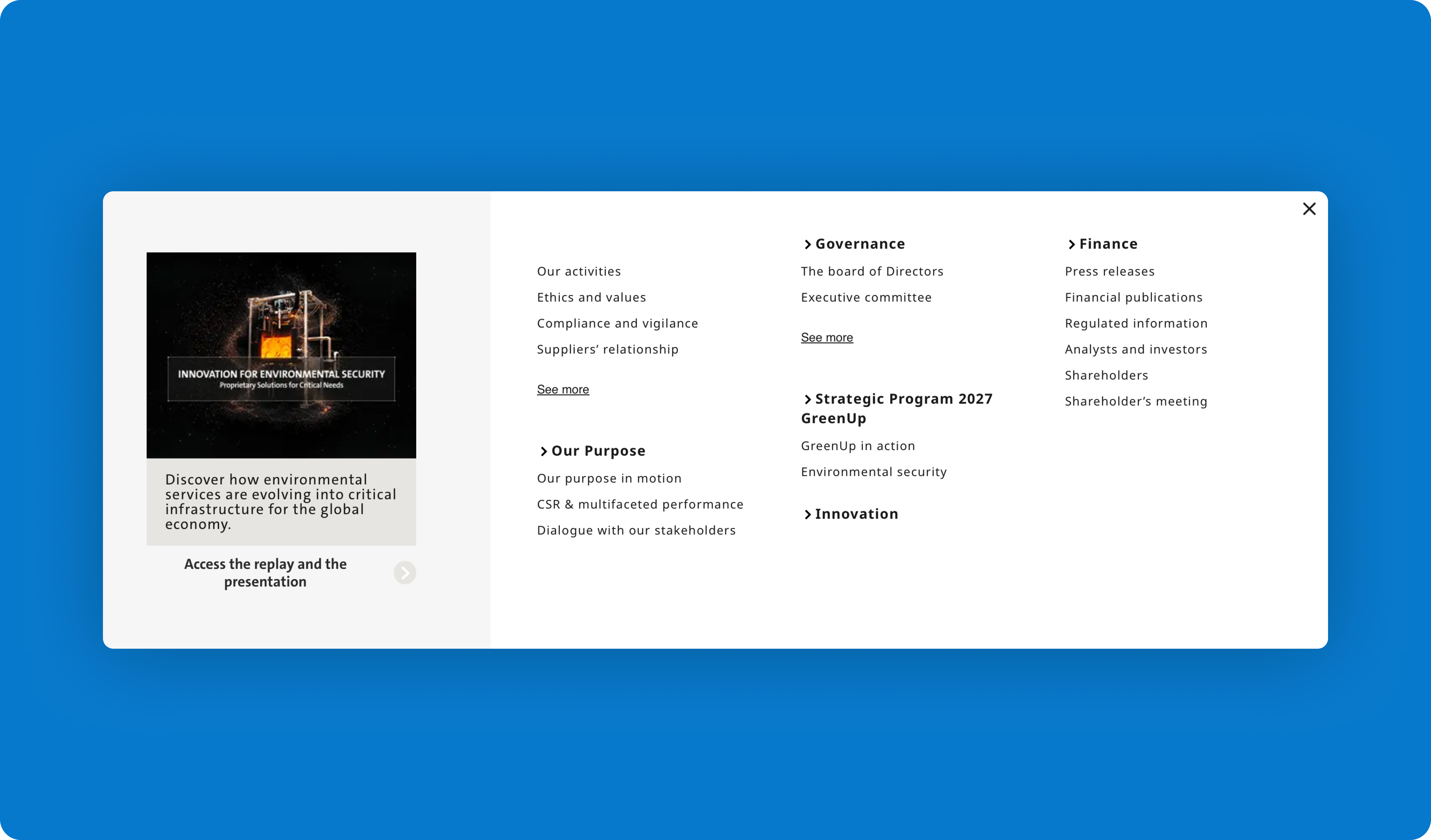
The team migrated the existing content structure to the new platform, including stamp and pictogram libraries, taxonomies, and service categories.
To prevent asymmetric multilingual content from failing during syndication, they built a custom serializer that processes each language version independently and resolves the correct entity and revision IDs during import. They tested it against real content snapshots before applying it across the portal estate.
A companion partial syndication module lets administrators control which fields each portal receives. Central teams can update shared content while local teams retain approved country-specific changes.
Portal management
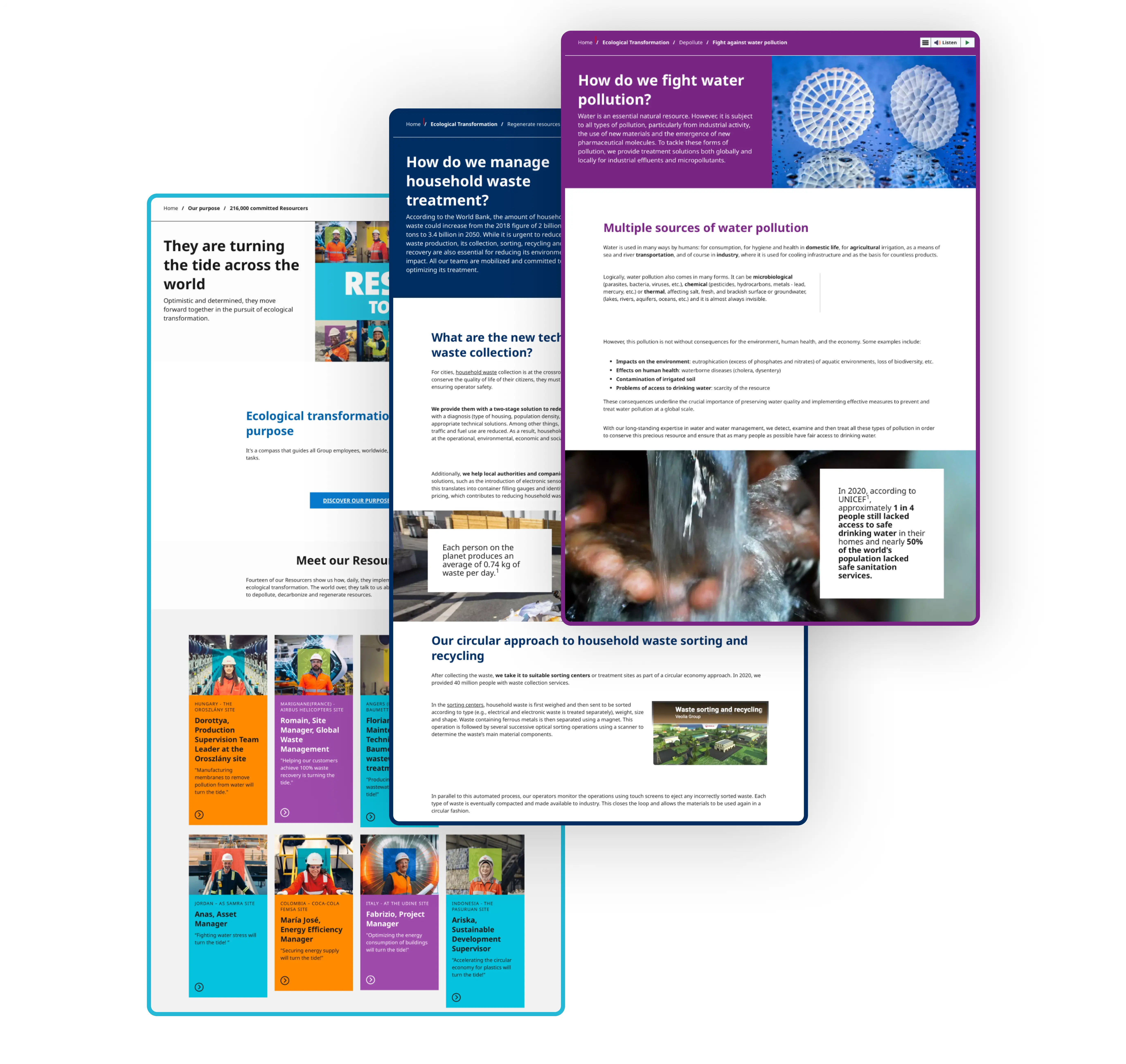
Site Studio gives non-technical teams a visual interface for building and updating portal pages. React components run within Drupal as Site Studio custom elements, with Drupal passing the required API, authentication, taxonomy, and identity configuration to each component.
SAML-based single sign-on connects the portals to OneLogin and Keycloak. Users authenticate once and access the portals available to them.
Customer services
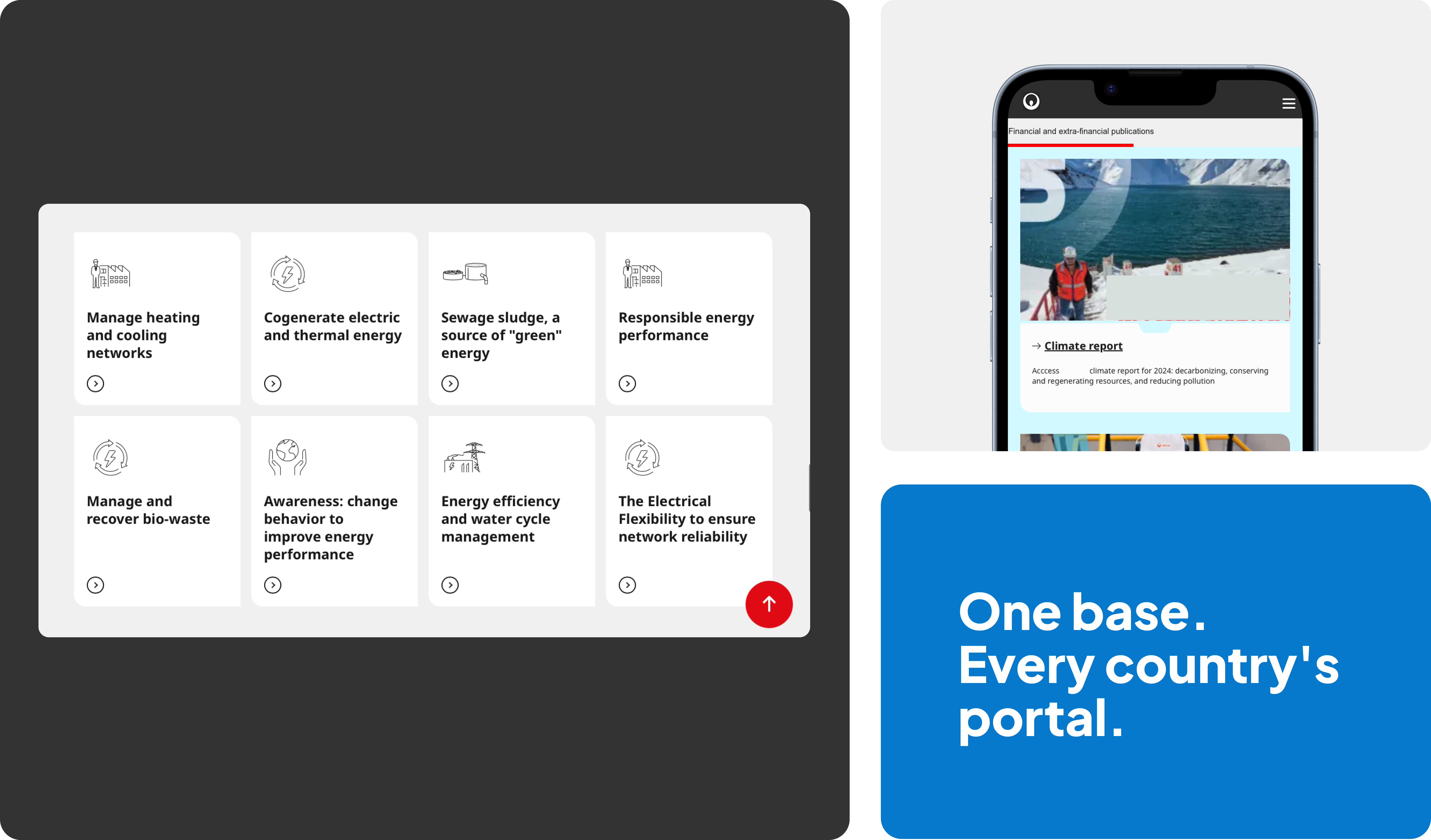
The shared platform connects each portal to the services customers need:
- Sisense for viewing service data and analytics
- Box.com for user-specific document access
- Didomi for country-specific consent and privacy controls
- LemonLearning for training and onboarding inside the portal
Outcome
The company now has a repeatable model for launching B2B customer portals across countries, business units, and brands. New portals start from the same governed foundation, so teams do not have to rebuild authentication, integrations, content workflows, and core services for every market.
Central teams can maintain shared platform capabilities and distribute approved content across the portal estate. Local teams still control branding, languages, consent requirements, and selected content fields for their country.
The platform also supports multilingual content structures that differ by language, removing a major barrier to reliable content syndication across regions.
For organizations with distributed operations, the portal factory creates a practical balance between central governance and local control. Customers get one place to access service data, documents, training, and account-specific information, while internal teams manage a growing portal estate from one shared base.
Bring us your challenge
We’ll help you get clear on what needs solving, that’s where we begin

