

Focus
Diabetes Foodhub rebuild and Migration from legacy CMS to Drupal 10
Services
Planning
Analysis
Rebuild of the feature in Drupal
Migration
Enhancement
Addition of new features
The American Diabetes Association supports people living with diabetes with practical guidance and everyday tools for managing health decisions.
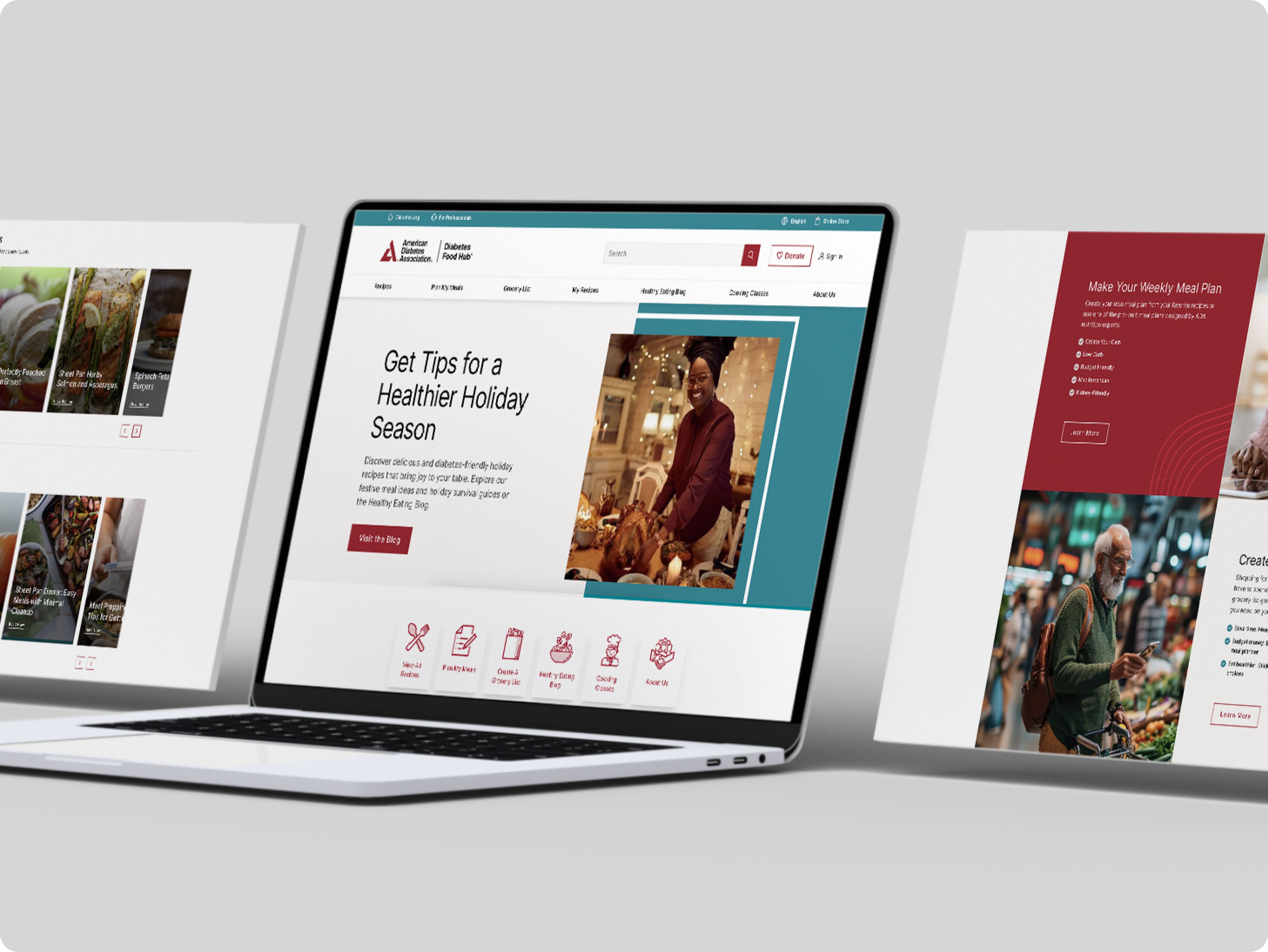
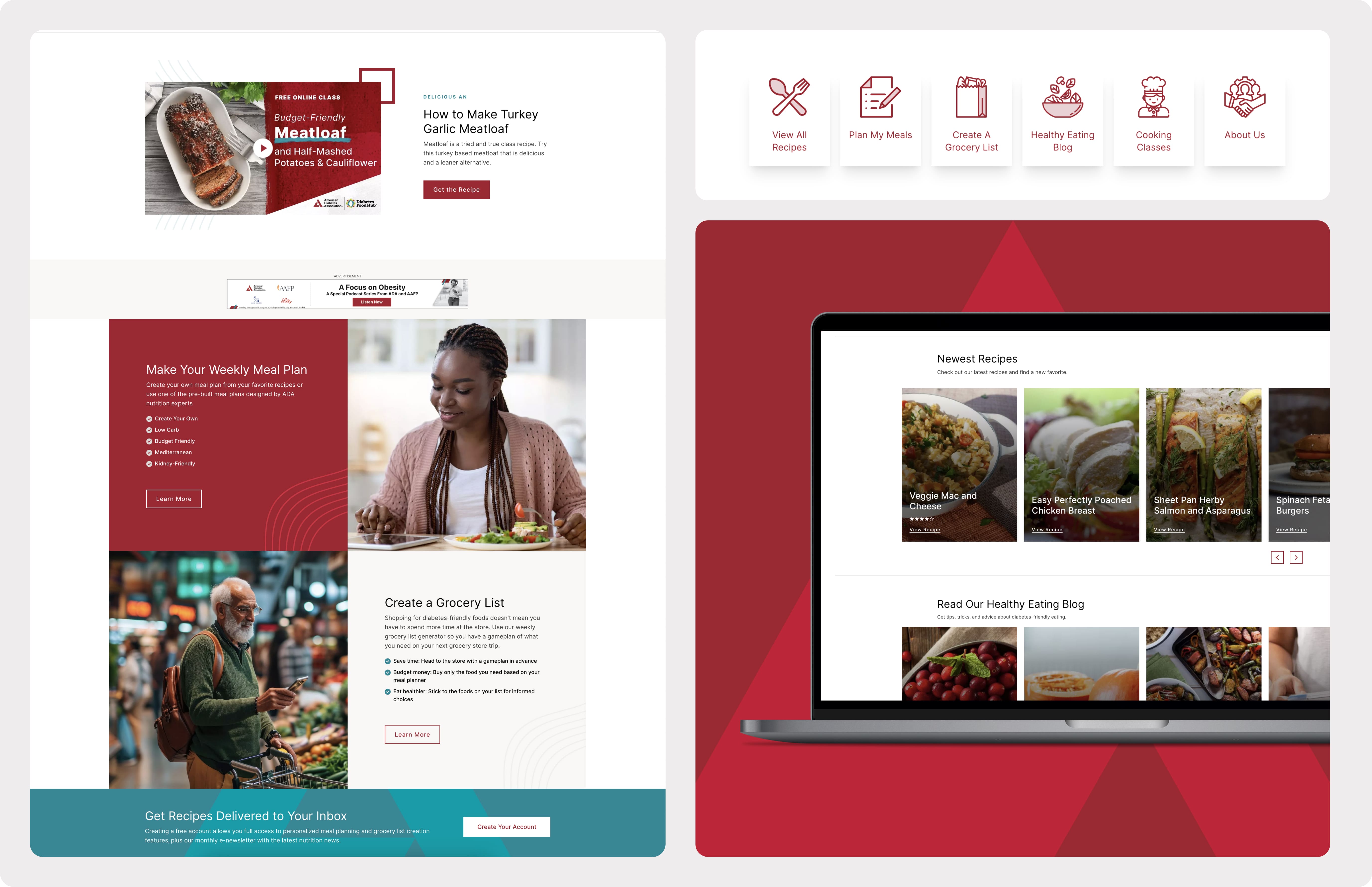
Diabetes Food Hub is ADA’s nutrition and meal planning platform. It helps individuals discover diabetes-friendly recipes, understand nutrition information, and build meal plans and grocery lists that support daily eating choices over time.
As more people returned to Food Hub to save recipes, plan meals, and adjust nutrition needs, the platform needed to feel like one connected experience. Recipes, ingredients, meal plans, grocery lists, and saved activity had to stay accurate, consistent, and reliable across sessions, devices, and languages.
ADA partnered with us to rebuild Diabetes Food Hub on Drupal 10 within its multisite ecosystem, strengthening the foundation for trusted nutrition planning and long-term continuity for users.
Live website

Challenges
Rebuilding Food Hub meant working across a set of closely connected features where accuracy depends on how ingredients, recipes, and planning tools come together.
Ingredients needed to serve as a shared foundation across recipes, meal plans, grocery lists, and search. This required capturing detailed ingredient information, supporting synonyms and measurement units, indexing in Apache Solr for scalability, exposing the data through a JSON API, and building conversion and validation rules so quantities behaved correctly across every workflow.
Recipes required structured content models that could hold nutrition facts, preparation steps, ingredient relationships, and credits, while also supporting fast discovery through search and filtering. User actions such as saving, sharing, and review approval workflows needed to remain reliable for authenticated users.
Meal planning introduced another layer of complexity. Users needed to build plans up to seven days, manage multiple saved planners, and see nutrition values update dynamically as meals changed. The experience called for an interactive calendar interface, accurate nutrient tracking, and dependable PDF generation for nutrition facts, recipe details, and grocery lists through queued processing.
Grocery lists had to stay connected to meal plans while allowing personal edits, revisits, printing, and accurate PDF outputs.
Food Hub’s educational content and blogs also needed improvements, including recipe-linked categories, expert-curated listings, saved content features, and new detail page integrations.
All of this had to be delivered while migrating a large authenticated user base without losing data or disrupting continuity.
Approach
We started with a full review of the existing Food Hub platform after obtaining administrative access. This helped us understand how each feature worked, where the experience needed to be smoother, and where the underlying structure needed strengthening.
We mapped the platform through a detailed functional breakdown across recipes, ingredients, meal planning, grocery building, blogs, and migration. This created a shared view with ADA and guided priorities across redevelopment.
Design work was carried out in close collaboration with ADA’s design agency. Together, we extended the multisite design system through a Food Hub-specific component library that ensured consistency while supporting the unique planning journeys of the platform.
Delivery followed an iterative, feature-led development model. Work was organised into epics across core areas, with dedicated ownership for each major feature, followed by integration testing to ensure the platform worked as one connected system. Regular check-ins with ADA ensured feedback was incorporated throughout and decisions stayed aligned with user needs.
Solutions
Rebuilding the recipe and ingredient foundation
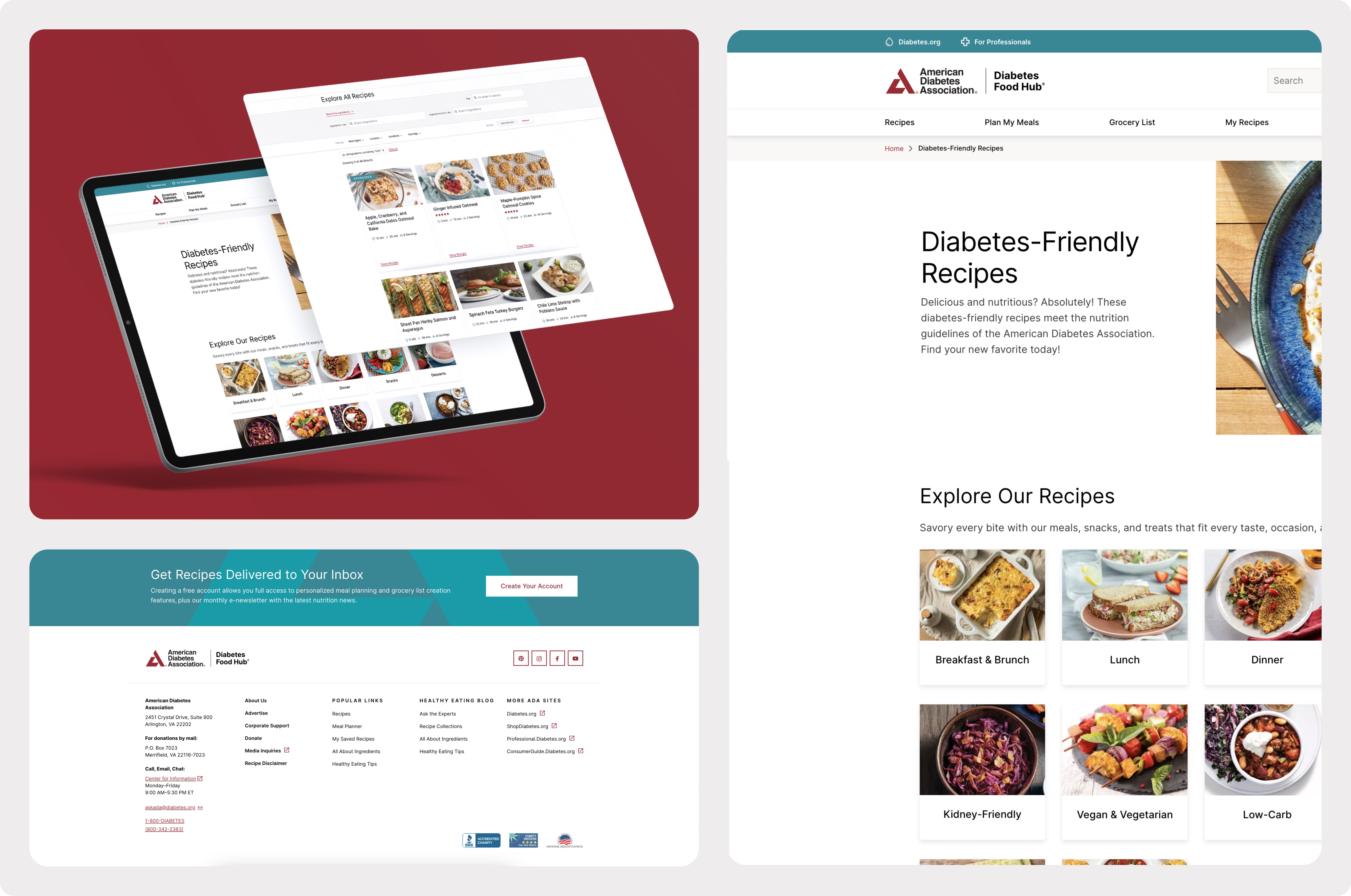
We rebuilt the ingredient and recipe backbone so that nutrition data, ingredient quantities, and preparation details operate from one consistent source. Ingredients were structured for reuse across recipes and planning tools, indexed in Apache Solr to support fast discovery at scale, and exposed through JSON API endpoints for broader digital needs.
Making recipe discovery easier and more reliable
Recipe experiences were strengthened through structured listings, search filters, and review workflows. A star rating system was introduced in place of likes and dislikes, supporting clearer user feedback.
Bringing meal planning into one connected journey
The meal planner was delivered as a dynamic, calendar-based experience that supports multi-day scheduling, real-time nutrition tracking across key nutrients, and multiple saved plans. PDF generation for meal plans, grocery lists, and nutrition details was implemented through Drupal queuing, ensuring downloads remain reliable under heavy use without causing timeouts.
Turning meal plans into grocery lists
The grocery list builder was developed to generate ingredient lists directly from meal plans, support edits, and produce accurate printable outputs, helping users move from planning to shopping without rework.
Migrating saved user activity without disruption
Migration was carried out in phases to protect continuity for returning users. Content and data were transferred securely, multilingual alignment across English and Spanish was maintained, and recent authenticated activity was migrated closer to launch to prevent loss of new user data.
Translation workflows were supported through TMGMT with Google to speed up localisation across the platform.
Supporting faster, smoother experiences under heavy use
Performance improvements were introduced through caching and Memcache to support faster page loads and a smoother experience for the large returning Food Hub audience.
Migration
The migration preserved the full scale of Food Hub’s content and returning user activity:
Recipes: 2K+
Ingredients: 1K+
Users: 263K+
Meal plans: 563K+
Grocery lists: 732K+
Saved recipes: 2.6M+
A comprehensive testing strategy validated migration integrity, accessibility compliance, and end-to-end user journeys across meal planning, grocery building, recipe saving, and authenticated experiences.
Outcomes
Diabetes Food Hub is now live as a unified nutrition and meal planning platform within ADA’s Drupal 10 multisite ecosystem.
Recipes, ingredients, meal plans, grocery lists, and saved user activity now operate from one consistent foundation, so returning users find their data intact, their plans accurate, and their experience uninterrupted across sessions and devices
Food Hub also serves as a single sign-on entry point for ADA’s Homemade portal, enabling users to access related experiences using the same Food Hub credentials.
Users now move across ADA's digital platforms with a consistent design experience, while ADA’s site teams have stronger operational tools to monitor activity, manage content, and support long-term continuity in nutrition planning.
Bring us your challenge
We’ll help you get clear on what needs solving, that’s where we begin

