

Focus
Multi-brand Platform Consolidation
Services
Staff Augmentation
Drupal 10 Migration
Custom Data Migration
Front-end Development
Platform Consolidation
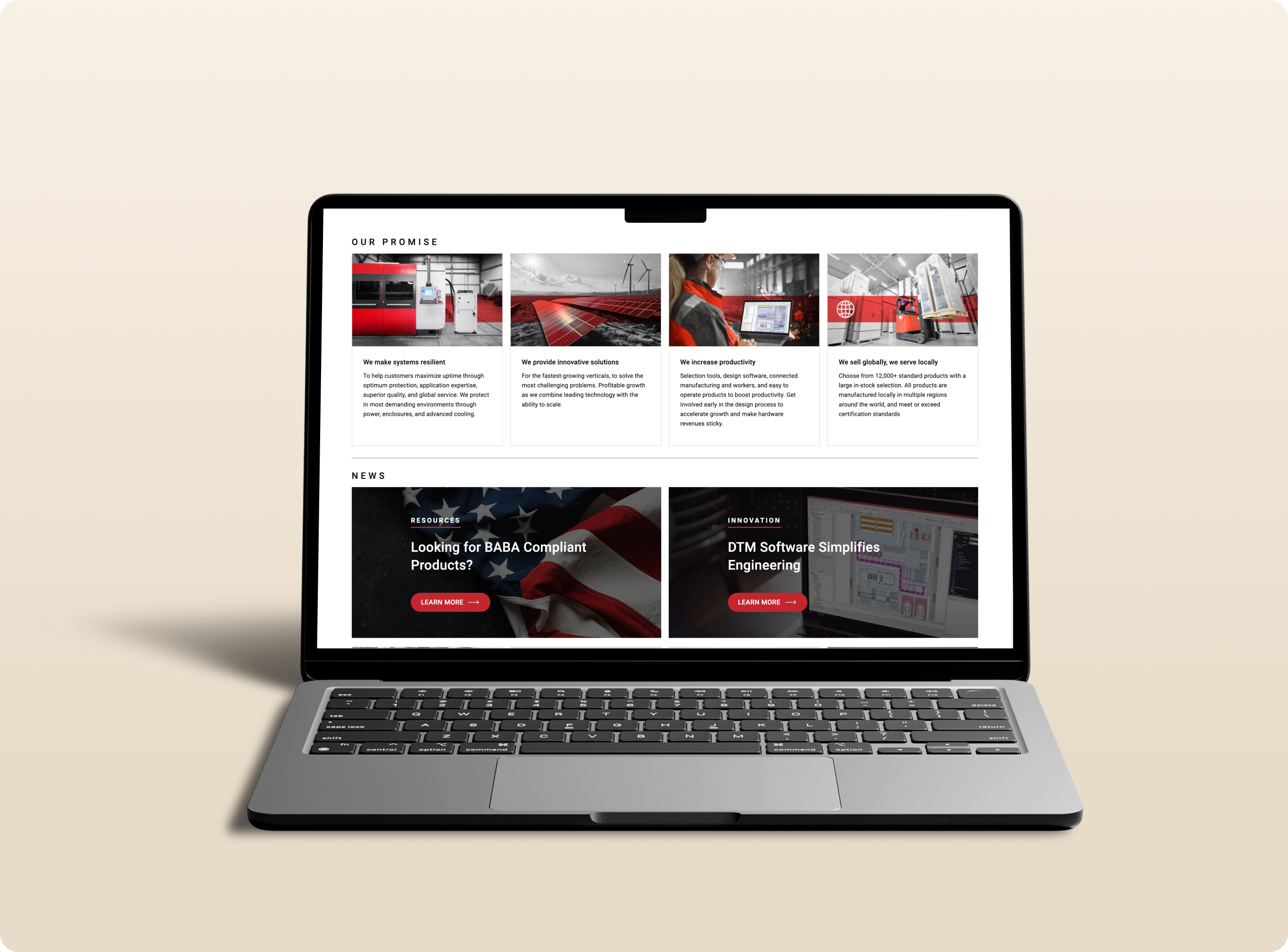
A global manufacturer in the electrical and industrial solutions sector runs a portfolio of brand websites across regions, product lines, and customer segments.
Over time, these sites were built and operated independently. Product categories differed by brand, publishing workflows varied, integrations were implemented in different ways, and each brand shaped its own digital experience within the portfolio.
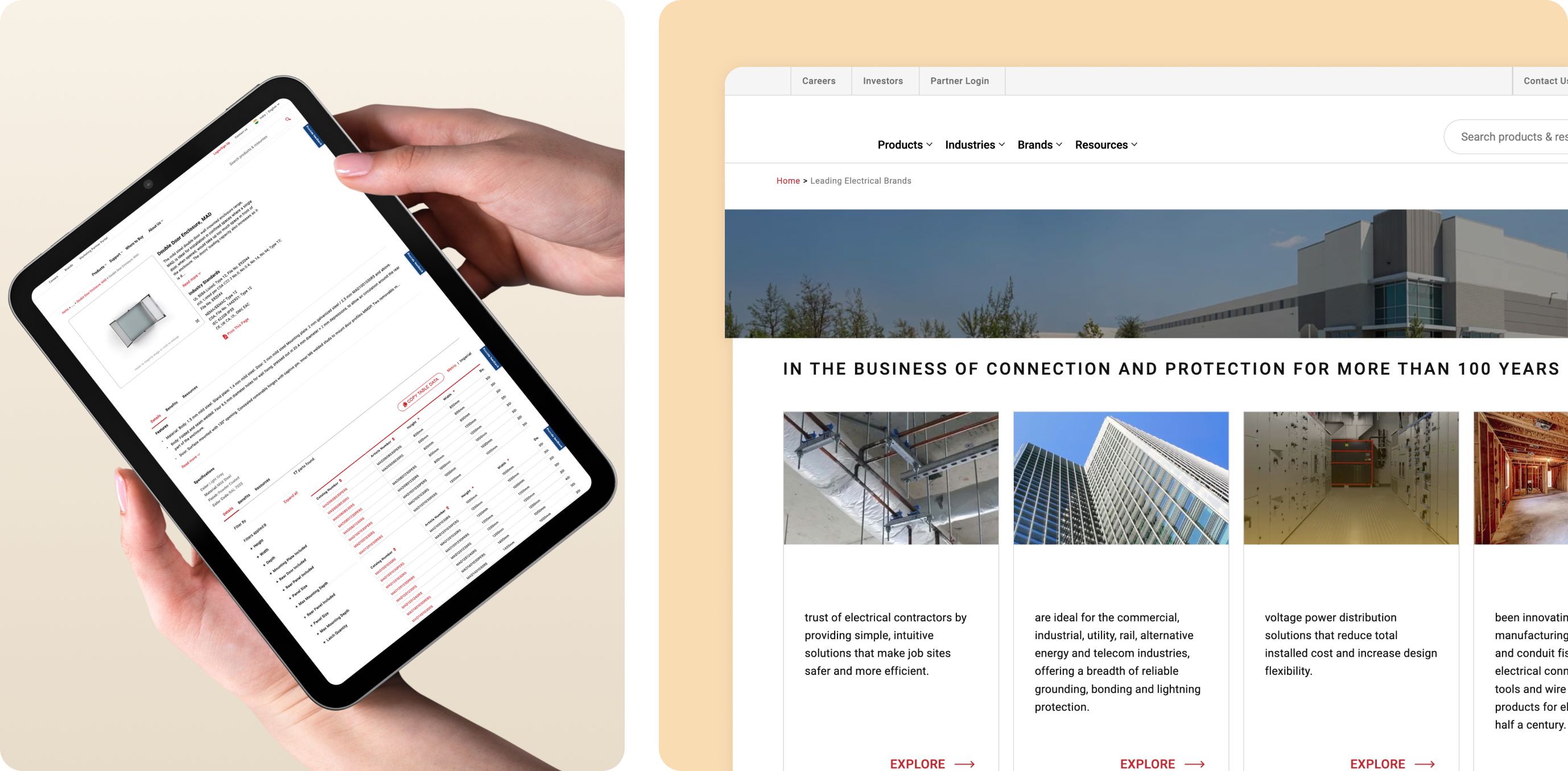
We partnered with the organisation to create a shared digital platform and operating model that lets brands retain their identity while standardising the foundations: product taxonomy, translation workflows, search, authenticated experiences, enterprise integrations, and ongoing upgrades.
The outcome is a platform that supports portfolio change, improves governance across brands, and delivers consistent performance at scale.



Challenges
The enterprise ran a portfolio of industrial brands that needed to operate as distinct experiences, but the foundations were not consistent. Product categories and navigation did not follow one shared model across brands, which made governance harder and created different user flows from brand to brand.
As the portfolio changed, the platform had to support both directions of movement. New acquisitions and new business verticals needed to be brought into the same digital experience without rebuilding the core. At the same time, brands leaving the portfolio needed clean offboarding without breaking shared infrastructure, search, identity, or customer journeys.
Publishing at scale across regions required translation to work reliably for both marketing and product pages. The existing translation setup added unnecessary coordination overhead, slowing regional publishing.
The organisation also needed to support internal, authenticated workflows that went beyond a public website. Employees needed a secure portal to perform product operations such as catalogue creation, structured search, and generation of custom outputs like PDFs.
Search had to work across a large product footprint. There was a need to support enterprise-grade search for the main experience, while also enabling search-driven pages and product experiences that relied on a separate search engine where required.
For certain brands, the website functioned as a digital gateway, while commerce transactions, carts, and order management were executed within external enterprise systems such as Salesforce and M3. Users authenticated through enterprise SSO, and the platform had to present a unified experience through secure API integrations, maintaining identity continuity and a seamless journey across systems.
Reliability and performance were not optional. The platform had to stay available under high automated traffic, including bot activity that increased sharply with the rise of AI crawlers. Performance improvements needed to be continuous across front-end and backend, without destabilising ongoing business operations.
Finally, the platform had to keep moving forward technically while staying stable. Upgrades across the stack and infrastructure had to be executed in a way that preserved continuity for multiple brands, regions, search systems, and integrations, while improving release confidence through automation and disciplined quality practices.
Implementation
Shared platform foundation
The portfolio was brought onto a single Drupal 10 platform to replace fragmented setups and establish one operating model for multi-brand delivery. The transition was planned so existing sites remained live, allowing teams to continue publishing without disruption.
Unified product taxonomy and navigation
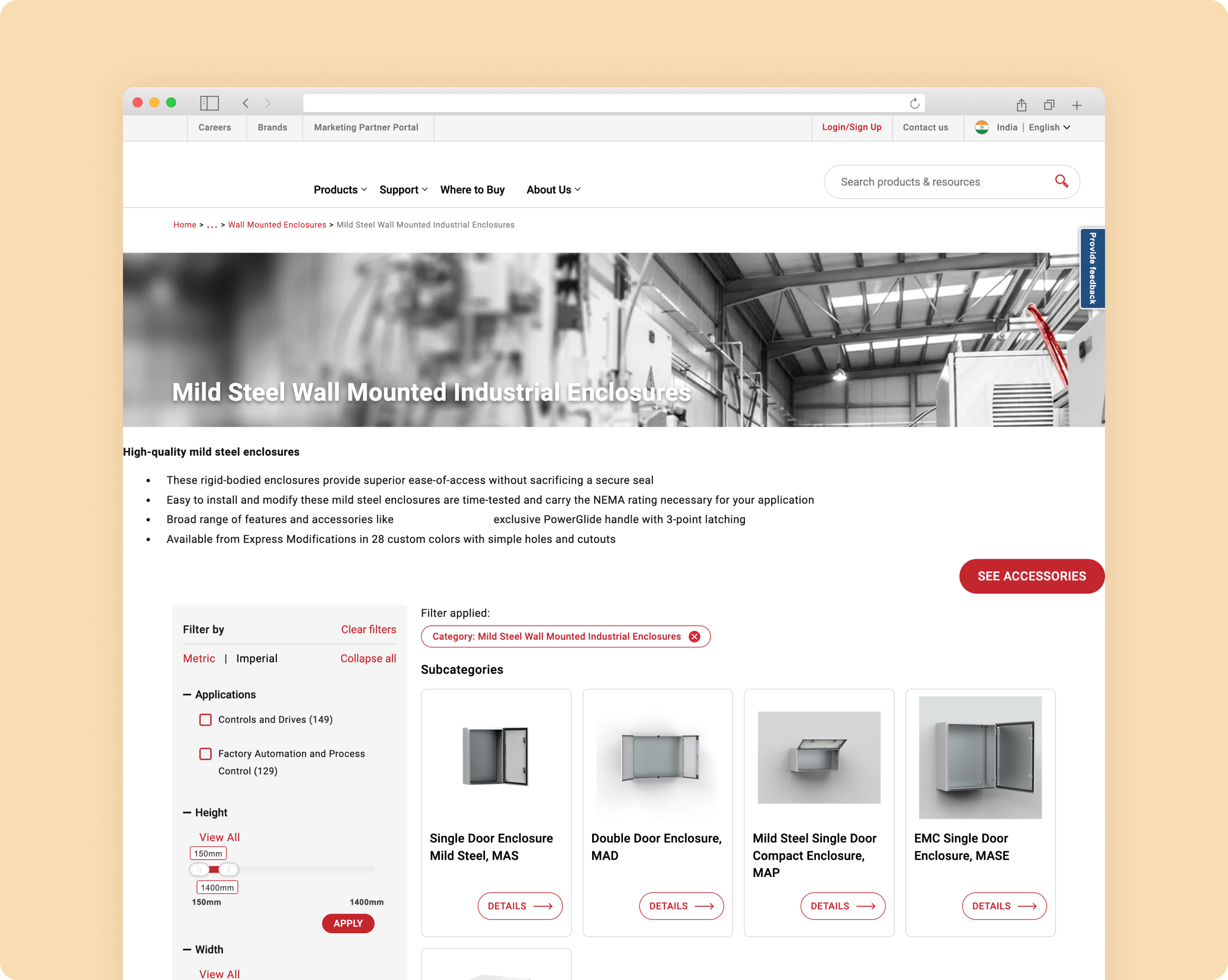
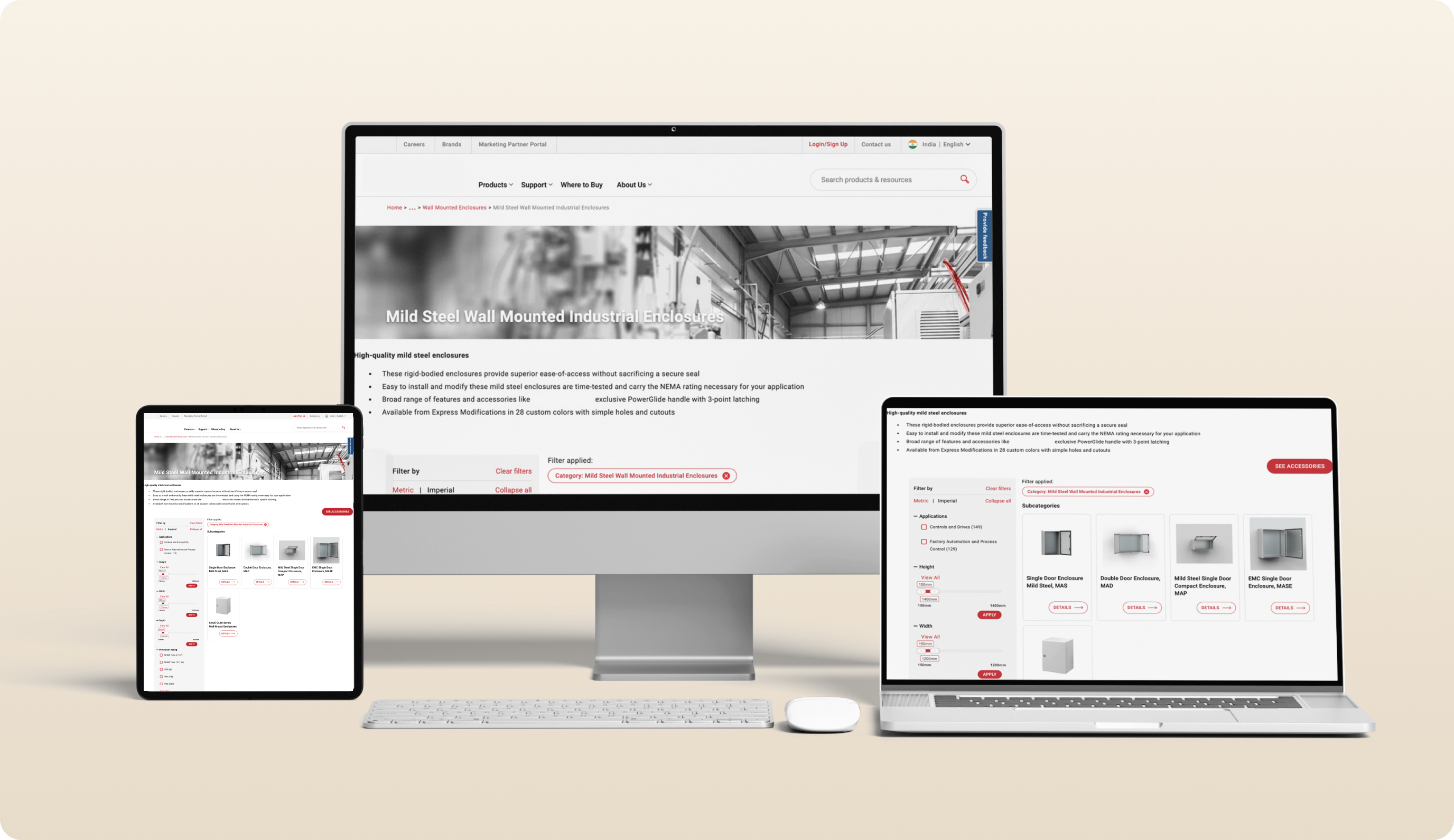
A taxonomy program aligned product categories across brands, improving navigation consistency and user flow. This created a shared structure that could scale as brands entered, evolved, or exited the portfolio.
Portfolio change built into the platform
The platform was designed to support ongoing business change. New acquisitions and new verticals were integrated using shared foundations, while brands exiting the portfolio were offboarded cleanly without disrupting shared systems or customer journeys.
Translation workflow modernisation
The external translation proxy layer was removed. Content moved directly from authoring to translation through Trados with tmgmt across marketing and product pages, reducing coordination overhead and improving regional publishing speed.
Enterprise search at scale
Coveo was implemented for the main enterprise search experience, with Solr supporting search-driven pages where required. This approach met different search needs across the portfolio while maintaining a coherent user experience.
Commerce, CRM, and identity integrations
Commerce functionality for specific brands remained externally managed and integrated through enterprise systems, including Salesforce, MuleSoft, and M3. Authenticated access was supported through Azure-based SSO, enabling secure customer journeys tied to identity.
Authenticated internal product operations
An authenticated employee portal enabled internal workflows such as catalog creation, structured search, and PDF generation for custom product outputs, extending the platform beyond public web delivery.
Performance, resilience, and bot protection
Performance improvements were delivered continuously across front-end and backend systems. Bot management and edge protections were implemented through Cloudflare and Acquia Edge to maintain availability and consistent performance under high automated traffic.
Quality engineering, upgrades, and security assurance
QA automation pilots covered end-to-end, visual, and regression testing to improve release confidence. The platform underwent continuous upgrades across the stack, including Drupal 9 to Drupal 10 and beyond, PHP 8.4, MySQL 8, Solr 9, and migration to Acquia Cloud Next. Security hardening was embedded into delivery through vulnerability reviews, dependency management, and secure engineering practices aligned with enterprise release standards.
Outcomes
The organisation now runs its multi-brand digital presence with a consistent operating model across brands, regions, and business units. Teams no longer manage each site as a separate system, and day-to-day governance is handled through shared foundations rather than repeated effort.
Product navigation and categorisation follow a unified structure, improving discovery across the portfolio and making product information easier to manage at scale.
The platform supports portfolio evolution as an ongoing capability. New brands and verticals can be brought into the ecosystem without rebuilding core systems, and brands exiting the portfolio can be transitioned out without disrupting shared journeys or infrastructure.
Global publishing has become more predictable. Content moves through translation and regional release workflows with less coordination overhead, enabling faster updates across markets.
Digital performance is consistent across the ecosystem. Pages load in under one second, performance scores increased by 18%, SEO scores improved by 15%, and load times reduced by 68%, supporting reliable experiences even under high automated traffic.
With automated testing, continuous upgrades, and security assurance embedded into delivery, releases are more predictable, and the platform remains stable as business needs and technology requirements continue to change.
The result is a scalable foundation that gives the enterprise clear operational control over its digital brand portfolio, with measurable improvements in speed, consistency, and reliability.
Bring us your challenge
We’ll help you get clear on what needs solving,that’s where we begin

