All blogs

10 Trends That Will Shape E-commerce in 2022 and Beyond
Change is the only constant when it comes to consumer behavior. Think back to the nineties, could you ever have guessed that people one day would agree to buy a product without physically seeing it; even if the product is as meager as a coffee mug?
Your answer is most likely no. However, to our amazement, today as the world enters 2022, people have moved on to making some of their most significant investments online.
The primary catalyst for this transition in consumer behavior is the constantly growing technology. E-commerce has become a significant part of most economies worldwide due to rampant technology. Retail e-commerce sales worldwide stand at a staggering amount of 4.28 trillion USD at the end of 2021 and are expected to grab 21.8% of total retail sales worldwide by 2024.
These numbers clearly tell us that it is vital for any e-commerce brand to keep up with today’s trends and focus on getting a solid grasp on AI and other machine learning to make their businesses stand out.
Why do Modern Consumers Prefer E-commerce?
The constantly increasing shift of consumers towards e-commerce has its own reasons. Before you read about specific trends that are bound to dominate the upcoming e-commerce world, it is vital to know why modern consumers prefer it over the conventional business. Despite the looming threat of digital fraud, e-commerce is bound to be a mainstay for today’s consumers just because of the sheer convenience it provides.
So let’s delve further to understand why.
A Shift Towards Online Transactions
Almost all major countries in the world are promoting digital payments. It would not be wrong to say that the pandemic has added to this transition from cash payments to online exchanges. The luxury of online transactions allows you to pay for anything with just the click of a button. It eliminates the physical exchange of cash and provides a more socially distanced option. With the pandemic still being part and parcel of our lives, this shift is only expected to get more prominent.
Robust Payment Gateways
From online banking to e-wallets, e-commerce provides a myriad of options for payment. The ever-improving payouts and return policies of several businesses around the world are driving more and more people towards it every day.
Ordering from the Comfort of your Home
The customer is king and is always on the lookout for more comfortable options. Therefore, modern customers prefer ordering their products from the comfort of their homes rather than running around looking for specific items. This practice has been made even more efficient with smart shopping options like AR and VR, and image recognition setups that allow better assessment of product quality and increase shopping transparency. The constant advancements in virtual reality provide the option of taking a 360-degree view of items and doing a digital trial of the goods. With the concept of metaverse growing popular every day, the scope of jumping on these advanced immersive technologies is only bound to increase. As big e-commerce retailers today provide everything you need under one website, customers end up saving time and energy significantly.
Access to Large Inventory
This point is closely related to the last point. Most e-commerce firms provide their customers with a plethora of options. For instance, if you are looking for groceries, a major e-commerce site will most likely have all the items you have on your checklist. This saves you the trouble of running from store to store to complete your shopping list.
Ever-Improving Logistics Network
Customers nowadays can order anything online and have it in front of them within hours. For example, Amazon has a certain segment of products that can be delivered to a customer’s doorstep in merely 2-4 hours. The e-commerce logistic network is faster than ever, and it's only going to get quicker. With more warehouses being installed, and speedier transportation options being employed, e-commerce logistics is set to make more amends in the future.
List of Trends That Will Shape the E-commerce Future
E-commerce is driven by those who know how to keep up with the pace of this moving world. As we head into 2022, let’s look at 10 trends that will shape the future of e-commerce in the coming days.
1. Artificial Intelligence and Machine Learning is the Present and Future
These are probably the most significant aspects that separate an e-commerce business from a conventional one. Artificial intelligence and machine learning have taken the e-commerce game to the next level. AI helps in tracking the information of users on the platform while machine learning helps in understanding the preferences of a particular user. These two combined can help make the user come across exactly what he wants and build up an excellent click-through rate ratio.
A prime example of AI usage can be Amazon. If you look for a product on Amazon, the AI tracks that information and feeds you the same product through different platforms. If you open Instagram, you get sponsored posts related to a similar product you searched for. The same is also true for YouTube where you’ll get advertisements associated with the same product line. As a result, the buyer ends up purchasing the product more often than not.
2. Enhancement of Interactive Tools
Interactive tools provide customers with that human touch that e-commerce otherwise lacks. Chatbots and live chats keep the user interested and provide them with a sense of security. Moreover, the advancements in the user interface with the help of AR and VR assist the customer in finding out minute details about the product they wish to buy. This helps grant the user the assurance that the product offered is of top quality.
Lastly, personally curated promotional emails and tracking information helps make users feel more important.
3. Focus on Sustainable Products
Sustainability is no longer a negligible factor for online shops. In an effort to successfully address increasing demands of sustainability from their consumers, e-commerce businesses have been looking out for options for providing sustainable products for quite some time now. Modern consumers are gearing towards sustainable options and are constantly on the lookout for choices that aim to give something back to the environment. Environmentally friendly shipping options, avoiding packaging wastes, and monitoring deliveries and returns are some issues that e-commerce can look forward to in the coming days.
4. Consumers Will Always Prefer Free Shipping
According to the Consumer Trend Report of Q2 2021, 65% of consumers expect free shipping on every item that they purchase online. Moreover, 80% of customers expect free shipping on every dollar purchase they make online. It’s a psychological thing. Consumers don’t like to pay any extra fee in the name of delivery. However, they don’t mind paying a few extra bucks if they are included in the product cost itself. As a result, free shipping has a massive impact on sales conversion. If a consumer has added an item to his cart and sees that enticing icon of free shipping applied to it, they are more likely to complete that particular order. More and more online shops are working towards finding different ways of providing their consumers with free shipping. Rising inflation and the ever-increasing price of fuel is also something that makes the customers prefer free shipping over commuting to shop for a particular item.
5. Focus on Personalization
A customer is more likely to be attracted to curated suggestions. This is where the role of AI comes in. Using artificial intelligence to determine the preferences of the customer, and then providing them with personalized suggestions can increase your conversion rate manifold. 72% of customers say that they only engage with suggestions that are personalized and curated to their interests. With competition increasing every day, value-added personalized marketing can help a business in making its messages stand out.
It is all about making the e-commerce experience more immersive for the customer. Services like one-on-one suggestions can help your users in zeroing down on exactly what they want to get from your services.
Another very important thing that customers take very seriously in the modern setup is data privacy. E-commerce platforms around the world are making several conscious efforts to be more transparent with their data collection and providing customers with the option of personalizing cookies and notifications. Recommendations based on customers’ browsing data help them in negating fluff and getting exactly what they want. This allows every individual to build their own journey with the platform and will, in turn, increase customer retention.
This will not only help them in saving time and effort but will also help the organization in deploying their technical marketing efficiently. Moreover, a personalized message from their favorite store in a customer’s inbox will always put a smile on their faces. Hearing your name triggers a self-representational behavior in your brain. Meaning that you'll pay more attention to the message and be more likely to act upon it.
Most e-commerce sites use this tactic to attach a certain level of importance to their customers. A personal message that goes, “Hey_____, here’s what you can get from our ongoing sale” is often good enough to lure that customer into visiting the website.
6. Optimized Websites for more Conversions
SEO and social media marketing have become a must-have in today’s digital world. Sales conversions don’t just happen, there’s a whole set of rules and priorities used to boost conversions. E-commerce websites require heavy optimization to make sure that they are able to provide the perfect user experience to their customers. Moreover, you need innovative CTA buttons that will motivate prospective customers to check your website. Most consumers shop online through their smartphones. Therefore, it is extremely important to curate the website/e-commerce app accordingly to provide users with a smooth UI and hassle-free navigation.
7. The Rise in Sale Platforms
E-commerce is not just restricted to their website. Giant e-commerce firms use platforms such as Facebook, Twitter, YouTube, and Instagram to increase their sales. The AI used by these firms helps understand user preferences and feed them with the right data across several platforms. Social media marketing is something that is ideal for grasping the attention of modern-day consumers. Everyone is a fan of new and innovative methods of seeking information. Therefore, live photos, coupled with short videos, can be the perfect marketing fodder for today’s set of consumers.
8. Voice Search and Virtual Assistant
It’s all about providing more comfort to customers. Additionally, a machine responding to your voice brings in a certain sense of excitement. It is always more convenient to say, “show me some good sneaker shoes for men” than typing out the entire thing on a search engine. Seeing the positive response of consumers regarding virtual assistants, the AI of different e-commerce sites is more likely to keep upgrading voice preferences. Providing the option of voice search in different languages other than English is one example of this. As more and more people shift towards voice search, more e-commerce websites are expected to become compatible with these resources.
9. Robust and Efficient Distribution Channels
41% of the total e-commerce consumers are willing to pay an extra charge for same-day delivery of their ordered products. These statistics hint at the growing expectations of users from the concept of online shopping. Fast shipping not only makes for faster delivery but also impacts the overall experience of the customer in the following ways:
- Increases customer retention
- They are more likely to recommend the e-commerce site to their friends and family
- Decreases the number of abandoned carts
- Increases the average order value
From orders taking months to now being delivered in hours; e-commerce distribution channels have come a long way. An efficient shipping experience, coupled with options like BOPIS and delivery notifications is about to be a bifactor for the success of your e-commerce firm in 2022.
Wondering what BOPIS is?
It stands for ‘Buy Online and Pay In Store’, which allows customers to avoid long queues of supermarket stores by just placing their order from the comfort of their home and collecting it from their nearest store at their own convenience.
This feature can be best experienced in the grocery delivery services in the US. For example, the Kroger grocery delivery app provides you the option of same-day delivery for all your grocery needs. You can even mark your order online and collect it from your nearest store at your own convenience. This is how the highly-efficient shipping channel trumps the conventional method of shopping for literally anything the customer needs. With customers practically expecting to receive their goods in hours, the e-commerce distribution system is well on its course to becoming more efficient.
In addition, the e-commerce world is witnessing a trend of using social media as distribution channels as promotions. It does an excellent job in raising the word for your product since most of your target group is active on such platforms.
10. Multichannel Sales and Support
This is another aspect through which e-commerce spreads its horizons beyond its website. Most of the major e-commerce services provide 24/7 customer support over different channels such as call, text, email, and even Instagram DMs for that matter. Social media stores are also something that is gaining popularity day by day. It provides consumers with a hassle-free option of buying their favorite item while scrolling through social media. E-commerce retailers have the most to gain from social media platforms. Contrary to popular belief, social media isn’t hampering retail, it’s simply giving it a place to expand.
Quick Tips for Modern E-commerce Business
If there was ever an ideal time to start your own e-commerce business, it is now!
Inspired by all the trends listed above, here are a few quick tips for modern e-commerce businesses that might come in handy:
- Encourage contactless payment on your e-commerce portal. Allow people to make payments without hassle with just the press of a button.
- Use AI to understand customers’ preferences and provide them with exactly what they want.
- Use personalized customer experiences to make your consumers feel important. For example, send a weekly list of recommended items based on their previous shopping activities. Provide them with customized platform experiences by analyzing their daily activities and preferences.
- Provide customers with swift and secure payment gateways to ensure quick payouts and easy refunds.
- Dial down on a particular niche for your business. This will help people to associate your business with a particular genre.
Final Words
It is impossible to predict the future, especially in these uncertain times that we live in. However, as far as e-commerce is concerned, these trends are most likely to shape the industry's future in the coming years.
The growing quality of web optimization for personalized marketing, ever-improving distribution, and the generation of new sales platforms are some of the factors that will heavily affect e-commerce as we move forward.
Did we miss out on anything? Let us know below your predictions for e-commerce in 2022!
.avif "9 Strategies To Help Institutions Retain Students Post-Pandemic")
9 Strategies To Help Institutions Retain Students Post-Pandemic
COVID has affected almost every sector of the world economy, including education. The ever-existent system of conventional learning is slowly depleting in popularity. As a result, one can say that the need to revamp the educational setup is now being felt more than ever.
As of fall 2021, enrollment into higher education programs dropped by 2.6% compared to 2020, and a total of 5.8% since 2019. With more and more learners moving towards online coaching and on-site working, institutions struggle to retain their students during the pandemic.
The trend of remote learning has been in the ranks for the last two years, and it’s only projected to increase. It would be fair to state that students worldwide have grown accustomed to online learning today and tend to prefer it.
This tilt towards online learning has been one of the major reasons for the growing disconnect between universities and students. Students now have multiple online learning platforms to choose from to gather education right from the comfort of their homes. College doesn’t seem to be a necessity anymore for modern-day learners.
Therefore, it is exceptionally challenging for universities nowadays to make students believe that college is worth their time and money. The only way out is to keep up with the evolving technology to maximize student retention and recruitment.
Since some things just can’t be replicated in a digital setup such as the presence of a human touch to learning, on-field research, and more, that an institution has to offer, is why we bring to you this article.
In this blog, we dive into some strategies that you can use to retain current students and attract prospective learners to your institution during the pandemic.
Let’s get started!
1. Adopt a Student-Centric Approach
Developing a student-centered learning program provides them with the opportunity of creating their own learning paradigm. It allows room for them to be flexible on the what, when, and where aspects of learning.
Additionally, such an approach helps them develop self-direction, curiosity, creativity, and collaboration skills.
Every successful institution defines its approach to teaching differently. However, some key features should definitely be included in your program such as:
- Prioritizing project-based interdisciplinary learning
- A rooted connection between the curriculum and learner’s interest
- Regular assessments designed to track the growth of your students
- Expert feedback platforms for students as well as their parents
- Customized learning plans for each individual
- Flexibility with regards to the shift towards online learning
Some people may argue that a student-centric approach can be ambiguous and chaotic. However, there is nothing that can’t be fixed with the help of a few adjustments from both sides. You must remember the key is to gradually embrace different learning techniques one at a time, rather than all at once.
2. Form Personal Connections
One in seven students worldwide has a mental disorder. The pandemic has acted as a catalyst in the deteriorating mental health of all, especially the younger generation. In such times, every individual will appreciate a personal human connection rather than a conventional and doctored regime.
If there was ever a time for institutions to invest in personalized learning techniques, it is now. The key here is to realize that small things go a long way in developing a personal connection.
Here are some of the things you can keep in mind to make learners feel at home in your institution:
- Make your Courses for Humans
An ideal course should aim at including personalized messages to foster an instant connection with the learners. Especially in these uncertain times, it is best to prioritize human connection in your curriculum rather than textbooks and prototype answers.
- Develop a Connection between Faculty and Learners
In the age of virtual learning, it may often get difficult for students to approach the faculty with their problems. To combat this, the faculty must ensure smooth communication between them and learners to maintain an efficient learning environment.
- Messages from Authorities
If a person of authority, like the president, reaches out to students to acknowledge their hardships, it makes them feel valued. It is vital to make them feel that the institution understands how severe the pandemic has been for them. Moreover, such messages can provide a feeling of calmness in such turbulent times to learners as well as their families.
3. Shift From Traditional Marketing To Digital
With people looking at the world today through their phones, it is only logical to ditch the traditional marketing setup and prioritize the digital image of your institution. Imagine how cool it would be if one of your students finds out that their institution has an active presence of TikTok and Instagram.
As far as the school/university website is concerned, you can invest in an esteemed development company that provides you with a seamless user interface.
A digital marketing setup has to be the culmination of various platforms. Gather information and partner up with different online portals to tap varied markets. You can use this information to good effect by curating it to students’ needs on an individual level and providing them with exactly what they are looking for.
Find the platforms on which your prospective and current students are most active and invest in specific channels marketing. Try to personalize your promotion content by monitoring the preferences of different users. For example, if a student is interested in business courses, they should get ads and promotions regarding the same course from your university.
You can use several content authoring tools that serve as a package of e-learning deliverables to your students. Examples of some of the most used storylines include Articulate Storyline, Composica, Camtasia, and Adobe Authorware.
Another major part of your digital marketing strategy can be web accessibility for design and content. It is a way of designing websites so that everyone, even people with disabilities can navigate through the content easily.
Some of the disabilities that you should consider while designing accessible websites and social content are as follows:
- Blindness and low vision
- Deafness and hearing loss
- Speech disabilities
- Cognitive disabilities
- Neurological Limitations
Additionally, investing in search engine optimization practices can help you gain traffic and traction on your website. Thus, with a seamless website and a neat social media presence, you will be able to get better results than any billboard or banner.
4. Enhance your Email Marketing and Digital Communication
This point can be considered as an extension of the previous strategy. Developing a personalized email marketing strategy with the help of market automation can allow you to widen your reach and enhance your promotional capabilities.
The market automation program develops tailored emails, campaigns, and more from the collected data of leads and potential applicants. Additionally, it also serves to provide you with a better conversion rate and helps you take some load off your marketing team to focus on practical strategies to approach potential students.
A fitting example of a market automation tool for universities can be Mautic, an open-source automation project that develops strategic campaigns for institutions.
5. Maintain Contact by Curating Virtual Experiences
In today’s world, it has become easier than ever to stay in touch with your current as well as your prospective candidates virtually. This is one of the great traits of digital learning that you can use to your advantage. With the help of your database, you can host digital meets and conferences to get in touch with your prospective leads. You can even provide them with virtual campus tours and a curriculum summary to help them understand your services better.
As far as freshmen batches are concerned, institutions can arrange for virtual seminars and training to help them learn new skills and concepts. They can also use these digital services to provide one-on-one counseling sessions to both learners and their parents.
Using virtual and augmented reality tools for such services can help develop a productive connection between the institution and learners. Several institutions like Delta State University and Coahoma Community College are using these tools to keep students in touch with their college campuses.
6. Fall Back on Faculty and Alumni for Communication
It is always better to learn from someone who has been through the same experience in their life as you. A connection between alumni and freshmen can help achieve just that. Regular meet-ups between them can help develop meaningful relationships and help the current batch better understand the importance of college.
A mentor-mentee program between them where the alumnus is specialized in the same course as that of the current student can greatly allow efficient learning and future planning.
As far as the faculty is concerned, they are the building blocks of the institution. They should make room in their schedules to also interact with learners about matters beyond college. It will help in guiding the learners for the life that awaits them post-college. Only the institution’s faculty can provide this perfect combination of support and guidance.
7. Create Support Groups
Every individual learner faces hardship in their college life at some point or the other which sometimes can be difficult to fix on their own. A helping hand is hence always appreciated.
As such create a network of students wherein, they can support their peers by helping them out both professionally and personally. A well-made support group also proves beneficial in the following ways:
- Strengthening Social Skills - Isolation cannot foster positive adjustment. College support groups can help with this by making an individual feel more confident and comfortable in social situations. It helps them become more expressive and assertive regarding their opinions and feelings.
- Encourages Independence - As freshmen move out of their houses and away from the supportive care of their parents, a well-valued peer group can help them become self-reliant and independent.
- Provide a Positive Peer Community - Students are susceptible to peer pressure. This phenomenon can often make them engage in self-destructive practices. In such cases, support groups can also provide a positive peer community that can help them negate this toxic peer pressure.
8. Encourage Summer Enrollment
As learners grow more accustomed to virtual learning, they are more inclined towards virtual summer courses. Therefore, colleges and universities must provide summer courses as an opportunity to earn extra credits.
Before the age of digital learning, students spent their summer breaks choosing between internships and co-curricular activities. However, online classes offered a whole new dynamic as they opened the possibility of taking up extra courses while also working on the side to widen their knowledge pools.
For colleges too, summer courses offer an excellent opportunity to fine-tune their system before the inevitable rush of enrollees in the Fall. As such, some institutions even offer tuition reductions in their online summer classes.
Summer is also the prime time for universities to focus on advertising and fall registration. The primary metric for fall enrollment is the advance registration for their future semesters.
Since generation Z is highly inclined towards coaching in person, therefore, providing one-on-one counseling sessions during the Summer can help institutions ensure a good turnout during the Fall semester.
9. Leverage Technology
If there was ever a time to invest in the latest technology of today’s world for your institution, it is now. A succinct IT ecosystem is what separates an elite institution from a subpar one.
A well-rounded course doesn’t guarantee student engagement. To make that happen, you need to rely on modern technology to provide services like training, workshops, leadership conferences, etc. that make learning fun and interactive.
On the topic of technology, something that has gained immense popularity over the last years is the use of AI. There is no reason why you shouldn’t incorporate artificial intelligence in your institution’s setup.
With the help of AI, you can gauge the precise capabilities of an individual student and provide them personalized, and timely support. The prospect of digital experience platforms can help universities in providing students with a more immersive form of learning.
A student-centric web design that provides them with different tools to track their progress and record results in, efficient learning. You can use Digital Experience Platforms (DXPs) to provide your students with consistent, secure, and personalized access to study material and online courses across different digital touchpoints.
As they say, data is the new oil. Investing in a good data handling service can not only provide workable insights but reduce redundancy in your marketing efforts.
Moreover, institutions can use technology to maintain records and databases of all their students. You can use artificial intelligence to develop personalized improvement programs for different students using these inputs. You can also provide online access to student support areas, including counseling services, disability support groups, and academic resources.
The scope of using technology for the betterment of your institution is therefore boundless.
With the help of data analytics, institutions can develop an inclusive and financially stable enrollment strategy. This will help them serve the current as well as the new learners by personalizing recruitment, enrollment, and the learning processes.
Thoughtful use of technology can also help build a sustainable ecosystem that augers a seamless experience. Hitting the right note of the user-centered design, process improvement, and system re-engineering can help you reduce redundancy and improve the end-user experience.
Wrapping Up
The pandemic has forced universities to develop new methods of teaching and marketing to build inquisitivity among students. Institutions are realizing how personalized and student-centric learning can play a pivotal role in upholding the reputation of a university and the importance of providing students with customized resources rather than conventional textbook schemes.
Moreover, using virtual learning opportunities in this digital era has also provided learners with new training options. If used in the proper manner, these platforms can help in improving student interaction and efficiency.
The aim of every institution should be to use its resources to the best. From extensive data analytics to support groups, this article listed all that an institution needs to retain students during the pandemic.
So, get started on working on the blueprint of your new student-centric learning curriculum today!
.avif "Classroom Tech Trends For 2022")
Classroom Tech Trends For 2022
The pandemic has compelled every industry to rely on technology massively, and the education industry is no exception. Although this sector initially followed more of a conventional approach, in the last few years it has undergone monumental changes.
What was earlier confined to being a brick-and-mortar structure is now an open-ended classroom with the World Wide Web at its core.
The experts in the industry assessed the current situation and sought concrete solutions to practical issues, for instance, attempts at solving the hindrances in accessing learning resources. This gave way to a stream of digital learning platforms, apps, and software with over 50% of faculties embracing the digital transformation.
The world of education was always limitless. However, the recognition and implementation of education technology at such a large scale have made the infinite number of learning resources accessible to every individual across the globe who has access to the internet.
Although we are all set to regain some semblance of normalcy with more schools, colleges, and other educational institutions that will reopen soon; the predominance of technology in education is here to stay.
What is Educational Technology and Why Should it Matter?
Educational Technology or EdTech refers to developing and incorporating tools including software and hardware that facilitate education, emphasizing engaging and personalized learning.
Essentially, the area promotes the use of applications, web portals, and other digital sources, fostering interactive online courses and other tech-infused tools in classrooms.
Though it may seem like a niche, EdTech is rather a far-flung dimension impacting individuals of varying backgrounds. It affects:
- Educational institutions: Schools and colleges need to embrace tech tools and ensure thorough incorporation of EdTech practices in the institutional processes. Moreover, educators will have to familiarise themselves with these procedures and formulate ways to incorporate them into their regimen.
- Designers: The need for advancement in the EdTech sector generates tremendous career opportunities for designers and technologists. These professionals must constantly embrace, innovate, and develop digital learning solutions to stay in line with the emerging trends and evolving technology.
- Occupation seekers: Not only educators and designers, but the education industry’s dynamics also create career avenues for entrepreneurs and other job seekers. From owning revolutionary education platforms to creating content and handling the backend technicalities, the opportunities are plenty.
- Every aspect of the future: Constant innovation in the EdTech industry empowers every individual to gain and receive education in a more streamlined manner. While it helps the educators organize lessons and enhance engagement, it equips learners with the resources needed to expand their scope of learning beyond the classroom.
Students are the future engineers, doctors, and eminent leaders, shaping the world with their knowledge and skills. Thus, EdTech indirectly impacts every aspect of the future.
8 EdTech Classroom Trends that are Poised to Rule the Roost in 2022
1. Gamification
Gamification essentially involves the use of game design and elements in educational software for learners to absorb knowledge in a fun and engaging manner. It challenges the status-quo of the conventional classroom approach, exhibiting how learning can be interactive.
EdTech companies have leveraged the power of gaming to revolutionize the way students interact with learning material.
Students receive a reward in the form of points or stars every time they give the correct answer which boosts their enthusiasm to learn. Moreover, it makes learning easy as well as positively challenging.
Educators and institutions can use digital tools and online platforms created especially for this purpose. These apps and websites allow teachers to create personalized e-learning lessons in the form of fun computerized games and quizzes.
It nurtures an immersive learning experience where students can learn, enjoy, and collaborate.
The use of a gamified instructional design in the STEM course of Grand Valley University is the perfect example of how this trend can motivate students and positively influence class participation.
The case study of 501 students who took the gamified lessons at the university exhibited that students experienced intrinsic affinity towards STEM learning. The use of custom software instilled an environment of emotional engagement, humor, and learning.
2. Artificial Intelligence
Artificial Intelligence (AI) in EdTech refers to the usage of smart machines to study learner-response patterns and provide a personalized learning solution to each individual. It is a state-of-the-art approach, immensely beneficial for both teachers and students.
Through AI, EdTech platforms can simplify learning for trainees and automate teaching for educators.
Teachers can leverage this technology to check and grade assignments, recognize error patterns, create the required courses, and track individual student performance as well as curate problem-specific solutions to ensure every student receives specialized attention.
Jill Watson from the Georgia Institute of Technology is an incredible example of how AI can help relieve educators of mundane tasks, allowing them to focus more on student progress. It is an AI-powered teaching assistant that provides specific answers to a student’s query related to a particular course.
Duolingo is another remarkable example of how an AI-based app can study a learner’s pattern and provide a well-tailored learning experience. It is a language learning platform that enables users to pick bite-sized training sessions according to their proficiency level.
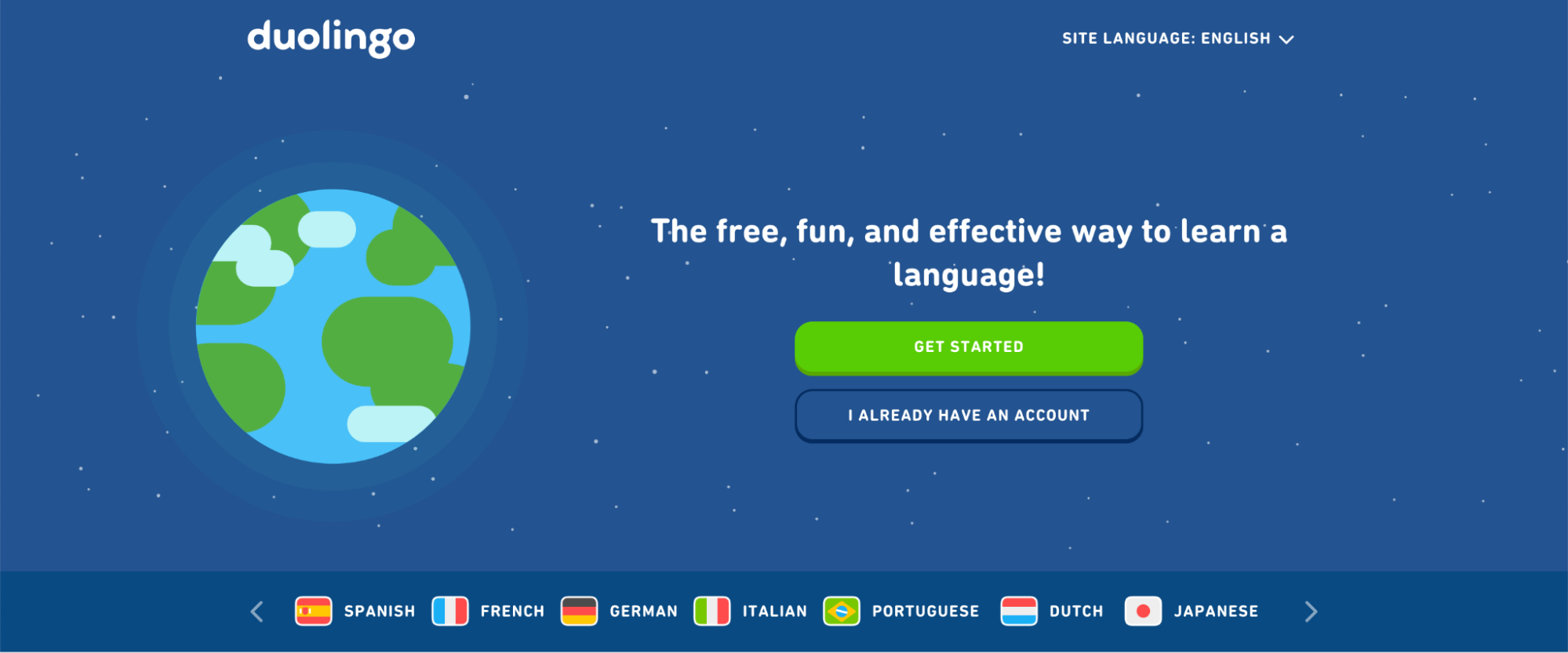
The practice prevents experienced individuals from getting bored with basic information and rookies from getting overwhelmed with complex questions at the beginning. It lets every individual follow an upward learning tree while employing deep learning to understand the areas that require more practice.
3. AR and VR
Augmented Reality and Virtual Reality in EdTech are technologies that foster a completely immersive learning experience. They let students closely interact with the subject of study in a virtual space which helps them gain practical insights about the topic.
While VR constructs a reality of the concept, AR lets learners visualize it for deeper understanding. For instance, if students are to learn about the human digestive system, they can use AR and VR to explore it virtually, bridging the gap between theory and practice.
With its perfect blend of sounds, images, and animations it ensures a standout learning experience.
An example of such immersive learning is the Google Expeditions Project. The application uses AR and VR to let individuals explore 500+ places virtually, in a thrilling environment of panoramic scenes, notes, and questions– both for the teachers and the students.
Another excellent example of AR and VR in EdTech is the Skyview App, which transforms a phone camera into a telescope. It is a unique application, letting astronomy enthusiasts spot planets, constellations, stars, and galaxies at the tap of a button by just having the user point the camera towards the sky.
Lastly, the 1943 Berlin Blitz in 360 degrees is another remarkable combination of VR education and BBC.
It is a recording of the live night-time raid over the Nazis by Wynford Vaughan-Thomas, a BBC war correspondent who boarded the Lancaster Bomber. The recording provides an intense experience to the viewer, with live visuals and voice recording.
The incorporation of AR and VR in EdTech thus has been a revolutionary phenomenon!
4. MOOCs and Online Courses
Massive Open Online Course (MOOC) refers to a unique e-learning paradigm, wherein a free online course is delivered to a limitless audience. It can be in the form of recorded video lessons, digital readings, and assessments.
Similarly, various free and paid online courses let individuals learn about diverse topics, expanding their knowledge beyond the curriculum.
What makes MOOCs and online courses stand out is that they provide students enough time to learn at their pace and comfort. Additionally, learners can also check their progress through online assessments and enjoy a personalized learning environment.
Such e-learning models also benefit educators as they can encourage students to take up online courses related to the lessons learned in class. This practice helps in widening a learner’s scope of understanding the concept as they gain deeper insights into the topic.
Coursera and Udemy are among the largest platforms providing MOOCs to students across the globe. They offer free and paid courses, certifications, and degrees, training learners to convert their interests into career opportunities.
Young professionals and students can take up niche-specific courses and learn at their own speed without any peer pressure or competition.
5. Actualizing the Potential of Big Data & Analytics to Improve Education
Students and educators leave a wide range of data on user behavior patterns and engagement levels that intuitions can leverage to save costs and devise strategies.
Big Data tools can help convert the swarm of information at hand into easy-to-read files and dashboards. Schools and colleges can quickly analyze the ongoing situation, check automated reports, and use these insights to create a cost-effective enrolment structure.
Additionally, the concerned authorities can also examine student learning patterns to decide which individual requires more attention or financial support in the form of sponsorships. It also serves to foster alumni engagement in favor of the institution’s reputation.
The pandemic led to the education sector embracing mobile learning at a widespread scale. That, along with open educational resources and the relatively new concept of the metaverse, can together harness the power of Big Data, actualizing its applications in the EdTech sector.
6. Growth of Mobile Learning in Higher Ed
While mobile learning has become more of a necessity than a choice, it is slowly becoming a habit for good. Individuals taking courses from a mobile device can complete it about 43% faster than those taking it from desktops.
The approach fosters greater productivity by leveraging efficient models like microlearning that provides concise training sessions of 2-5 minutes only.
Institutions will require more mobile-friendly learning management systems to implement adaptive learning strategies. These include applications that offer multilingual features, engaging user experience, and are also device-agnostic.
7. Metaverse in Education
Metaverse has had a revolutionary impact amidst the pandemic, allowing students to interact and collaborate in a live space. It allowed institutions to create a virtual environment where learners can hang out, discuss, and attend classes as if they were doing it in person. Its 3D avatars looked as natural as an individual, converting the learning experience into that of a near-reality one.
The blend of metaverse and EdTech has given rise to Eduverse. It is a hybrid world where knowledge is gained through real-time experiences implanting in them the kind of learning that is sure to last for an eternity.
For example, students can travel back in time and feel the essence of Greek mythology with their VR headsets on. Their avatar can look for precious items around the archaelogial structures or peel through the soil with a shovel to discover exciting relics.
8. Open Educational Resources
Open Educational Resource (OER) is any material available online for the public to use and learn from without any cost. These may be learning or teaching materials that are either published by a governmental institution or by individual parties under an open license.
Irrespective of its publication source, what matters is OERs present accessible and cost-effective education to every institute and individual.
UNESCO has a special OER program in place for knowledge seekers around the world to access quality information. The organization firmly believes that such universal knowledge sharing encourages social, cultural, and economic development.
Conclusion
EdTech trends are bound to evolve and enhance with time due to analytics and technological innovations. It is safe to say that technology will take over the entire education sector soon, even in offline classroom settings.
Revolutionary technologies and concepts like MOOCs, OERs, and mobile learning ensure flexibility in learning, letting students learn and grow uniquely. Additionally, immersive learning techniques like AR, VR, and gamification have completely restructured the educational field for good.
These trends make learning more fascinating, intuitive, and collaborative, allowing the students to explore their interests. Moreover, such engaging settings motivate students, encouraging them to learn practically and implement new concepts.
Round-the-lock learning through the latest EdTech developments facilitates the personal growth of students and learning professionals, preparing them to excel in their professional roles.
To meet these demands of the changing times, classroom tech trends in today’s digital world are many with each being better and more immersive than the other.
So, which tech trend are you excited to incorporate in your institute in 2022?
.avif "Actionable ways for non-profits to elevate online donor engagement")
Actionable ways for non-profits to elevate online donor engagement
Anyone passionate about a cause will find running a non-profit emotionally rewarding. While your passion knows no bounds, you might struggle with the monetary feasibility due to various challenges.
Having a non-profit organization means that it relies heavily on funds and the generosity of like-minded contributors. Without monetary benefits, any non-profit will plummet to its demise.
Retaining and acquiring a high number of annual contributors means that you can:
- Get new prospects
- Successfully plan campaigns
- Higher engagement metrics
- Better awareness
- Adds more value to the cause of the mission
Non-profits can access more significant donations while gaining data through successful retention and acquisition strategies.

Importance of digital donor experiences
Crafting the best digital donor experience will ensure a streamlined fundraising possibility.
If you want to ensure engagement, then designing and delivering an optimal digital donor experience is crucial for:
- Better communication between you and the donor
- Analyzed sponsor data enables you to make better decisions
- Enhanced connection for the contributor with the initial cause
- Improved patron satisfaction that leads to better donations
- User-friendly digital platforms increase acquisition
Designing the digital donor experience
You can build better relationships with a new-age approach using the Donor Experience Design (DXD) which consists of the designing process, outlining and charting the patron engagements and activities, and interactions with your non-profit. To facilitate a better experience, you need to improve your digital presence.

We have outlined a curated list of ways to ensure continued long-lasting connections with your contributors.
1) Your digital platform matters a lot
It is crucial to build an attractive digital presence with a design that resonates with your purpose.
To build a perfect platform, you need to follow these tips:
- Create separate layouts for mobile and desktop
- Highlight your organization's vision
- Feature accessible contact forms and information
- Be authentic about the data you are putting out
- Rope in chatbots to offer contributors real-time assistance
- Keep the platform simple from a technical standpoint
- Utilize multimedia to keep your donors engaged
- Use all security protocols
Adhering to these points will help you create a user-friendly, attractive, and thought-provoking digital presence.
2) Humanized content
Creating an empathetic connection with your sponsors will increase retention and facilitate your acquisition. You must put a human touch to your digital platform and social media campaigns. Your digital content can tell the story behind the non-profit's existence, share testimonials or feedback about your organization, and also showcase success stories.
3) Relevancy in your messaging increases engagement
The messaging of your non-profit should be everything that you do and you stand for. The content, timings, channels, and offers should all be proportionate to the cause and relevant to the supporters.
4) AI-powered donor experience
Organizations in various industries have been leveraging AI to gain more prospects. This stands viable for non-profits too who can also utilize it to improve interaction and retain contributors.
Various AI tools can help you enhance the essence of your non-profits. You can use it to streamline segmentation by improving the process drastically.
You can start by implementing a simple AI chatbot on your platform to help prospects in their donor journey. It could enhance the digital experience while eliminating complicated technicalities.
5) Support modern payment methods
The digital payment sector witnessed significant growth. When your non-profit supports multiple payment methods, you demonstrate your openness to change.
You can improve the existing payment methods by including:
- Bank transfers
- Payment applications
- Cashless payments
- Cryptocurrencies
- Digital wallets
You can also add QR codes and 'donate' buttons to streamline the process and enhance the user experience. These payment methods are convenient and easy to navigate.
When the donors find it easy to pay for a cause, it will automatically improve interaction, engagement, and retention. Your non-profit can tap into international donors through modern payment methods.
6) Incorporate videos into your communication plan
Meaningful videos can help inspire people and increase popularity. Videos can be created to show solidarity and appreciation for donors. This way, you can thank them and showcase their impact.
Videos also offer opportunities for nonprofits to stay connected and involved with new donors. You can visually represent the cause and solidify the bond with new contributors.
It is hence imperative to incorporate video messages on the donation confirmation page and to add mission-oriented videos to gain better results. Lastly, you could even share real-time video updates with all your contributors.
7) Optimize the new donor onboarding experience
A great way to harness an acquisition is through thoughtful and empathic processes to welcome new sponsors to the organization.
The onboarding process can have personalized emails or videos underlining how their ongoing donations will continue impacting society. Additionally, engaging the contributors through informative two-way conversations could also help retain them.
8) Keep the donors posted about the impact of their donations
Recognizing and thanking contributors can go a long way. However, the best way to foster a proper sponsor relationship is to enhance two-way communication. If you keep them posted about the impact of the donations, it will promote retention.
At the same time, this information will inspire the contributors and encourage them to give more significant donations. It could also help bring new donors through referrals.
9) Create a strategy to re-engage donors
It is crucial to re-engage patrons to ensure a high retention rate. Doing so will help enhance donor loyalty and experience. For example, you can utilize particular social triggers like launching a unique email design to excite these supporters. Additionally, you can reach out to them through personalized messages that inspire them.
Every acquired contributor is a valuable addition to your community. Therefore, you need to support them to ensure they stick around and keep donating.
10) Social media campaigning
You can utilize social media platforms like Instagram, LinkedIn, Facebook, and Twitter to promote fundraising activities. Not only is it an excellent strategic move, but it also enhances engagement and reach.
You could even set up online donations for various initiatives on social media. At the same time, you can easily organize promotional campaigns that attract better acquisition.
Elevate your fundraising capabilities
The world is changing as it goes digital. Through the tactics mentioned in this blog, you will be able to boost your brand awareness while enhancing your reach and recognition.
Your donors' donations will make a difference in people's lives. It is your job to make a difference in their experience by making it fun for them.
Talk to our experts to know more about how we can create a visually stunning, accessible, and user-friendly digital presence that inspires action and fosters connections.

Crafting Customer Experiences For Higher Education
The educational landscape is evolving dramatically, and technological advancements like artificial intelligence (AI) and machine learning (ML) are the top drivers of this change. However, as a higher ed institution, are you aware of the customer needs of this sector?
Students are one of your clients, and you need to ensure an indulgent customer experience (CX) to stay ahead of your competitors in the game.
Do you remember looking at the “People also watch” recommendations when you look up a show on Netflix? Or perhaps, you remember shopping products from Amazon’s “You might also like” suggestions section. With tech giants like Netflix and Amazon setting examples of offering people exactly what they want right when they want it, you know that personalization is imperative to hook users.
The same applies to Higher ed institutes that must leverage the power of AI to deliver an incredible customer experience. In this article, we’ve gathered 9 exemplary ways for you to fulfill your consumer’s needs. Check it out!
What are the common student experience issues?
Student experience refers to the online and offline interactions of learners with an institution. Whether it is their connection with technology, information, or the people representing the educational establishment, the experience can significantly impact lead generation and conversion rates in higher ed institutions.
Most institutions do not treat students as their consumers, resulting in a poor state of client support. So, we bring to you some of the most common service gaps in the higher education industry:
- Communication requirements: The institutional authorities do not communicate what is expected of the learners when they adopt different approaches like online education or a new discipline.
- Lack of service awareness: Many pupils do not have enough information on services offered by the academy. Some individuals are entirely unaware that such opportunities exist.
- Technology gaps: Platforms used by the institute may not be mobile-friendly or may be too complicated for an individual to access.
- Special needs: Applicants with low-income backgrounds, foreign nationality, or other special needs require additional support in the form of common platforms, auxiliary aids, etc., which is often lacking in a lot of institutes.
- Absence of online community: Despite shifting the classes online, most institutions fail to create a supportive online campus for learners to interact and participate in programs.
- Barriers in access to data: The faculty members & students do not have access to complete data due to organizational silos, leading to unsatisfactory student experiences.
- Enrolment agreement: Schools also force pupils to enter a contract of paying tuition fees and attending classes even if they wish to change later.
- Divided services: In most cases, learners have to visit multiple offices to get any formal inquiries or tasks done, causing an unnecessary wastage of time.
- Transition in delivery approach: Every student and staff member cannot adapt to the one-size-fits-all delivery approach.
Students - the customers in higher education
Learners expect similar quality service from educational establishments as they expect from other renowned brands like Uber and Grubhub. With the education industry embracing digitalization, officials need to treat students as clients.
The modern learner wants to get things done in a few clicks and clean swipes instead of lengthy procedures. Moreover, they may take the extreme measure of dropping the program if they have any bad experiences.
With the increasing competition among educational institutes and the rising awareness of customer experience in the higher ed sector, the responsible authorities need to modify their perspectives.
Often renowned institutions tend to regard themselves very highly and consider their students as individuals who were lucky to receive admission which proves detrimental.
Schools and universities instead must develop a customer service mindset and aim to build a reputation as a customer-centric organization focusing on providing quality services.
Why treat students as customers?
Most organizations in the industry do not give enough importance to student satisfaction. However, treating their pupils as consumers and providing quality services can prove to be significantly profitable for institutions.
Some of these advantages include:
- Visibly increased loyalty
- Positive publicity through word-of-mouth
- Higher retention rates
- Comparatively larger enrolments
As per research conducted by the National Student Clearinghouse Research Center, the pandemic has significantly affected the higher ed enrolment rate.
Did you know the postsecondary enrolment rate declined by 2.6% in fall 2021 compared to the previous year? Moreover, with the rising availability of online knowledge programs and establishments, the market is experiencing high competition levels.
Such circumstances add to the reasons why educational institutes need to take adequate measures in prioritizing quality customer service.
Strategies for fostering a positive and productive environment for higher education
With digitalization disrupting almost every sphere of life, learners have a different set of expectations from higher ed institutes. They wish to enjoy profound learning flexibility in both on and off-campus facilities.
Institutes must develop strategies to provide students with the freedom of learning anything from anywhere, at any point in time.
The best approach is to create a customized set of online and offline strategies to enable an ecosystem of innovation, engagement, and adaptation.
Let’s check out some of the top ways to foster a positive and productive environment in the higher ed sector.
Online Strategies
- Website customization: Like retail websites, college and university sites must also guide their consumers through the conversion funnel. Practices like providing relevant information to grab visitor attention, directing them towards the next steps in their journey, and following other tactics to provide a customized experience can help boost enrolment rates.
- Personalized curriculum backed by AI and blockchain: With the rise in digital educational platforms, the one-size-fits-all curriculum is no longer preferable. Students expect a customized learning approach, and institutions like the Massachusetts Institute of Technology are leveraging blockchain for the same. With this, they can share confidential documents like transcripts and diplomas securely.
- Online communities: Despite the countless online courses and MOOCs, most higher ed establishments lack engagement and relationship-building activities. Institutes must introduce digital programs that require learners to work in groups and collaborate digitally.
Offline Strategies
- Tech-enabled learning space: Pupils increasingly depend upon technology for multiple day-to-day tasks. Institutions can leverage this opportunity by providing a tech-enabled learning environment on the campus. The Spark: Academic Innovation Hub at Washington State University is an exemplary example of innovative space for students to collaborate and engage.
- Project-based learning: Another similar offline strategy is introducing apprenticeship programs for learners to test their knowledge with practical projects.
- Promote positive behaviors: Apart from building relationships and collaborative spaces, the responsible authorities must try to inculcate positive behaviors. These include a passion for succeeding, helping others, and practicing an optimistic approach. Educators can also reward learners with certificates and tokens for recognizing their conduct, thereby motivating others to follow the same.
Why should higher education websites embrace Personalization?
Higher ed websites must adopt corporate branding strategies to attract their target audience– the students. The new generation learners demand value propositions through well-tailored experiences.
Schools and colleges must offer a seamless web experience that is convincing enough for applicants to realize it is the right place for their learning and growth.
Check out a few reasons why personalization is essential for higher-ed websites.
1. Highly competitive market
Did you know the global e-learning market is expected to reach 243 billion USD by 2022? Online learning has gained massive popularity, resulting in the highly competitive higher ed sector.
The blurred geographical limitations have taken this level of contenders to an all-time high. Institutions do not just have to compete with educational establishments in the same region but with those all over the world.
To attract applicants to your institution, it is essential to stand out from the crowd. Schools can do this by offering a personalized experience just like Lancaster University does by optimizing Alexa as a digital guide.
2. The target market is used to a personalized experience
The higher ed sector’s target audience primarily comprises teenagers, and research states that 95% of teens have a smartphone. Even if they do not own one, they have access to it through their guardians.
As a result, most students are habitual to personalized treatment by other digital platforms like Spotify and Amazon Prime Video.
With such a high level of tailored customer experience, students expect similar treatment from educational institutes.
3. Students will be encouraged to interact with the website
A personalized website with recommendations based on the candidate information will ensure higher engagement. When they come across topics of interest, the site will automatically seem more appealing.
For example, if an applicant searches for management programs, the website can recommend all the related programs. Additionally, they can get recommendations of relevant online courses, faculty, and degree formats.
This way, when they see material content tailored to their needs, learners will be encouraged to explore the website more. This, in turn, can lead to the conversion of a lead into a client.
4. The primary source of information
With open access to the internet, teenagers are well informed about the tuition fees, service quality, and facilities offered by the various institutions.
The new generation students are savvy customers who need relevant data to choose a particular school over the other. It is this reason why a university’s website becomes the prime source of information for learners to make their decision.
For instance, let’s look at the case of Bryant University which has directed its undergraduate admission applicants to personalized landing pages. Each of these exhibited specific information related to the chosen programs and campus life, providing a tailored experience to the visitors. As a result, the university witnessed a visible increase in its enrolment.
9 ways to deliver excellent customer service at your educational institution
A modern institute needs to be student-centric at every level. You will not be able to provide a Netflix-like front-end experience in the absence of a Netflix-like back-end setup. Being customer-focused is imperative for every higher ed institution.
Check out 9 practical ways to deliver quality customer service at an educational establishment.
1. Establish personalization practices through student personas
To create a personalized client strategy, you must first understand your target audience. There may be foreign nationals who require help with visas or individuals from low-income backgrounds needing financial aid.
Here are a few questions to help you create a student persona:
- Who is my target audience?
- What questions may they have?
- What are their preferences?
- Why are they opting for this course?
Based on this analysis, institutions can categorize students into groups and dedicate unique pages for each cluster.
West Texas A&M University, for example, follows this approach quite well. Its ‘Admissions’ page comprises links directing to varying student categories like international candidates, freshmen, pre-university programs, etc.
2. Promote a customer-centric culture
When we meant institutes must deploy Netflix-like back-end practices, this is what we were referring to. Educational institutions in the higher ed sector must encourage their faculty and staff members to nurture a customer-centric culture.
To ensure quality service, Coastal Carolina University introduced a unique training module named ‘Feel The Teal’. Its prime theory is that though clients may not always be right, employees must go out of their way to make the situation right.
3. Devise and adopt a customer experience strategy
Every educational organization must develop a concrete customer experience strategy, portraying the kind of value the company seeks to deliver.
It must align with the establishment's brand principles while also including aspects like resources and the investments required. Such a strategy that clearly defines its vision will help the institute stay on track and achieve its goal.
4. Incorporate FERPA compliance
Keeping your customer’s records safe at all times is highly imperative. To ensure every educational institution maintains high data security, the US government has made Family Education Rights and Privacy Act (FERPA) compulsory.
In case the school wishes to share an individual’s information, the responsible authorities must take written permission from the parents.
With digital frauds and hacks on the rise, every institute must follow strict measures to ensure student-customer data privacy.
5. Revolutionize customer service through gamification
A school can gamify its services to ensure the employees perform their best and provide quality customer service. To introduce a fun element, the authorities can create a competitive environment where associates are rewarded for excellent performance.
Here are a few ways to practice gamification in customer service:
- Following a point system to grade the service team
- Providing weekly or monthly goals to achieve
- Rewarding individuals with the highest scores
6. Voice of Customer (VOC)– Customer understanding through constant feedback
Gaining insights into the voice of the customer (VOC) is essential to analyzing the current performance and gauging the required changes.
Institutions must interact with students regarding their perceptions, preferences, and overall experience through constant feedback. Surveys, chat forums, and emails are great ways to collect reviews.
Other concrete steps include conducting usability testing and A/B testing while the product is still in the development stage.
7. Adopt a culture of continuous CX improvement
Even after institutions have gathered customer feedback and rectified the current product, their work is not over. They must follow an incremental approach to CX design.
Despite multiple feedbacks and tweaks, the educational corporations must not set the final version in stone. Following practices like monitoring student behavior, gathering more feedback, and closely working with the target audience will help ensure customer-centricity.
8. Streamlining processes by going digital
Due to the current hybrid work scenario, several organizations may face operation management challenges. Employees on leave may not reply to important emails, and the lack of communication in the team can lead to grave repercussions.
For example, the sponsors, administrators, and faculty members at the Boise State University complained about not receiving responses to emails. So, to streamline the process, the university adopted an automating tool that ensured no emails were missed and every concerned individual was kept in the loop.
9. Continuous measurement and rectification
To ensure they are on the right track, schools and universities must use concrete metrics for analyzing customer experience success. Continuous monitoring and measurement is the best solution to spot loopholes in the ongoing process and devise strategies to rectify them. Institutes can use the data to gather insights into the return on investment (ROI) to gauge their overall profits.
Summing up
Higher education corporations operate at an advanced level, with multiple aspects playing a significant role in their survival. However, customer-centricity is an imperative factor in their success, and treating students like consumers is the way to ensure promising CX.
Streamlining customer service with the help of digital tools will help institutes enhance student experiences. Similarly, leveraging user voice, feedback, and data can help institutions improve their service quality and, in turn, ensure high enrolment rates.
Customer-centricity is massively becoming a non-negotiable factor, leading to the demand for personalized student experiences.
Higher ed institutions must realize that excellent customer service does not hamper academic value. Instead, it enhances the level of higher education.
So, what’s the hold? Use the strategies mentioned above to deliver flawless customer service at your higher ed institution today!
.avif "Multisite Platforms – Why, When, and Where?")
Multisite Platforms – Why, When, and Where?
A large organization, Fannie Mae, also known as FNMA (Federal National Mortgage Association), manages multiple sites to meet its business goals. How? The answer is 'multisite.'
This reputed public traded company and government-sponsored enterprise has consolidated all its non-integrated sites and content into one unified platform for efficient management. The multisite platform enables Fannie Mae to communicate better with lenders and borrowers and meet all demands for its services.
That’s the power of multisite. It’s a systemic feature available in most content management systems (CMS), allowing organizations to operate multiple websites on the same codebase. Enterprises may need to maintain a host of different websites for products, extranet, community platforms, forums, blogs, and more. Attempts at managing countless websites simultaneously can often have inefficient and redundant outcomes. Multisite mitigates such inadequacies by fostering editorial efficiency, flexibility, ease of use, and security of content management across numerous sites by bringing all sites under a single platform.
Given its tremendous importance let’s delve into these multisite platforms- learning their application and how large organizations are successfully reaping their benefits today.
Understanding Multisite Platforms – A Fundamental Overview
Let’s understand how multisite platforms work with the help of an example. Centara Hotels & Resorts, a leading hotel operator in Thailand, provides Thai-based hospitality services across 81 deluxe properties in Thailand and 34 hotels and resorts across various locations in Asia. Consistent services and content management were essential to maintain brand reputation across all branches.
However, Centara was using a custom CMS created in 2005. Though the platform was updated over the years, content management was difficult making decentralization impossible and was the biggest roadblock to the corporate. The loyalty program journey and booking engine were not easy and user-friendly.
With a multisite platform, Centara was able to manage content efficiently. The group now easily manages multiple customized sites with decentralized content management. As a result, Centara has seen a 100% increase in conversion rates and overall bookings in a year.
Types of Multisite Platforms
Constructing a multisite platform is easy given that the organization is aware of the required content framework and model.
1. Same Codebase with a Shared Database
This is the simplest approach, where platforms include a central system hosting multiple websites with the same functionality and visual elements. Here, a single authoritative structure is responsible for the content.
2. Same Codebase with Multiple Databases
This approach is similar to the first, such that it involves one codebase with multiple websites sharing similar functionalities. However, its configuration and content exist in varying databases, allowing the authoritative body to change the functionality and looks of one website without disturbing the other.
3. Same Codebase with Clusters of Instances and Different Databases
This technique goes a notch higher in terms of flexibility and scalability. With this, the system can use the most efficient database according to the requirements.
4. Installation Profile for Distribution
Along with the features of the option mentioned above, this approach allows websites to install individual instances without coordination with the central authority. It lets organizations set up multiple installations for distributions.
Industries That Use Multisite Platforms
Let’s look at how multisite platforms allow organizations from different industries to create a multitude of sites under a single CMS, enabling agility and flexibility of editing, content migration, collaboration among teams, and above all, aids brand consistency across multiple sites.
Corporate Sites
Most giant corporations have multiple facets. It may comprise a parent company managing different sub-brands or just a single company with more than one website for blogs, products, and community updates. Since visitors prefer a tailor-made solution, multiple websites make more sense.
Multisite platforms enable corporate sites to deliver a seamless user experience to all stakeholders. They also ensure that each of these websites aligns with the core brand guidelines and design standardization.
One unique example is the Roman Catholic Archdiocese of Boston (RCAB). Identified as a church more than a corporate, the RCAB oversees 288 parishes and 116 schools with independent websites. With a multisite platform, RCAB has migrated 288 parish sites into 157 parish-collaborative sites, with a single template also adopted for the Catholic Schools Office website, www.csoboston.org, and the Central Ministries website, www.bostoncatholic.org. Currently, the RCAB runs 22 live parish-collaborative sites and 14 more to go live with the end goal of running all 157 sites seamlessly within 2-4 years.
Educational Institutes
Educational institutes have a large community of educators, students, and contributors, and it only escalates with the standard of the universities. These establishments use multisite platforms to create custom websites so that the staff, administrators, and other members can effortlessly share information.
Multisite platforms prove ideal for educational institutes, and The George Washington University is an excellent example. The university can curate personalized experiences for students, staff, alumni, applicants, and visitors through a multisite platform. Relying on one fully-managed cloud, the university can unify platform updates, security, and compliance across its entire site network. GW can seamlessly provision hundreds of sites supporting the university's various colleges and departments.
Media and Entertainment Industry
Mediacorp, the largest content creator and national media network in Singapore is an ideal example of how the media industry thrives on multisite platforms. Running 11 radio stations, six TV channels, multiple websites, and a digital news site on a multisite platform, the network offers engaging content to 98% of Singaporeans in four languages every week and reaches 81+ million households in 29 territories across Asia, Australia, and the Middle East.
Besides, the cut-throat competition in the entertainment industry compels companies to ensure attention-grabbing, enticing content on time for the viewers. The Emmys, one of the four major entertainment awards in the US, uses a multisite platform to provide up-to-date content to hundreds of thousands of visitors on its website during the awards season.
Government and NGOs
Modern governments require multisite platforms to handle dedicated websites for different wings and subject matters without hassles. Besides, the central governments of each country need to manage a separate website for each state/district. Here’s an example of Bhutan, the South-Asian state with 20 districts and 4 municipal corporations that is interesting. Using different servers for each website was costly, time-consuming, and vulnerable to malware attacks, but by adopting a multisite platform the IT team was able to manage the intricate functionalities and updates with ease while also getting the freedom to maintain distinct colors, layouts, and structures.
Large-scale NGOs like Doctors Without Borders operating at a high-level need to maintain multiple websites dedicated to different states and countries. Each of these sites usually has a massive traffic load, requiring separate servers for each site.
Benefits of Multisite Platforms
Organizations need reliable platforms to ensure the security of sensitive data and manage multiple websites with minimal errors. Leveraging the incredible benefits of multisite platforms allows enterprises to invest more time in crucial decision-making.
- Single CMS Installation: One installation for multiple websites means ease of deployment. The bug fixes and features installed at the platform level can be used by all the sites, facilitating high hosting efficiency. Developers can create a single-parent theme and develop unique child themes for each website. Additionally, maintaining a single platform ensures greater security.
- Cost-effective solution: Keeping the multisite network up-to-date is highly cost-efficient as the concerned personnel need to update the themes only once. Regardless of the active number of sites, the settings will automatically be implemented to all of them without any errors.
- Flexibility: With the different types of multisite platforms available, enterprises can opt for flexible options allowing them to configure varying settings for individual websites present on the same server.
- Scalability: With multisite platforms in place, companies looking forward to expanding need not invest in a new server if they want to introduce an additional wing or a department. Thus, multisite platforms enable enterprises to scale efficiently with minimum setup work required.
- Ease in integration with other systems: Enterprises can easily integrate different systems like CRM, cloud, and more with a single or multiple websites within a few clicks. It facilitates easy migration of content, web applications, and other crucial information within the network.
- Single dashboard: A single dashboard expedites the administration of multiple websites. Organizations can manage controls, create clone sites for various regions, and generate templates for ease of use.
- Faster time-to-market: With multisite hosting, business establishments can introduce new websites to the public quickly. That is because the newer sites will share the same codebase, design language, and components, ensuring a lower time-to-market.
In a nutshell, multisite platforms foster growth and management of company websites with efficiency, simplicity, and speed.
The Why, When, and Where?
With the need to host multiple websites to sky-rocket businesses, leveraging platforming can prove to be downright beneficial. Therefore, we must highlight the why, when, and where of adopting a multisite system for small, medium, and large organizations.
- Why: To manage and expand websites, operating smoothly from a single source.
- When: Organizations need to provide a host of services for a broad range of audiences with varying tastes and preferences.
- Where: Any industry – private or governmental, and all types of web elements including forums, eCommerce sites, blogs, educational sites, portfolios, non-profit, multi-service businesses, and more.
Drupal - The All-Inclusive Multisite Platform
Drupal is a comprehensive multisite platform, helping businesses create multiple websites with a single codebase. It allows organizations with a large number of different websites to host all of them on the same platform in a hassle-free manner.
For example, universities have a multitude of departments and councils but operate as a single unit. While every department may have a separate website, it has the same branding, theme, and content model, i.e., the same core, making a multisite platform like Drupal a perfect hosting and management solution.
Drupal is loved by organizations from almost every industry including agriculture, eCommerce, healthcare, blogging, entertainment, and even retail. Besides, government and non-profit organizations also use this exceptional multisite platform to manage their websites. Some of the most prominent clients of this industry giant include Tesla, UNICEF Innovation Fund, The City of London, City of Boston, Syfy.com, Warner Records, and Visit the USA.
Final Words
When an enterprise understands how to utilize a multisite, it becomes a potent tool. Many global companies leverage multisite platforms to manage massive amounts of data and configurations.
LUSH, a British cosmetics company uses Drupal to run its multisite e-commerce platform that supports 17 different countries and local sub-sites for 100 different markets. The establishment optimizes its processes for a seamless operation.
Once organizations have a tech partner with the complete know-how of utilizing a multisite architecture, implementation is painless. Businesses can enjoy all-inclusive control over content distribution, ensure brand consistency, and knock off the additional costs.
%2520Help%2520Brands%2520Create%2520Memorable%2520Experiences.avif "How DXPs help e-commerce brands create memorable experiences")
How DXPs help e-commerce brands create memorable experiences
Marquee brands like Forever 21 and Yelp offer personalized experiences on their homepage. They provide customized recommendations for user preferences, such as likes and dislikes, food preferences, and lifestyles, to meet customer needs better. The new features on the Yelp app have earned them 2.4 million users a month, with 2.2 million requests from across 300+ categories. The Californian fashion giant Forever 21 has been prioritizing personalization. They capture customer attention with personalized search results, lucrative offers, and product recommendations. This article discusses digital experience platforms and how they play an important role in creating a great digital customer experience for customer loyalty, retention, and lifetime value. It also covers how digital experience platforms can elevate customers' brand experience and ultimately business for brands.
What is a Digital Experience Platform, and how is it applied to E-commerce?
DXP is a front-end software paired with a back-end platform to create a complete e-commerce system. It helps customers in their shopping journey from finding a perfect product at the right price to completing the order. For this, it collects customer data from a range of digital channels to build, personalize, and maintain customer content.
With a DXP, brands can deliver personalized and compelling product listings and content based on the customer identity and their search and purchase history. DXP works the same way as headless platforms. In e-commerce, DXPs operate as front-end software with a back-end platform for creating an e-commerce system.
Enhancing the e-commerce experience starts with the customer
Three main aspects of customer experience are:
Building unique and memorable user experiences
For brands today, customer satisfaction is one of the important strategies for success in the business. Various brands look into how customers are using their websites, products, purchase history, search history, and feedback to gain user experience information. It helps them create unique and memorable experiences through personalization, leading to customer loyalty.
Shifting the marketing strategies
The end-user experience enhancement is essential while shifting marketing strategies. Market experts shift their plans and strategies from price and product to enhance the end-user experience throughout the purchasing lifecycle.
Personalized product recommendations and user preferences
One of the critical parameters for 21st-century businesses is customer loyalty. Customers are offered product recommendations and user preferences with attractive offers and marketing strategies. It helps them reduce their time searching for the product of their choice. Which in turn builds brand loyalty.
The back-end DXP platform processes payments and manages customer orders and products, but it cannot work independently. Digital channels provide data on the customer search, wishlist, purchase history, returns, and price of previous purchases from digital channels. In addition, it helps create personalized customer information. As per the information, the DXP recommends and indirectly guides the customer throughout the shopping journey of suitable products at preferred prices. The DXP directs the customers in their shopping journey and finds relevant products at an excellent price. It is done with customer data taken from the digital channels to create, personalize, and maintain the customer's information.
DXP helps create memorable customer experiences across multiple touchpoints with in-built templates and tools that allow e-commerce brands to build fully-functional applications.
The basic DXP features:
- AI and Analytics intelligently extract the customer preferences and accordingly provide suggestions while shopping.
- Automation in DXP offers a fast and most accurate analysis of massive data generated by millions of customers every day.
- Cloud infrastructure enables easy data storage and access.
- Content Management System (CMS) allows efficient and effective data management and easy content authoring.
- Digital Commerce speeds up brand recognition by reaching millions of customers at a time.
- Integration APIs connect two or more applications through APIs and quickly exchanges data such as the Google account connected to Gmail, Google Calendar, Google Drive, and other synchronized accounts like social media accounts on Facebook, Instagram, Twitter, Reddit, and so on.
- Personalization offered by DXPs satisfies customers with their preferred recommendations while shopping.
- Omnichannel delivery allows customers to purchase and receive orders from multiple sales channels with one-touch seamless integration.
10 ways in which DXPs can elevate your brand experience
Modern consumers and shoppers crave for guided and personalized user experience. DXPs facilitate improving the search relevance by simplifying information search for users. It offers a personalized and controlled shopping experience by displaying products matching user preferences while shopping. It also helps the e-commerce engines collect customer shopping behavior data to become more intelligent over the period with experience and below tactics:
1. An intuitive UX and landing page experience for simplicity
Brand recognition and enhanced business need an engaging website with an intuitive UX and design. Brands need to focus on three critical areas to create an intuitive landing page experience:
- Websites should be optimized for various devices and gadgets used for digital shopping, such as smartphones, laptops, computers, tablets, and iPads.
- It should have appropriate product categories and sorted landing pages to make the site easily navigable for product search, the on-site path offers and CTAs, optimized payments, order fulfillment, and returns, streamlining the purchases for digital customers.
- The user interface should be simple and easy to track landing pages to make product, content, and information search simple and quick for visitors.
2. Appealing customer emotions for an increased customer base
Customer emotions play a critical role while invoking interest in your brand products and services. Thus, every touchpoint of your DXP must be engaging. Using the latest technologies such as augmented and virtual reality can change the digital shopping experience more than ever before. They offer the edge to convince you of the product by virtually visualizing it and making the shopping experience more tangible, like in shops or malls. Moreover, a combination of photographs and other multimedia content can evoke emotions to impact your online customers positively.
3. Omnichannel customer experience for brand strategies
With marketing performed on several channels or devices that the customers choose, offering a genuinely omnichannel customer experience is necessary for all the brands. Brands need to collect data from all platforms and analyze it for the best marketing and business strategies on each platform based on the information gained.
4. Personalized CX for customer loyalty
For e-commerce, personalization focuses on offering curated content for every customer throughout their journey. As an e-commerce business owner, you can provide personalization through the services you extend to customers' preferences and engagement history. Artificial intelligence makes it possible to analyze customer data, personalize, and tailor your ECX accordingly.
5. Responsive interaction for customer engagement
You can engage customers with newsletters, email marketing, SMS messaging, audience segmentation, chatbot, and live chat for audiences on-site and social media to interact with the customers. You can also incorporate follow-ups after customer engagements using customer surveys after purchase and cart abandonment emails.
6. Responsive support to resolve customer queries
Customers should be satisfied with each query. The FAQ page on your website enables your customer service department to address the issues and find the best solution without reaching your customer support. Other advanced solutions such as live chatbots 24*7 customer support help elevate user experience, keeping up with your brand loyalty.
7. Optimized supply chain for an improved customer service
Supply chain management is all about delivering products on time, avoiding stock-outs and customer disappointments, assuring product safety throughout the supply chain. Therefore, it is mandatory to centralize your inventory data when moving towards omnichannel sales.
8. Several fulfillment options
For popular brands, fulfillment options such as BOPIS, i.e., buy online, pick up in-store, and BORIS, i.e., buy online, return in-store, are becoming increasingly prevalent. They help save on shipping and other fees, ensuring stock availability for earlier product delivery. It is a win-win for both the customer and company as they can save on shipping and restocking costs and get the returned product for reselling.
9. Payment options for easy transactions
There are two payment aspects to consider. One is the different payment methods customers use. You must pinpoint the customers' payment methods and provide a seamless checkout. The other way is to offer subscription service to the customers as it is convenient for goods or services customers use regularly. Offering payment options to the customers can be great to get them to convert. Also, offering financing, layaway, and pre-purchasing to your customers is a good option for businesses.
10. Community support
Creating a community of engaged and loyal customers, influencers, partners, and stakeholders is the ultimate business solution. This community must expand to multiple platforms where your brand operates. One way is to create a Facebook community where customers can share product reviews, user-made content, usage tips, etc. You can also host an online community on your website. Building a community keeps customers informed and productive and adds an element of fun.
Benefits of DXPs for e-commerce platforms
E-commerce platforms can reap some incredible benefits from DXPs as below:
1. Scalable to multiple touchpoints
With DXPs, brands can deliver content to online and in-person touchpoints beyond the web, mobile, chatbots, and customer portals for consistent customer experience on any type of platform.
2. More control over your business
DXPs integrate marketing, trading, and customer service along with real-time solutions. In addition, DXPs can collect relevant incoming and stored data with APIs offering brands more control while interacting with the customers.
3. Scalable architecture with microservices
DXPs function with the agility of the microservices architecture it offers. It enables organizations to evolve their technology stack, making necessary changes and improvements to the platform components.
4. Fueled by insights
The AI in the DXPs offers brands actionable insights at every customer touchpoint. It can find the hidden details within massive data, helping visitors find the relevant information.
5. Personalizations
AI-enabled personalization drives customer loyalty and provides a tailored user experience. In addition, it helps in knowing customer buying patterns to improve the customer experience at every touchpoint.
Examples of e-commerce brands who have adopted DXPs
1. Amazon
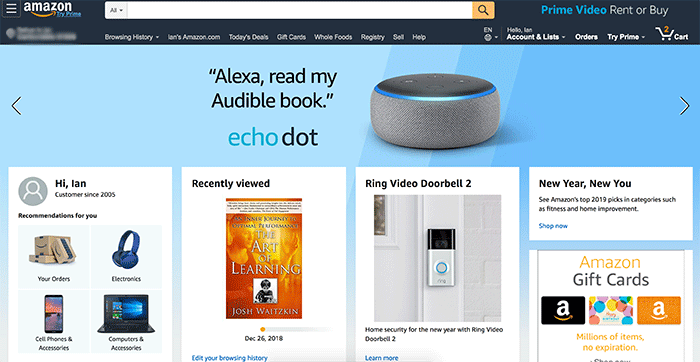
Amazon always tops the list when personalization in the e-commerce landscape is discussed. This is because Amazon accesses the customer data points such as name, search query, search time, purchase history, brand affinity, browsing habits, past purchases, the average spent amount to know customer preferences and market better.
Amazon performs behavioral targeting, predictive modeling, and contextual marketing by anticipating customers' needs using customer data. As a result, Amazon’s on-site recommendations make 60% higher conversions than other brands.
2. IKEA

IKEA has been actively employing AI, making customers interact and use the app to get an idea of the actual store without even visiting, making the buying process easy and engaging. IKEA searches spiked tremendously with the app and established it as one of the most innovative companies.
3. Macy’s

Macy’s has introduced a mobile application for augmenting sales and has reported more than expected earnings. Its mobile checkout app quickens the in-store checkout. In addition, the technology bolsters the self-service feature, making customers browse items with their phone camera and app scanner.
4. Starbucks

Starbucks has launched an app-based customer rewards program to customize their beverages and order products. In addition, it introduced gamification to engage with in-app customers and personalized them for users’ screens. This rewards program earned Starbucks a revenue of $2.56 billion, generating $6 million in sales per month. In addition, Starbucks drives real-time personalization with app-centric data. Their AI engine serves individualized customer offers based on their activity, past purchases, location, and preferences.
5. Walmart
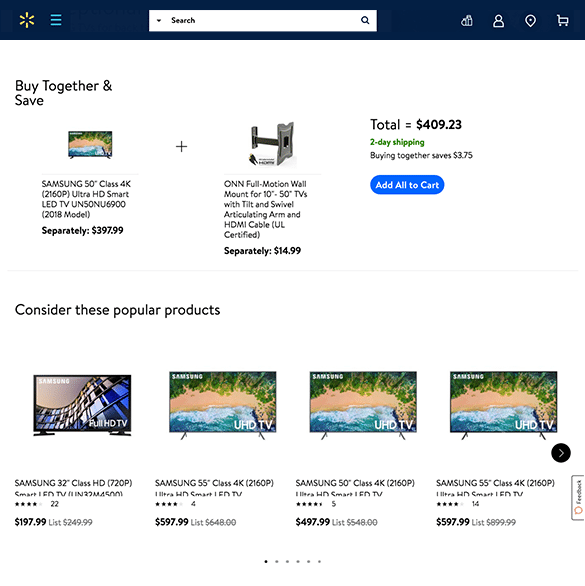
Walmart achieved a 40 percent increase in sales and a 10 percent stock boost in 2017 by a website representing trending items. In addition, its recently launched Store Assistant mobile app has helped it transform the overall customer shopping experience.
Types of DXPs and their e-commerce applications
Here are the three DXPs and their E-commerce brands applications:
1. CMS DXPs
CMS DXPs work on analytics and persona-based segmentation for generating demand, acquiring customers, accelerating sales, personalizing promotions, and content delivery.
2. Commercial DXPs
Commercial DXPs display promotional content on their websites and offer add-on features of pre-purchasing, product returns, payment, inventory, and shopping cart management.
3. Portal DXPs
Portal DXPs increase customer loyalty and retention with CMS mobile support, workflow automation, and front-end representation to the e-commerce brands.
Conclusion
The 21-st century digital era is modernizing with advanced digital technology in all sectors. It has brought a new marketing strategy for businesses, like enhancing digital customer experiences through DXPs. DXP enables businesses to reach millions of customers in a few seconds, make modifications on a website and enlist new products through digital product launches. It helps improve the customer experience by personalizing products they view based on their search, purchase, return, and even price preferences in historical data. Reach out to QED42 for a digital experience you would have never imagined before for your business and brand, and transform your business into intelligent entities through their innovative marketing strategies and expertise.

Elevating student experience with cloud technology
The year was 2013, and TED announced their annual $1 Million winner- the professor with his head in the cloud. Dr. Sugata Mishra envisioned creating a cloud school for the next generation of learning. Today, we can all vouch for how this theory has aged rather impressively. Much to his vision, education has come a long way, and cloud technology has taken it by storm. Contradictory to the usual philosophy, the cloud is helping both teachers and students nurture connections across geographies.
Teachers are increasingly stepping in the role of facilitators, with students taking charge. Not just limited to classroom operations, cloud aids educational institutions to face and cope with a range of issues, which are only intensifying with time. These include tighter budgets with limited funding and the discord between student needs and curriculum.
With the arrival of Covid, the cloud is no longer the future, but the savior of the present. In 2020, most industries put their pedal to the floor on the digital transformation front, and so did educational institutes of all scales. Although mostly insufficient at the moment, emerging economies are taking note of the inevitability of cloud technology in their smooth functioning.
Modern students also no longer want passive online learning, but a dynamic and immersive space to engage and collaborate. They want lessons relevant in the practical world with flexible access to resources.
The meaning of classroom teaching has transformed into an adaptive learning space. With this fast-paced evolution, it is not surprising that many universities and schools are gearing to adopt cloud technology as part of a more sustainable solution.
Cloud Technology – reinventing the education ecosystem
Technology can bolster education in more ways than one, and the ongoing EdTech revolution is a perfect example.

The overall market is exploding with a projected reach of $8,779.1 million by 2027. As the future of education has already arrived and is here to stay, the educational and student experiences are undergoing a bigger and better transformation. This holds for all stakeholders and institutions alike.
Let us explore a few ways in which cloud technology is reshaping higher education for better student experiences.
Augments student collaboration and productivity
A virtual learning environment has the power to connect learners and teachers across devices and geographies. The last two years have effectively demonstrated how online classrooms help students adjust themselves to technology as they attend, take exams, and turn in assignments on the cloud.
Google Classroom is the unprecedented leader in this arena as the pandemic reduced all learning from homes and continues to use it even in physical lessons. These sessions are also known to increase lesson retention. Two decades ago, nobody knew if taking a course in Sri Lanka with a professor sitting in Norway, for a University in the UK was even doable.
Source - Google Classroom
Augmented reality has fueled a hands-on learning experience, with location-based markers for a lesson experience that comes alive, literally. This approach can be used across industries to impart practical skills, such as in manufacturing and hospitality. Platforms like Zappar offer the space and tools for creators to put together more interactive and engaging content for learners.
Source - Zappar
Enables greater accessibility to both learners and teachers
An internet connection is all you need to go to school. The cloud has made our world smaller, and the atmosphere of learning is now on our screens. There is nothing that can match the accessibility of the cloud, and this is a powerful means to conduct most activities and tasks in real-time without affecting delivery. Students can sync all devices for universal access, and this is an unparalleled advantage against existing conventional educational set-ups.
The collaboration factor snowballs into institutes going the extra mile to get in skilled global trainers for specialized learning, without the latter moving from their living room.
The constraints of time and place are diluted when everything is integrated on the cloud platform. Taking an exam without the hassle of commuting or automated grading of test papers helps students and facilitators focus on the most critical activity- learning and development.
The accessibility is not limited to isolated schools and colleges, with MOOCs emerging as a quality learning platform with a strong presence of globally acclaimed institutions on board. From EdX to Coursera, the scale of offering and pricing has changed how most people view college education.
Improves content delivery and flexibility
A virtual medium of learning enhances the scope of presentation and helps teachers leverage online tools to create a lucid lesson. Content is the soul of any lesson. A robust and creatively designed content engages students cognitively and increases overall engagement.
There is a fiber of flexibility when it comes to online content delivery. Lessons are pre-uploaded along with relevant AVs for all learners. This ensures those fast learners no longer bore themselves with the same concept but move at their own pace in the subject.
Taking courses outside of the curriculum is easier to accommodate, and students upskill in areas they consider rewarding. Teachers are also left to focus on enhancing individual classes with cloud tools at their disposal for out-of-the-box lesson delivery.
Promotes agility in school operations
Speaking of the business front of education, the goal is to get maximum results at minimum costs. Clouds give institutions the flexibility to adjust resources in tandem with the ongoing demand with add-on resources in a few clicks. This cushion of pay-as-you-need leaves room to accommodate other pressing expenses that are otherwise difficult on a restrained budget.
Cloud automates most redundant tasks, leaving time for other expansion ideas and advancements. As data is readily available from analytics, an institute can analyze its metrics for optimum utilization of resources and tap into AI for personalized learning experiences.
The pros are not restricted to just that. The ecosystem has brought academic operations and administration to collaborate and embrace futuristic technology seamlessly.
For instance, Mississippi’s Baylor University implemented the Oracle cloud ERP, CMS, and HCM to bring down costs and establish efficiency in their processes. The University previously had several backend processes with disconnected systems, forcing employees to punch in the same data multiple times, leading to redundancy and errors.
Source - Oracle.com
With Oracle’s intuitive AI, interconnected dashboards helped sync decisions concerning multiple departments. One of its highlights is also the reduction in the hiring steps from a 26 to a meager 6 or 7.
Affordable education with streamlined costs
The overall operational cost relaxation makes programs slightly affordable for learners. Additionally, students need not invest significantly in textbooks and materials as most are accessible on the library system. Reduced costs and universal accessibility play a key role in extending the reach of higher education to areas that would otherwise be deprived of it. The increasing number of students who are unhappy with traditional education patterns can explore the content of online education without worrying about its credibility. As full-time classes require longitudinal commitment, working professionals can accommodate learning via the cloud at convenient hours.
Enhanced content delivery pathways
Institutions are increasingly turning to cloud spaces for collaborative research and high-end industrial training amongst students. Course management software such as Moodle enables collaboration for effective learning.
The chore of maintaining physical tests and records is off the table, and last-minute paper turn-ins are no longer a pest, as the CMS automatically accepts assignments until the set deadline. From sharing notes and accessing textbooks and handouts to private communication forums, these platforms have taken off a significant load from teachers to create insightful and engaging course content.
Classter is an end-to-end cloud management solution that has been helping K-12 educators in Australia and around the globe in freeing up time for teaching and learning, by enabling their school to remotely manage important tasks like online admissions, day-to-day management, billing, etc.

An all-in-one student management system and learning management system that is fully customizable to the needs of each educational institute.
Personalizing education and improving learning outcomes
Institutes can leverage machine learning and AI to curate personalized classes for students' interests. Students’ success rate is bound to increase automatically as learners’ individual needs are catered to.
As against old-school methods that cannot possibly match the learning pace of every student, cloud technology lets the process of learning continue until the course-taker is confident of the concepts. This makes room for those seeking less rigidity to thrive in virtual learning spaces.
Self-enabled learning is on a rise, with policymakers accommodating its components in core degree programs. Cloud aligns and irons out drastic differences by making education available to all, anywhere. As the ground sets running, the cost of such technology is on a downward trend, and even free on numerous platforms for broader access.
Bottom line
Cloud technology is a revolution altering the course of ways students learn, and educational institutes offer programs. With seamless collaboration made more accessible, students can expect increased practical learning with meaningful group work and communication channels to complete tasks.
While there are other advantages like increased inclusivity, decreased costs, and overall affordable programs, a few pain points can hamper switching to the cloud holistically. Risks of downtime during important sessions like exams or up-front cost of infrastructure may discourage smaller institutes from taking the long-term plunge into the cloud.
However, the world is increasingly moving to a remote and hybrid model of communication at all fronts. Top universities across the world are adopting cloud tech for keeping up with the ever-changing demands of the student market. From Purdue University’s Libris for organizing, collaborating visual resources to Cornell’s Red Cloud service for increased collaboration, the aim is to create a cohesive learning atmosphere- be it on a screen or the actual classroom on campus.

E-commerce Website Design – 9 Emerging trends for 2022 and beyond
E-commerce has transformed the way shopping or business is done with continuous innovations in the industry. Smartphone infiltration is one of the key factors behind the growth of this industry. As of January 2021, the number of internet connections worldwide is around 4.66 billion, out of which 92.6 percent use the internet through their mobile devices.
The e-commerce industry and its business models continuously evolve to fulfill consumers’ expectations. For example enhancing some of the website's features, such as clicking the photo of the product you like, uploading or searching for it on the website, and placing the order in seconds, which is one of the easiest ways to shop right now. Also, with the assistance of Artificial Intelligence and Machine Learning features, you can show the exact product which meets the expectations of the visitor or customer.
What does the post-pandemic consumer want?
The pandemic has wholly altered the behavioral pattern of consumers. The post-pandemic consumer is more about greater self-awareness and passive shopping. Thus, shopping is now an always-on experience, and meeting the latest demands of buyers in a post-pandemic world requires a website that operates flawlessly. E-commerce is playing a vital role in this entire transformation. Let's discuss some features or services post-pandemic consumers expect from the websites:
- Your website should be mobile-friendly; according to research by Similar Web, 51.61% of traffic on websites comes from mobile phones, so your website should be easy to navigate, scroll, and customers should find what they are looking for easily.
- Your webpage should have a fresh design with up-to-date features and an easy-to-use user interface (UI).
- Speed is one of the main things that everyone should be focused on; every visitor or customer needs the information quickly. Therefore, your website should ideally load in 2.5 seconds or less and render all information quickly, even at low internet speed.
- Every customer should also feel secure on your website as a lot of information is shared online, making data security a priority.
Nailing the basics of e-commerce design
Consistent branding
You should always provide consistent brand satisfaction to your customers, so they can trust your brand and feel secure while shopping with you. The name, colors, logo, or tagline should also create a particular image about your company/shop and invoke brand recall in the customer's mind. If your brand is known to the public, they will expect your website to replicate your brand image. Make your website the same as your brand. Always dry run the website with your team before launching to avoid providing the wrong experience to the public at large. Go for personalization and omnichannel experience. Finally, ensure that your website resonates with your target audience. You are recommended to keep all of these pointers in mind while creating a new website for your business.
Responsive design
Responsive design plays a vital role in designing your e-commerce website. It helps generate more traffic and leads to a higher conversion rate. It also tends to implement a better search engine optimization strategy.
Intuitive navigation
Intelligent navigation means when people have a seamless experience while surfing through your website, bypassing the information they do not want to consume. Your e-commerce website should have all the features or services the customer expects like Saved Favorites, login ID, cart, payment options available on your website. The customer should not have a hard time finding information. Also, provide complete company details and contact information.
Clear CTAs
CTA means Call To Action. You should always create multiple call-to-actions on your e-commerce website to encourage customers to place an order or explore new products or services you provide. A CTA should be prevalent to engage more people and drive up sales. You should update CTA details regularly to have a consistent and on-time lead.
High-quality media
The experience your website provides to the consumers speaks volumes. The website should always have high-quality images or videos because it shows the grade of the services or products you offer on your website. It encourages them to order something or explore more products or services available on your website. Cost-saving in the media will show poorly on how you look forward to your products and services.
Simple, secure checkout
When customers decide to buy something on your website and add products to the cart, they should have a safe and less complicated way to finalize the order. It should be easy to create a new account or log in, and there should be easy, secure, and fast payment options to complete the order. Cash on delivery should be available if possible. Your checkout process should be designed to ensure minimum clicks to complete the order to activate immediate order placement. It is recommended to provide SSL certificates on the website. Secure Socket Layer (SSL) provides an encrypted connection between an internet server and a browser using these security procedures and certifies the website’s authenticity.
Accessibility
All the features or services should be accessible easily, like looking for something unique. Or it should be easy for them to contact the team if they have any confusion or queries related to the products or services you provided. Keep your website extremely friendly for people who have disabilities and aim for inclusivity. For example, have larger fonts, all labels must be very clear and add keyboard navigation. Go check your accessibility score now!
SEO basics
Your website should be SEO-friendly and have content embedded with keywords, meta titles, and descriptions. For instance, even if you create a website with all the latest features or services and have all the products per the market demand, one can not find it without the right SEO strategy. So, your website should always be SEO-friendly, mobile-friendly, and keyword-activated so that customers can find your business or website effortlessly.
9 Emerging trends for e-commerce web designs for 2022 and beyond
These are some of the emerging trends for e-commerce web designs:
Mobile-first designs
Your website should be thumb-friendly. Customers browsing on mobiles should easily find anything they are looking for to place an order. It is an approach where web designers first start with the product design for mobile devices. They perform this by first sketching or prototyping the web app's plans for the smallest screen. If the design and prototype work, they shift to larger screen sizes. This approach is considered helpful as most users use mobile to access e-commerce websites and apps.
Minimalism
The website should have all the needed features, but it should look minimalistic or professional from the front-end. This process helps users find the products more efficiently and lets your site load quickly. If you hold a small-scale business, then this can be a good trend to follow. It would help if you managed everything wisely from the back-end to provide all the features or services without creating any confusion or problem for the customers. The consumers are very impatient about the website loading time and don't think twice before leaving the website. Reducing the clutter can keep your consumers on your websites for longer.
Content-centric design
Customer-centric strategy starts and finishes with one goal in mind: excellent customer experiences. The customer should feel valuable on your website. The site should have helpful details about the product, such as product description, usage, manufacturing, and expiry details. It should also have consumer feedback and direction to use. Content is the backbone of the website. Without content, the website is of no use.
Augmented reality
In e-commerce web design, the usage of augmented reality aims to provide customers with an immersive environment, allowing the user to interact with items in real-time while staying in their current location. With the advancement in technology, websites can now creatively interact with consumers. For example, consumers can ask about the products and services directly. Also, they can pick the calling information from the website itself and have 100% consultancy before landing for the product or service. Furthermore, AR offers two-dimensional methods of giving out information instead of the one-dimensional traditional approach. Therefore, it makes the engagement rate go up and reduces the returns.
Chatbots
Chatbots for e-commerce serve as a powerful lead generation tool for online retailers. With this tool, anyone on your website can find the answers to their questions in seconds. It is undoubtedly one of the most utilized means on a website. You can flexibly frame the designs and questions. Chatbots are like the reception of a company that is available 24 hours. Users are now more comfortable with chatbots as they resolve all their queries from their answers.
Voice assistant integrations
Voice assistant integrations help customers find anything by voice commands on their phones or assistants to find something on your website. Voice assistants enhance the order search speed and prove very helpful to the users who didn't know how to type the product. An individual types at the rate of 30 to 35 words per minute, but with the help of voice search, they can close up to 100 words per minute. It enhances communication speed and provides quick results. It has been found in MSI’s Working Paper that consumers who use voice AI browse 13.6% more and spend about 19.5% more, which adds to $493 million in sales revenue over a year. To understand voice assistants better click here.
ML and AI for a personalized experience
With the help of the Artificial Intelligence and Machine Learning feature, you can show the exact product which meets the expectations of the visitor or customer by tracking their history or search results.
Lead nurturing and capturing forms
Lead capture is a form on a landing page that asks the visitor to submit an email address and sometimes additional information. This helps collect data from the visitors or customers and contact them again in the future.
Faster loading designs
If your site loads in 2.9 seconds, it is shorter than approximately 50% of the web. Check if your webpage loads in 1.7 seconds. It means it is faster than about 75% of the net. If your website loads in 0.8 seconds, it is shorter than approximately 94% of the web. Milliseconds matter a lot in website loading. If your webpage takes additional time to load, the customer might reverse on another website. You can't afford that to happen, of course!
Conclusion
Without a doubt, the e-commerce industry is one of the fastest-growing industries in the world. In the future, smartphones or the internet will be made available to more people, even in remote areas of the nation. So, it is amply clear how much the industry is poised to grow.
If this is an industry you want to operate in, it is advisable to enter the drive as soon as you can. Then, all you need to make a mark is to curate a website with in-demand features such as Add to Cart, Track Order, Easy Payment options, Chatbots, Contact options, and other features discussed in this article. Check out how we designed and built a flexible e-commerce marketplace for boutiques to sell their products for Shop the Area.

21 Must have strategies for your Higher Ed Digital Experience
If you ask a student if they consider themselves a customer of their university, the answer will almost certainly be yes. Students expect a heightened level of service in exchange for their participation. They're used to brands wanting to form and maintain relationships with them, even when there's no monetary incentive. Students understand that they cannot be passive and must take responsibility for their academic performance, but they also expect to be partners in the process rather than subordinates. This calls for a student-first experience.
Community colleges continued to suffer the most, with enrollment dropping by 9.5 percent or 476,000 fewer students
– Forbes
Here are a few more insights from Forbes:
- Public four-year universities were down by 6 percent
- Private, non-profit institutions saw an 8 percent decrease
- Private, for-profit schools saw a 1.5 percent drop in enrollment
Higher education is undergoing a series of challenges and opportunities that will forever alter the institution’s course. The industry's digital transformation is aided by information technology, which is both driving and enabling. Education refers to digital transformation in higher education as "DX" and defines it as a "cultural, workforce, and technological shift." Trends and changes in technology are driving the Higher Ed industry, allowing for a new approach to everything from digital architectures to how campus leaders interact with higher educational digital ecosystems. These new approaches will create new opportunities and outcomes, such as increased student success, innovative teaching and learning methods, and new research capabilities. The transformation of our core missions will enable, if not necessitate, institutions to create entirely new business models.
Evolving expectations are a significant driver of higher education's digital transformation. Students, in particular, expect a personalized and seamless customer experience. They want a home base for their education, but they also want their institution to access a larger higher education marketplace. They want to be at a competitive advantage when they graduate, which means having job-ready skills and competencies and new and innovative learning opportunities.
Enhancing the Student Experience
University is about the experience and experiences matter
Casting aside the education aspect, which is essential, the university is about the experience, and experiences matter. For some, it goes beyond the fear of missing out; it's why the majority of students choose to live on campus; and it's why teams, societies, and student government play such an important role in university life. Experience is inextricably linked to students’ decisions and their overall university experience.
Make it a collaborative approach with the students
Digital transformation improves the student experience academically and how it affects their lives throughout their university life cycle. If you ask the people who will use the product or service, the chances of getting it right will increase. As students are experiencing this firsthand, it is critical to have a student voice on issues that will affect their lives and university experience.
Use technology as the enabler
Having a digital-first mindset is a great way to think about how digitalization can enable more incredible things and provide better experiences for digital transformation. Voice assistants, such as Amazon Alexa-enabled devices, are excellent examples of how digitalization can be introduced into student spaces, such as dorm rooms.
Adopt an omnichannel approach
As we fixate more on the student experience, adopting an omnichannel approach allows for a seamless experience between those online and in person. It will enable the online to improve the in-person experience and gather feedback at every step. It is becoming clear that a holistic approach is critical to student success. Institutions now have access to new and emerging technologies to help them.
How to adapt to ‘digital-first, customer-centric thinking
Undoubtedly, improving the student experience necessitates the collaboration of many roles and stakeholders, and digital is increasingly playing a significant role. Institutions that take a more strategic approach and involve their students in decision-making processes have direct access to their opinions. It can only benefit and improve their service.
Importance of Digital Transformation in Enhancing Higher Ed Digital Experience
Digital transformation's ultimate goal is to improve customer service and streamline business operations. Here, in higher education, students are the customers. They have several options to select from, including private vs. public schools, online vs. on-campus study, and full-time vs. part-time enrollment.
The National Centre of Education’s statistics shows that post-secondary schools in the United States increased by almost 10% from 2005 to 2016. College and university administrators are attempting to preserve a competitive advantage with the declining percentage of high school graduates. According to Forbes, high school graduates have declined yearly, with no rise expected until 2024. Even though there is less student demand and more learning options, colleges and universities can differentiate themselves and gain a competitive advantage by rethinking their technology and data processes.
21 Must-have Strategies for Your Higher Ed Digital Experience
1. Low Code
Universities and colleges have limited budgets, but they must make critical investments to compete for a shrinking pool of students. Traditional options can be both resource and time-intensive. Many schools have an aging portfolio of core enterprise applications such as Student Information Systems, Learning Management Systems, Human Resource/Payroll Systems, and a Finance ERP. To remain competitive and introduce new programs, they must change these systems. Initially, this can be difficult due to the high cost and scarcity of software developers proficient in their respective platforms. However, low code significantly lowers delivery costs.
Most schools have gradually built their workflow automation, using various options such as off-the-shelf software and custom-built solutions. Patches were applied to these applications as their requirements changed over time. As a result, the average student or faculty member interacts with multiple applications while navigating academic and campus life.
In many cases, this results in a fragmented, discontinuous experience that necessitates reentering data and logging in and out of multiple systems. It can lead to lost productivity, data integrity issues, and an overall negative end-user experience. A low-code platform can serve as the glue that connects various systems in the background while providing end-users with a simple unified front end.
2. Multisite governance
A college campus is a microcosm of a larger ecosystem, including many miniature worlds within a unified identity. Besides their main website, most HEIs have several microsites and portals for each program and department. If each department uses a different content management system (CMS), the outcome is hundreds of separate websites with no common identity. Higher education executives want technology that allows for innovation without devolving into chaos. It will enable them to maintain brand consistency and guarantee that the information is accurate and connected with the university's overall mission and values. A unified platform with overarching governance and well-defined roles and duties establish a consistent standard across departments, teams, and campuses.
Using an agile and robust CMS like Drupal reduces confusion and annoyance while allowing users to make their required adjustments. Multisite management technologies enable teams to roll out updates to numerous sites and save time.
Perhaps, establishing a sense of connection and harmony between the virtual higher education experience and the on-campus experience can also allow students to feel like they aren't losing out on life-changing memories and possibilities.
3. Enhance content delivery
Students no longer communicate with educational institutions solely through traditional websites or in-person tours. They increasingly use mobile devices, tablets, and other technologies to obtain information and interact with colleges. Many students juggle several commitments, like employment or childcare, and they want access to content on the go.
Students may want to submit an assignment or write a complete essay on their tablet during their daily commute. Universities must ensure that their portals and learning management systems are adaptable enough to support multiple device types and accommodate whatever new technologies arise in the future.
4. Providing better skills through digital capability
Digital transformation necessitates the development of new skills and competencies across the institution. Strategic sourcing, contract management, supplier relationship management, user experience and design thinking, product management, and enterprise architecture are just a few of the new technology-related talents in high demand. More developed data skills and the capacity to communicate and partner up will require the whole workforce.
Human resources professionals and workforce managers will need to improve their talent management and workforce planning skills. All employees will need to learn how to manage, communicate, collaborate, and work efficiently in a hybrid work environment if the institution operates with a hybrid model office and work-from-home model company.
Institutions may be able to violate the ‘iron triangle’ rule, which states that only two of the three desirable outcomes – cost, speed, and quality – can be maximized simultaneously. Systems and data integrations are frequently used in Dx activities, resulting in cheaper pricing and improved services and experiences.
They can offer a comprehensive picture of students, alumni, personnel, resources, and more to produce positive outcomes. New architectures make data and resources more accessible, allowing for improved insights into institutional products and services and faster and more accurate decisions. These improvements will pave the way for more affordable education, offering students the skills and credentials needed to obtain their chosen employment conveniently.
5. Student-first digital transformation
HEIs construct digital environments to fulfill students' needs and assist them in their studies and beyond as their expectations and demands vary. Digital revolution benefits students academically and how technology affects their lives throughout their university careers. Leaving aside the essential educational component, the university is about the experience – and experiences matter.
It's why most students choose to live on campus; it's why sports, societies, and student government play an important role in university life for many. Students' decisions and general university life are heavily influenced by their prior experiences.
Adopting a digital-first attitude is a beautiful way to consider how technology may enable more incredible things and better experiences for digital transformation. Students must be supported in achieving their goals and ambitions, as mental health can impact their relationships, well-being, and learning and working at university.
6. Leverage alumni community groups
Building significant ties with alumni requires the same attentiveness from HEIs. What makes your alumni tick, and what types of information do they want to consume? Knowing the answers to such questions can help personalize your alumni engagement approach for each category and persona. You'll be able to segment your students once you've gathered crucial information about them to speak their language more effectively.
Any brand would find managing a social media strategy difficult. Since monitoring your campaigns’ performance is the only way to identify whether they are successful or not, you'll need a tool that allows you to learn from them consistently. You may start adjusting your alumni engagement plan once you understand where your audience spends their time and what content they appreciate the most.
One example of best practices for alumni involvement could be creating and moderating clubs or communities for graduates, depending on colleges within your university or your overall alumni association. Through these clubs, graduates can connect with people within their discipline or outside who may still have links to enterprises of similar interest.
Searching for a new job is one of the few things that draws alumni back to their alma mater. While your university's internal database may provide job listings, 79% of today's job seekers use social media to find work. You can work with your career services department to give training sessions and build career groups on LinkedIn.
7. Ensure websites are optimized for mobile
Your school's website gives students their first impression. Key conversion points such as ‘apply now’ and ‘contact us’ become considerably more apparent when your website is mobile-optimized and gives a fantastic user experience. According to Pew Research Center, 30% of smartphone owners have used their devices to look up educational content or take online classes.
Students will leave you if you don't have a quick, mobile-friendly website. People expect results quickly – every second matters in the digital age. By chance your site takes longer than four seconds to load, you may lose as much as 40% of your visitors.
Widespread mobile phone usage has also gotten people accustomed to instant gratification. Users will hit the ‘back’ button if your page does not load immediately, navigating them to your competitors' websites in the search results. A customer is always only a few clicks away from abandoning your website. As a result, you must use mobile optimization to nurture conversions and increase brand engagement.
Google’s ever-improving organic search platform favors mobile-friendly websites. It will enable mobile-first indexing for all sites in search by default starting in March 2021. It's worth noting that Google currently uses mobile-first indexing as a ranking component, but this update will have a more significant influence. Thus, if your website is mobile-friendly, has SEO-optimized content, engages consumers, and loads quickly. It will be prioritized in search results. Schools can use increased traffic from mobile optimization to reach their per-cycle enrollment targets.
8. Generate high-quality leads with PPC next-gen advertising
Pay-per-click (PPC) services charge advertisers a fee each time a link in one of their advertisements is clicked on online platforms, including search engines. It is a fantastic option for HEIs to buy website hits rather than solely on organic traffic, typically slower. Higher ed institutions may create a large number of high-quality leads in a short time since PPC advertising narrows the target population down by age, interests, demographics, etc.
9. Search Engine Optimization
Google's no-click search increased in 2021, resulting in a drop in organic traffic. Almost two-thirds of Google searches ended with the user not clicking through results (up by 50% in 2019). Come 2022, it is time for higher education marketing teams to collaborate with SEO specialists and develop strategies that focus on creating content that answers high-volume search queries and includes main keywords. Using keyword research and SEO insights to develop new content or enhance current content can help you get featured snippets, rank higher in SERPs, and drive more traffic back to your site.
Increasing student enrollment is usually the primary goal of higher education institutions. However, consider the big picture when building an SEO strategy for colleges because every institution has plans somewhere in the middle of ranking priorities. Most people only think about how to get more students into their schools. However, other crucial considerations must be made before optimizing existing content – whether keywords or phrases will best suit what people want from this site, if you require web pages mainly dedicated to those search terms, etc.
10. Increase usage of live video
The sky's the limit when it comes to generating meaningful information with sessions hosted by faculty members, current students, alumni, or the dean. It also communicates a different message about your institution: that you're an HEI that's up to date on technology and willing to engage with students in meaningful, convenient, and relevant ways. This belief is especially true for today's digitally connected generations.
Break up your full-length lecture into smaller videos instead of recording it as a whole. According to TechSmith's survey on video watching in 2016, most individuals like 6–15-minute-long videos. You can create videos based on specific subjects, sections, or other logical subsets of your lecture content. You can even record courses on topics that students seem to struggle with regularly.
When educators must teach online exclusively, they have to go out of their way to connect with pupils. They can use brief videos to launch e-courses and introduce themselves to students personally. Each unit, or the week's topic, might be presented here to give students an idea of what to expect and establish the groundwork.
11. Take PR strategies online
Traditional public relations isn't gone; it's just had a makeover. Some PR principles will never change. Building ties with professors, reporters, and editors is one of them. Professors can provide you with cutting-edge research as well as entertaining quotes or tales. Media personnel are your best bet for getting that research and those stories out to your target audience as news or editorial material – especially when they're about current and sensational themes.
Another traditional online PR strategy is strategically positioning advertising or content on sites most likely to be viewed by the students or organizations you want to reach. Start with a brand awareness ad introducing your higher ed institution to obtain the best results. Follow up with a retargeting campaign showing new ads to those who clicked on your previous ad.
12. Harness the power of influencer marketing
So you thought influencer marketing was solely for makeup and boots? Think again – higher education is a prime candidate for influencer marketing. You'll want to start by looking at your social media platforms and any places where your institution's hashtags appear. Examine people talking about your institution, their reach, and the number of times they have been mentioned. Do you have any questions on how to proceed? Take the assistance of experts – it's worth hiring a digital marketing agency to assist you. Influencer marketing may be incredibly beneficial for HEIs when utilized as a part of a well-thought-out digital marketing strategy.
Create a strong network of people willing to share their post-graduate experiences and opportunities with potential students. You may screen these alumni to ensure that they'll be good spokespersons. Then, allow them to moderate the discussion online so that it's a true reflection of your program.
Today's millennials trust an influencer on social media over other sources of information by a whopping 52%. Gen Z wants to see the truth from someone they can identify with, not just hear about it from professors or admissions counselors. Because influencer marketing isn't going away anytime soon, now is the time to use it strategically to increase enrollment.
13. Responsive ad placements
Responsive advertisements are ad units that scale your campaign's assets to match the different limits of different devices and platforms. You can upload numerous ad formats, headlines, copies, and images when designing responsive advertisements, and Google Display Network will automatically offer a version to match the demands of the user's platform or device. When employing numerous headlines, descriptions, and images with responsive display ads, advertisers receive 10% higher conversions at the same CPA, according to Google's research.
Moving from static to responsive ad units resulted in increased impression volume and higher clickthrough rates in our experience executing college enrollment marketing campaigns. Recognizing the performance potential of responsive ad units while planning your display advertising strategy for 2022 could help you generate more relevant leads and boost conversion rates.
14. Conversion-driven content
What is a niche or area of expertise where you have enough knowledge and resources to influence thought or action meaningfully? Utilize your in-house knowledge to find and direct your material. Allow specialists to write if they can or if their byline draws attention, but keep the right to edit carefully for style and consistency. Above all, ensure your content provides value to the user.
Then decide which method is most effective. Is it a blog, or is it something else entirely? Is this going to be a video show? What is the best use of your resources? What is a reasonable frequency? What kind of content will you plan? How will you assist content creators in ensuring quality, consistency, and timeliness?
15. Course offerings
Online education has become quite the buzzword since 2020. It gives students the freedom to study when and how they want. The majority of students have adopted this way of learning. In the meantime, international institutions are already attempting to mitigate the impact of education disruption on people from low-income families who are not tech-savvy.
Massive Open Online Courses (MOOCs) are low-cost, short-duration courses designed for the general public that can be accessed from anywhere at any time. Over 180 million people learned online in 2020, with 2800 courses, 19 online degrees, and 360 micro-credentials.
These classes are a fantastic opportunity for students to improve their talents. Learning isn't confined to those who can afford higher education, thanks to the convenience of MOOCs. Apart from the short-duration sessions, which allow students to learn more in less time, this is one of the critical benefits of these courses.
16. Brand awareness
In the context of higher education marketing, it's difficult to overestimate the significance of brand awareness and equity. The overriding feature differentiating an academic institution from competitors is its brand, including everything from the university motto and crest to design elements, educational programs, and campus identity. In this sense, branding is crucial for higher education marketing initiatives to succeed.
Consistency is also necessary for maximizing the influence of branding in higher education. At this level, academic institutions must maintain brand consistency across all media and campaigns. Higher education institutions' digital transformation should communicate the same brand across all digital, traditional, social media platforms and other marketing efforts.
17. Multichannel social media presence
According to Hootsuite's annual digital state of the union report, social media has 3.8 billion active users – 49% of the global population. This figure is projected to rise further. Make sure you don't get left behind.
Imagine a potential communications student, and consider how crucial it is to develop a solid internet profile to draw them in. Why should people consider attending your institution to learn about media best practices if the school itself is behind the times? Meeting your target audience where they are is also a cost-effective and straightforward approach. Creating authentic content (and sharing plenty of user-generated content) is easier than ever, thanks to the popularity of Stories on several platforms and Instagram's recent Reels launch.
Fit is a crucial concern for students who want to live on campus; on-campus trips often feel scripted. Prospective students want to picture themselves in a dorm room with their buddies, watching a game at the stadium, or getting a cup of coffee in the campus library. Consider more innovative approaches, such as a student social media takeover (which should be approved before being published) to highlight some of these more personal aspects of campus life.
18. Engage 24/7 with chatbots
As technology advances, accessibility implies being reachable whenever and however your audience requires you. Do any of your programs cater to professionals looking to advance their careers? Live chat might be impossible at 11 p.m. on a Saturday. However, your target audience is most likely surfing at that time. You still have to provide solutions to their inquiries from a conversion standpoint.
Chatbots, or virtual chat assistants, are increasing in popularity. Customer service chatbot usage has climbed by 23% in the last three years. For university websites, they're increasingly becoming a must-have. Quick replies to a student's inquiries from your website could mean the difference between making it into their shortlist or not.
19. Invest in world-class websites
Your institute's website is a chief component of your enrollment marketing plan. It provides you with a devoted platform for nurturing leads and educating prospective students about your brand, programs, and educational offerings. However, creating a world-class website requires thorough knowledge of your target demographic and implementing an SEO-friendly content marketing plan.
Having the correct combination of these top-performing content kinds can significantly enhance your website traffic and engagement metrics, especially given the rate at which students consume program-related research content. As a result, your school's brand will get more recognition, authority, and additional enrollment chances.
Finally, a great user experience makes it easier for future students to find information. That should, of course, be your priority. With the popularity of voice-search functionality in devices like Alexa and Siri on the rise, don't overlook voice search optimization as a way to boost usability and accessibility.
20. Create engaging video content
36% of universities report a dip in campus visit requests. With the number of campus visits and tours projected to fall, video is better to raise brand recognition and engage prospects. The following are examples of possible topics:
- Responding to the most commonly asked questions at school
- Offering student tour guides for mini-tours of the facilities
- Tours of the university via video
Nearly every social media platform features short-form videos, which are more engaging. Over half of the viewers watching short-form videos (under 90 seconds) finish them.
Consider using short-form channels like TikTok and Instagram to reach prospective students' feeds for awareness and remarketing campaigns in 2022. You can connect these brief videos to longer videos with more information. According to a Hubspot survey, YouTube videos influenced the enrollment choice of 27% of potential teen students. YouTube can increase brand exposure, improve SEO performance, and support other digital marketing activities.
Long-form video can also be an effective promotion technique on a program level. Having student program ambassadors talk about their experiences or film quick ‘day in the life’ videos can provide prospects with valuable information and improve your brand's overall storytelling. New tools also make it simple to assess your video's effectiveness with audiences before releasing it.
21. Create education apps
Many institutions are developing applications to allow mobile users to access their websites and constructing mobile-friendly websites. Moreover, the apps have functions that aren't available online for laptops or desktops. University apps, for example, frequently incorporate high-resolution visuals. Universities' designs for assisting mobile users in accessing the university website are frequently available for download on the website itself. They are, however, often available for download on third-party websites, too, like App Store and Google Play.
Conclusion
HEIs and educators, besides students, can improve their skills by digitizing the learning experience to establish an active educational process. With online learning, intelligent schooling, student assessments, tailored learning experiences, and online examinations, the digital revolution in education can be implemented in various ways.
QED42 is among the top providers for Design and Drupal globally. Currently, Drupal powers more than 70% of the world’s top higher education institute’s websites including Oxford University, Harvard University, MIT, UCLA, etc. Over the past 11 years, QED42 has worked extensively in the higher education space, focusing on content delivery, portal development, and helping Higher Ed institutes innovate and adapt. Learn more about how we create Digital Experiences for Higher Education Institutes.

17 Ways to achieve mobile excellence in 2022
Before the Covid-19 outbreak, mobile applications had already made significant market breakthroughs, with consumers spending 87% on mobile phones. Mobile app use will dramatically increase in the coming years, as it did during the pandemic. By the end of 2021, the Google Play Store will have 196 billion apps downloaded, while the Apple Store will have 42 billion.
Competing mobile apps will produce $693 billion in sales globally over the same period. Companies are looking for ways to increase remote work cooperation, expedite contact tracing work, and improve consumer e-commerce connections due to the recent coronavirus outbreak, which has accelerated app development.
As a result, businesses seek to achieve mobile excellence to develop approaches that address immediate challenges while also laying the groundwork for long-term success.
But, with the Covid-19 situation still raging and no clear resolution in sight, how can businesses ensure that the apps they build remain reliable and relevant even as the 'new normal' emerges? Here are 17 ways to achieve mobile excellence in 2022:
Design for the device
According to Google, 53% of customers will abandon a mobile site that takes longer than 3 seconds to load. You can throw in a few tricks to prevent the majority of those visitors from leaving your site due to the speed. For the design of your device to be fast and agile, you need a language that supports that kind of speed and performance. Here’s where JavaScript comes into the picture. JavaScript programming is known for its speed and agility. For enhancing the loading speed of your device, using a JS Framework will work wonders.
Above-the-fold components are served while elements farther down the page are loaded in the background. It is known as lazy loading, and it's a systematic method for hiding the actual loading time. However, when it comes to using slow loading to hide latency, be cautious. Google warns that if you use lazy loading on your mobile site incorrectly, it may prohibit Google from scanning your content.
Techniques such as srcset allow it to display larger images on desktops while serving smaller images on mobile devices. Because you're offering a smaller total page, you can utilize this to your advantage and reduce the loading time on mobile devices.
However, test this well before using it, as it's easy to make a mistake. Instead of providing a mix of data and markup HTML to a client, the design can be accomplished with JavaScript development by sending JSON (or sometimes XML) data to the client.
Touchless interfaces
77% of customers demand non-touch interactions for customer experiences, according to Capgemini research. Even once the present pandemic has passed, more than 62% expect the same touchless experience.
Touchless interface development is becoming increasingly relevant and vital, as users seek applications that eliminate the need for face-to-face interaction. Touchless experiences employing technologies like Bluetooth Low Energy, NFC, biometrics, and QR codes have been essential in the push to replace public touchscreens with touchless experiences.
The current focus is mostly on emotion identification, from the face to hand motions, but it may also encompass full body gestures in the future. The demand for gesture recognition is currently worth $9.8 billion and is predicted to grow to $32.3 billion by 2025.
ASR will play a key role in providing valuable consumer insights by capturing relevant interactions. Low-latency ASR for remote work is fuelling the market, which will reach $21.5 billion by 2024, especially for non-native users or those with speech or hearing difficulties.
The JavaScript framework, Sencha Touch, is the best suitable option for building powerful touchless interfaces. It facilitates high-level responsiveness, sports a fast-loading time, and is compatible with all the latest versions of mobile software.
Reduce search efforts
Assist your users in rapidly locating what they require to meet their demands and increase conversion rates. You can use barcode scanning and keyword search in your app, for example.
Providing consumers with a search tool and criteria to help them find what they're looking for will boost conversion rates dramatically. Because this strategy aims to assist consumers in finding what they're looking for, the search integration mustn't filter out all results.
Moreover, with voice recognition and controlled personal assistant software like Siri and Google, search efforts have been reduced tremendously. It has enhanced the consumer experience where the effort put in is minimal, but the result of the search is optimal.
JavaScript helps in achieving interactive UIs and is built for 21st-century users. Being highly adaptive, the JS Framework is the best option to reduce search efforts.
Optimized, mobile-friendly website for speed
The browser fetches the complete page content whenever you visit a new web page, whether a blog post or a static site and then offers it a native surfing experience. Most of the time, you are required to download the entire website before viewing anything beyond the fold.
On the other hand, lazy loading instructs the browser to load (render) content that is only visible within the user's viewport. As a result, if a page contains size-sensitive photographs or videos, those files will only appear when your browser screen reaches that section of the site.
JavaScript is a simple and effective way to load your graphics fast. The script is also turned on on the project's homepage, so you can see it in action. It will help you increase the overall performance and speed, resulting in an optimized, mobile-friendly website.
Super apps
Platform-based business models are gaining traction in digital economies. Platforms now account for seven out of 10 of the world's most valuable enterprises. This trend has intensified as firms across industries have begun to transition away from single-purpose applications and multipurpose apps.
It is culminating in the emergence of a new breed of product known as the Super App. Adopting a JavaScript model will help you create and deliver a Super App efficiently.
By establishing a Super App, you attract a large audience to your platform who will use it to do all of their purchasing. This user data can assist you in gaining a better understanding of the user's shopping habits, among other things. This volume of data can assist you in anticipating consumer wants and providing them with the best possible service.
Adopting offline-first experience
Most businesses don't think about creating an offline experience for app development because smartphones allow users to access the internet from any location, anytime. Until the app communicates with the server, allowing the app to work offline may appear unnecessary.
On the other hand, mobile networks aren't always dependable because coverage fluctuates from one location to the next. As a result, mobile apps users should prepare to deal with network failure and latency. Offline architecture can help in this situation. For example, Spotify offers an offline music experience if users download music on the app. This is possible only because of an offline-first experience approach.
Businesses are increasingly adopting an offline-first strategy, in which an app performs without a network connection, allowing users to sync their data, receive updates, and more. The offline design also has other benefits, such as lowering roaming expenses while traveling, reducing data usage on maps, conserving battery life, and allowing for quick loading.
Intuitive and easy navigation
Navigation is more than just about design aesthetics; it's about structuring your app in a way that encourages convenience and efficiency. Businesses should use standard icons, positioning, and design to ensure that navigation matches user expectations.
The Hick-Hyman Law is another essential consideration in navigation design. This law pushes us to limit the number of choices on the menu. The more the options available, the slower will be users' interactions with them, especially when trying out a new app.
Media content is subject to the same law. Consider offering little pieces for consumers to investigate, if they desire, rather than overloading them with an extensive array of media selections.
The critical, fundamental feature of navigation is clean interaction, which relates to how consumers engage physically with navigation in various circumstances. It is one area where putting yourself in a consumer’s shoes will help you design better.
Make an effort to comprehend your users' actions. JavaScript is the best solution to achieving intuitive and easy navigation in creating apps. Businesses should leverage the JS Framework to achieve competitive mobile excellence and constantly meet user expectations.
On-demand apps
On-demand apps act as a "third party" that allows users to hire a service or a product. Uber, where the service in question is a ride, is one of the most prominent examples. On-demand apps provide services in various industries, including food, logistics, groceries, lodging, and more, when and where consumers need them.
In 2020, there were a plethora of on-demand apps, but in 2022 and beyond, there will likely be even more. People will think of more ways to make their lives easier as new technologies emerge, and on-demand apps will be able to cover those gaps.
As on-demand apps permeate every aspect of life, from the home to your profession, to vacation, and much more, luxuries will be needed. Edge computing and 5G have the potential to enable previously unthinkable on-demand services.
React Native is an excellent solution for building on-demand apps. Businesses get an edge in logic, APIs, and time for designing sophisticated mobile apps because React Native apps share 80% of the code for Android and iOS platforms.
Accelerated mobile pages (AMPs)
AMPs are a Google and Twitter open-source project that attempts to make pages load faster. As the name implies, accelerated mobile pages reduce the time it takes for a web page to load by removing redundant code. As a result, pages load a lot faster and consume far fewer data.
According to Google, AMP pages take less than a second to load and consume ten times fewer data than non-AMP pages. It is a product of Google's mobile-first strategy, which prioritizes mobile-friendly sites in search results. businesses are using JavaScript in their development, which increases the speed and eliminates lazy loading.
Although AMPs will never wholly replace applications, they will render low-quality apps useless. Because of the recent movement in progressive online and streaming apps, some apps will prefer to employ AMP protocols rather than filling up the App Store or Google Play Store. As a consequence, you'll see more relevant, mobile-friendly apps as well as PWAs that load quickly.
IoT and blockchain
If there is a secure method for storing data, a record of transactions or papers, it's blockchain. However, in a global pandemic, one of the most critical functions of blockchain is to track COVID-19 vaccines.
Banking is the industry with the most blockchain spending in 2020, accounting for 29.9% of the worldwide blockchain market value. Along with blockchain, another technology is making its mark in the mobile app development field. The Internet of things (IoT) is spreading at a fast pace. Integrating IoT data with mobile apps provides users with on-the-go access to real-time data about people and equipment, increasing process efficiency.
IoT applications have already begun to impact businesses. Leading brands have invested in the technological revolution to give users a seamless linked environment. According to Statista, from 2015 to 2025, the global installed base of Internet of Things (IoT) connected devices is set to increase.
Businesses have discovered a sorted way to design interactive UI with fewer lines of code, thanks to the arrival of JavaScript frameworks for building mobile apps. This, in collaboration with IoT and blockchain, is all set to disrupt the user experience for mobile users and businesses in the years to come.
Leveraging cross-platform development technologies
In recent years, cross-platform development methods have advanced significantly, and they are now practical for most apps. While there are few cases where an app needs to get very near to specific hardware, device-specific code is unnecessary for most apps.
Instead, frameworks like React Native and Flutter enable you to design solutions that work across a wide range of iOS and Android devices. Programming languages like JavaScript allow programmers to think outside the box and develop fresh ideas. It helps in creating cross-platform development technologies.
The advantages of using JavaScript are apparent. You can support two platforms with one code base using cross-platform development methods, eliminating the requirement for additional technical personnel and increasing the likelihood of acceptance. It means you can accomplish more with less, lowering your total cost of ownership and staying lean so that you can get to market quickly.
Pushing business logic to the backend
The visible part of an iceberg is an engaging mobile app running on the user's device. The backend of this is a mobile app, which handles all user interactions. The mobile backend server provides user administration, push notification, app management, app insights, secure backend integration, and other essential features of any mobile app.
Developing these features for each mobile app while constructing the front-end user experience is the most critical mobile app uptake and maybe a time-demanding component.
These backend capabilities are provided by mobile backend service providers and can be utilized by front-end applications via APIs and SDKs. Businesses prefer to build code to create the most incredible user experience possible, leaving backend skills to cloud providers.
These services are called "Mobile Backend as a Service" (MBaaS) or "Backend as a Service" (BaaS). This backend server also interacts with a microservices-based business logic layer and consumes high-value services like cognitive and analytics REST APIs.
The server is entirely detached from the front-end rendering process with the JS development framework. It helps push business logic to the backend and achieve an enhanced mobile experience.
AI and machine learning (ML)
Machines, unlike humans, can examine vast amounts of data. Machines look at data, learn from previous actions, and forecast each user's best effectual output or solution. Look around; you'll notice that you're already utilizing machine learning.
Machine learning is likely to disrupt mobile app stores with valuable capabilities, thanks to its excellent pattern recognition potential.
AI and machine learning offer enhancements in a mobile experience, like recommendations, personalization, user analysis, fraud detection and security, fast and intelligent search, and healthcare and fitness management. Working with a JavaScript model gives you a change in programming style and freedom required for working with AI- and ML-based models.
Augmented reality (AR)
Augmented reality technology requires no more than a smartphone. It allows users to scan photographs, objects, and their environment with their phones to display hidden digital material.
Since 2020, when covid-19 began influencing different industries, including manufacturing, social distancing technologies have worked. For example, 60% use augmented reality and virtual reality as virtual auxiliary labor in virtual production lines. As a result, many manufacturers claimed to have decreased operational expenses while also increasing productivity.
Businesses can build an immersive, inventive, contextualized, practical, and relevant experience for the user when working with AR. Continue reading to learn more about the advantages and practical applications of augmented reality in user experience.
AR has improved mobile experience by displaying multiple sources of information, facilitating engrossed engagement, easing out communication, immersive entertainment options, and an enhanced shopping experience. As JavaScript is easy to learn and implement, integrating JavaScript framework with AR interface provides a superior digital experience.
Low-code app development
Organizations can employ low-code app development frameworks to speed up app development timeframes, similar to cross-platform app development frameworks. This appeals on several levels, as businesses may not always have the resources or time to develop an app. An organization can use a low-code (or no-code) platform to design and develop an app without coding skills.
A low code app eliminated the challenges of complex app development. The operations are simple, involving drag-and-drop actions and an intuitive user interface. However, it is not likely to replace traditional app coding. Still, they will become a standard option for businesses to create their initial apps without paying or outsourcing an app developer.
According to TechRepublic, low-code will gain traction in 2022. Forrester's software development projections back this notion for 2022, suggesting that as the working environment changes due to the pandemic, more and more development shops will use low-code platforms. Low code platforms allow true, real-time agility, allowing businesses to remain secure and compliant while maintaining consistent and uninterrupted customer experiences.
Predictive analysis modeling
Predictive analytics can act as a magical crystal ball for app businesses, allowing them to determine which users will stick around and eventually leave. And, because no app developer or marketer wants a single user to go, they will aggressively re-engage and keep those users.
Predictive analytics is a comparatively new concept in software development, yet it is now a buzzword. However, it is helping in boosting online sales, driving engagement, and eliminating guesswork. Predictive analysis needs power, and a JavaScript Framework supports that. It is why one should consider coding through JavaScript for excellent results.
Beacon technology
When beacons were first introduced, they connected with retail environments. Other types of businesses, such as events, dating apps, museums, and banks have adopted beacons and extended their capability for real-world context over time.
SXSW was one of the first event-related organizations to introduce beacons. SXSW worked with Eventbase in 2014 to create an official event app that included iBeacon to give attendees a more seamless festival experience. Beacon technology requires multitasking, and JavaScript supports this feature like no other language. This makes JavaScript the first choice in app development.
Conclusion
The competition is fierce. Businesses need a trusted technology partner with a futuristic approach and problem-solving capabilities to meet evolving consumer demands. Using advanced technologies to enhance user experience will take your business a notch higher than that of your competitors. Businesses must set their engineering teams up for success in today's fast-paced technological world by giving them the freedom to focus on building outstanding user experiences rather than reinventing tools and services that already exist.
If you are looking to achieve mobile excellence in 2022, reach out to our experts at business@qed42.com.

Why are Design Systems a Must-Have for Business' Growth?
Innovation is a constant in every business. However, what sets apart a business from its contemporaries is its ability to connect with users through its products. A design system helps teams within a company to collaborate and keep their work uniform and consistent to ensure a seamless user experience. It helps build the digital experiences of your company’s brand. According to Kinesis Inc. 94% of users' first impressions of a company are design-related and 75% of those same users admit to making judgments about a company’s credibility based on website design.
When you opt for a design system, it streamlines the workload of the different teams. This unified system ensures that all your teams are able to work faster and the outcome is more organized and consistent. The results show up in improved user experiences and better insights for your business’ brand. There are several companies such as Airbnb, Hubspot, Dropbox, Shopify, Atlassian, Uber, Mailchimp, Microsoft, IBM, and Google that already use design systems to help with an efficient development process.
What is a Design System?
Before we delve into how a design system can help boost your business' growth through its key benefits, let's understand what it actually is. A design system consists of reusable standards and components that can help to bolster a brand's image by working in a compatible manner. It enables teams to create experiences that your customers want while ensuring consistency with your brand needs. A design system helps a brand build an image that is to stay with it for years to come. Simply put, a design system helps to provide order in chaos.
A design system grows with your business. Along with the changing needs of its users, design systems go through constant refining and development. A study by Figma shows that around 3/4th of enterprise customers use the support of design systems within their organizations. In this blog, we'll discuss ways in which a design system can prove to be beneficial to your business.
How is a Design System Beneficial to your Business?
The main purpose of a design system is to help facilitate teams that are working on a common product. It helps with the efficacy of the product's evolution. A design system will enable teams to create a product that is both faster and better. This will help your business not only gain a competitive edge but also help retain old customers and attract newer ones while reducing support costs.
Let's look at some of the ways in which design systems could help to benefit the growth of companies.
Helps to Build A Secure Brand Image
While a company makes the product, it is the brand that helps to sell it. In order to create a strong presence, a brand needs to be able to communicate with its target user, consistently. A design system works to help streamline the design process efficiently, to ensure that connection with the user is built to last.
Uber’s design platform’s style guide wherein they upload all the assembled design system elements also helps to showcase branding from multiple points of contact with prospective customers through printed materials, posters as well as digital billboards.
Allows for Easy Accessibility
Design systems ensure all customers who have access to your products are able to achieve similar results. It ensures accessibility is built into both the design language and the component library. The design language allows us to ensure the content being provided is acceptable and the design language patterns act as a foundation to the component library ensuring leverage of semantic HTML elements. When HTML becomes insufficient WAI-ARIA (Web Access Initiative-Accessible Rich Internet Applications) are added in to fill the gaps. This ensures that accessibility is no longer a distant reality.
Shopify’s Polaris Design System looks to provide a comfortable user experience to the users of both Shopify and its merchants. It serves as a guide for the designing of one’s online shop based on the Shopify platform. Through the use of a variety of visual elements and UI components, Polaris Design System provides better usability for its e-commerce ventures.
Alleviates Strain on Design Resources by Focusing on Complex Problems
As simple UI elements are already in place, design resources have to work less on tweaking its visual appearances. This might come across as a small payoff when creating a smaller number of screens but when you look at coordinated efforts across thousands of screens and a dozen teams, it seems pretty substantial.
Prompt Responsiveness, Efficiency, and Consistency
A component library is built to be prompt and responsive. It helps account for diverse viewports and screen resolutions. Another key feature of a design system is its consistency. According to the 2019 Design Systems Survey consistency and efficiency were considered to be the most valued attributes in a design system, as they help make the user experience more predictable. Even if the number of teams working on a particular product continues to upscale, the UI remains consistent. Major visual rebranding or redesigning can easily be managed using a design system. The workflow remains consistent and designers are able to incorporate easily accessible high-quality work throughout channels.
Atlassian Design System’s end-to-end design language provides detailed resources on color usage, branding, and marketing. The company has a wide range of digital products that span different industries and its design system ensures that the experience is consistent and simple for marketers, designers, developers, and all others involved.
Helps With Smooth On-Boarding
A design system helps to reduce the overall onboarding time taken for new recruits by providing a single source of truth for them to get acquainted with. This helps to reduce the overwhelming stress of starting a new job by finding all the comprehensive documentation in a single location.
Provides Access to Trickle Down Updates
Every time a design pattern is updated, a designer has to struggle with updating the different components in several places. Having a design system in place helps to remove this struggle because they provide you with a single source of truth for all the components and patterns. Hence, styles are to be updated in a commonplace so that the changes to the products get distributed through quick updates in the library package version.
Ensures An Improved Performance and Code with a Consistent UX
Using a design system will aid developers to have a uniform view of the code. It will prevent them from duplicating and aligning the newer codes with the pre-existing ones. Also, when you have a consistent layout and code, it ensures a consistent experience for users irrespective of whether they use the same device or shift to another product. Having a predictable interface allows users to interact and engage well with your digital products.
Overall Improvement in the Development Speed
When the component library goes through a stable release, the development speed automatically improves. Developers are freed from the burden of worrying about building new components from scratch to ensure their accessibility and responsiveness. Simply importing and leveraging the components does the trick.
Conclusion
A design system can assist in the fulfillment of a business's needs. With the growth of the digital economy, the transition to digital products is occurring at a rapid pace, necessitating continued development. Through the support of creativity, design systems help save money and time while eliminating task repetition. It helps to promote transparency through the use of consistent design language, preventing one-off solutions and brand image scattering. A design system can also assist in the simplification and optimization of corporate processes. The consumer experience becomes consistent if you have a central design language in place.
Having a design system in place will allow users to access and understand your brand's visual language better. Design systems help to keep a consistent customer experience for your users, by aiding in the resolution of inconsistencies in the overall user experience. Adoption of a design system can also serve as a helpful guide by providing future designers working on your brand with enough information on guidelines and components.
The design system, like your brand, undergoes continuous adjustments and evolutions to reflect the company's overall growth and development. If your focus is to provide users with a seamless digital experience for years on end then a design system is the solution.
Speak to our team of experts to build better with design systems.

E-commerce website trends to watch in 2022 and beyond
Whenever you want to buy something, doesn't Amazon always pop up in your head? It's because e-commerce has become a vital part of our lives. As market stats say that e-commerce revenue will reach almost 5.4 trillion by 2022, you'll see even more e-commerce sites popping up.
So, if you own an e-commerce site, you have to stay updated with the current trends to capitalize on this market boom. Adopting strategies like personalized branding, data profiling, and even chatbots will enable you to deliver top-notch customer experiences.
Want to know more? This blog will take you through all the latest e-commerce website trends in 2022 and beyond you need to watch out for.
Cross-platforming
Have the number of shopping cart abandoners increased on your site? It does not necessarily mean that customers don't like your products and are considering other options.
It might be technical issues on their devices, indecision or just comparing too much with other brands! No matter the issue, customers abandoning their carts won't get you the conversions you dream of.
The situation has given rise to a trend called cross-platforming. It'll keep the customers hooked and keep buying from you.
You can start by making sure your website is completely responsive and offers the same experience across various devices. It must deliver similar experiences on a smartphone, laptop, or desktop.
Here are some other tips to engage your cross-device shoppers -
- The functionalities must be consistent across all platforms. It includes proper CTAs, secure checkout forms, convenient product viewing and consistent branding
- Include testimonials, customer reviews and product ratings to help customers make a well-informed purchase decision
- Customize and prioritize reminder emails for cart abandoners. Send emails at night or early morning after studying their behavior
- Collect website activity, social media actions, ad clicks and text responses to understand your customers
Retargeting
You must also implement retargeting or remarketing. For instance, a customer checks out a smartphone on your site, gets distracted, and doesn't buy it. However, you can position the product ad on Facebook or Instagram using retargeting so the customers view it.
Then, you can send a reminder notification on their mobile app to convince them to complete the purchase. In addition, you can try to attract them by offering a discount.
Profiling customer data
You've heard of companies using data science to understand their customers. Along with analyzing users by utilizing customer data, companies use customer data profiling. The process enables them to develop better buyer personas.
Also, you can gain more insights into your target audience.
So, companies are employing data scientists to gather vital customer information. This includes a customer's purchase history, demographic data, browsing patterns, and payment behavior.
Here's what you can know about your customers through data profiling -
- Browsing Device - It describes the socio-economic status. For instance, Apple device users are well off, while low-end smartphone users fall into the middle-class section.
- Browsing Time - If the customer browses late at night, they might be a working professional busy all day. And that might be the best time to connect with them.
- Purchase History - It tells you whether the customer is new or old, and you can align your marketing campaigns accordingly.
You will be surprised to know that Netflix uses customer profiling to develop thousands of micro-genres. It enables them to cater to a large customer base. The benefits of this process are -
- Reduced marketing and customer acquisition expenses
- Increased customer satisfaction and purchases
- Better customer retention and loyalty
- Understanding customers better
Personalization adjusted purchase journey
As there are so many brands and such stiff competition, you need to connect more with customers, so they buy more of your products. So, you can set your brand apart by offering more personalized services, which is the next trend we're going to talk about.
80% of customers love companies offering a personalized shopping experience. Also, 50% of shoppers consider personalization highly crucial to their buying decisions. Get the drift?
Here's how you can go about it -
- Based on customer data, send personalized emails talking about your products
- Send out exciting offers and discounts after customer segmentation
- Include audio or video within emails and messages to keep them engaged
- Provide interesting options for product packaging
- Keep the customers engaged with messages until they complete the purchase
Besides all this, you can also send specialized gift cards with the final delivery to make customers feel special.
Digital advertising
Gone are the days of door-to-door selling, pamphlets, and brochures to promote your brand. It is the age of digital marketing, and it's not just a trend but a norm.
So, the stronger your digital presence is, the better will be your sales and conversions. With digital advertising, you can reach customers located in various parts of the globe. Digital ads help you target more customers and change the strategies as per your needs.
Here are the trends you need to adopt and live by in 2022 –
- Search Engine Optimization - Optimizing your e-commerce website with the right keywords will improve its Google ranking. More people will find you, and you will receive higher organic traffic, enhancing your revenue opportunities.
- Email Marketing - You can occasionally send engaging emails to your customers about new product launches and offers. You can also send emails about abandoned product carts!
- Social Media Marketing - You can easily reach out to your target audience via social media platforms such as Facebook or Instagram.
Consistent branding
Another important idea that has been making the rounds is consistent branding. It means that every element of your marketing/ branding strategy must be perfectly aligned with your brand identity. So, you have to keep the color palette, visuals, brand voice, and other elements consistent.
Consistent branding will allow customers to connect better with your brand and increase engagement. For instance, your brand's site consists of minimalistic designs and colors. So, you need to maintain this tone on your E-commerce website for customers to relate to your products.
If you suddenly start using neon colors and over-the-top visuals, customers might be confused. A consistent and customized color palette can enhance your brand recognition by 80%!
That's why you'll see brands like Amazon and eBay maintain their color palette and visuals. It not only drives sales but also builds trust among your customers.
Green consumerism
Modern customers are more concerned and aware of their environment. It has given birth to a trend called green consumerism, to which you need to pay attention.
Almost 60% of online shoppers say that they're willing to pay more for eco-friendly products. Customers are focusing more on the environmental impact of their purchases. So, you need to implement sustainable practices and start developing more eco-friendly products & processes to attract customers.
You can take the following steps to maintain your eCommerce brand during this green consumerism wave -
- Ensure your product development and manufacturing practices are environment friendly
- Follow the Fair Trade Principles and source products from companies following these rules
- Donate a percentage of your revenue towards environmental conservation
- Provide information about your eco-friendly ventures on the site
Augmented reality
Augmented Reality (AR) has revolutionized e-commerce by letting customers view products they want to buy. It offers the customer a better feel of the product, which will drive their buying decision.
So, if you sell curios, home decor products, or clothes, Augmented Reality can help you step up your game. As customers are less inclined to visit brick-and-mortar stores, AR will attract mode users to your E-Commerce site.
Here are the benefits you'll enjoy after implementing AR into your e-Commerce platform -
- Offering 3D visualizations and virtual try-on options, AR will help bring down the product return rates
- Improve customer retention and engagement
- AR will enable customers to relate to your products while offering and enhancing user experience
- Better conversion rates and customer satisfaction
That's why global retail giant IKEA uses an AR-enabled e-commerce application called IKEA Place. It allows users to see what the furniture will look like when kept inside their homes.
Chatbots
Chatbots are modern-day customer service executives that enable companies to address their user's queries. These programs can also common questions about the products and services.
Queries related to pricing, discounts, exchange offers, cashback, or warranty - chatbots can handle everything. As customers want results and information at any instant, chatbots can be the ultimate solution.
Using chatbots, you don't have to depend on customer service executives 24/7. Providing instant answers, this technology can help you retain more customers and keep them engaged. As a result, your sales are bound to increase.
You'll be surprised to know that almost 1.4 billion people use chatbots to find answers on online platforms. In addition, chatbots can work as your shopping assistants and get you the best products and deals.
So, if you don't have a chatbot in place, get your developers to include them on your site.
Phygital experiences
Phygital experiences are the combination of physical and digital aspects of online purchases, which offer an immersive experience to the user.
Technologies like virtual reality, artificial intelligence, and augmented reality are crucial for developing phygital experiences. The primary objective is to create a sensory experience. And that’s why chatbots have become so essential.
Chatbots allow the user to chat live and get answers to their queries. It creates an immersive and engaging experience, making the customer feel more connected.
Endnotes
As you might understand, the future of e-commerce is vast, especially in an era when people want everything at their doorsteps. So, it's essential to keep up with the trends and enhance your e-commerce platform accordingly. Keeping your site up to date will help enhance user experience, customer retention, engagement, and improving brand loyalty. So, perform a website audit today to see where you can improve.

Jumpstart your Digital Transformation with a Digital Experience Platform
Digital experience platforms (DXPs) are becoming extremely popular these days. Companies looking to enhance their customer experiences and meet demands use DXPs to up their game. It's because DXPs can offer seamless customer experiences across multiple channels.
Adopting these platforms are important as customers are getting pickier by the day. As they want connected experiences on their phones and laptops, companies utilize DXPs to create personalized and unique customer experiences.
DXPs have become the perfect tool for digital transformation, connected offerings, and enhancing business operations. So, if you're looking to adopt a DXP for your firm, this blog will tell you all that you need to know.
What are Digital Experience Platforms?
DXPs came into action as more companies wanted to deliver customer-centric services and experiences. That's why its features are based on familiar technologies businesses already use, such as CMS and web portals.
By 2024, the DXP market is expected to skyrocket up to $13.9 billion! Before we talk about the "how" of DXPs, let's start with the "what."
What's the deal with DXPs?
Well, you can consider them as platforms that enable the hosting, development, and distribution of high-quality digital experiences for users.
- It helps companies organize and offer connected experiences on all touchpoints. These channels include social media, web, and mobile, along with digital displays, wearables, and digital home devices
- It is a type of enterprise software that optimizes digital interactions and helps acquire user insights
- Depending upon the company's goals, products, and services, the DXPs can include these services and other functions too
Usually, companies purchase various software suites to develop these experiences for different channels and markets. But a DXP acts as an integrated platform combining everything – CMS, e-commerce solutions, analytics, search, marketing, and much more.
Who should use Digital Experience Platforms?
Digital experience platforms enable companies to develop digital experiences with outstanding consistency and speed. These platforms integrate content, commerce, and customer experience to deliver a more personalized and interactive experience across multiple channels.
If this is what you want, then DXP is the perfect enterprise software suite for you. DXP will suit you if you encounter the following situations -
- You have multiple online and offline digital touchpoints for connecting with your customers
- You want to segment your customers and target them properly via the various touchpoints
- You generate most of your revenue from online business
- Reaching an international audience across the world is one of your primary targets
- The various front-end and back-end systems are not in sync
- If you want to increase customer loyalty and deliver personalized experiences
On top of all this, DXPs allow you to have more control over your digital touchpoints and marketing strategies. The flexibility to upgrade or change the various tools also lets you enhance your services.
In short, if you want to capitalize on integrated technology and offer the best user experience possible, DXP is the way to go.
How can Digital Experience Platforms drive Digital Transformation?
If you feel that your company is lacking technical prowess, it might be time for digital transformation. And, as you might guess, DXPs are currently the best options for such a change. But, selecting a DXP is just getting the job half-done.
Here's how you can utilize DXPs one step at a time for a successful digital transformation.
Figure out the needs of digital customer experience
As you're aiming to deliver seamless and personalized experiences, you need to start by understanding your customer's pain points. You have to figure out the customer's requirements, problems, and issues faced during their buyer's journey.
Data Analytics tools within the DXPs might give you a better insight into this. After you've figured that out, you can start working on creating a better digital user experience. You can either enhance your existing customer offerings or develop a new one.
Being a completely data-driven strategy, you'll observe the change in quality open these experiences. It will also not limit you to a specific type of customer interaction idea. You'll get all the appropriate tools for development from your trusted DXP!
The enterprise software will offer you the following pros in this regard –
- This transformation will enable you to figure out the gaps in communication between your customers
- You can determine the faults in your user interaction delivery
- Understanding the customers is more convenient in this way
Enhancing the accuracy of marketing and customer engagement strategies
The best way to improve the accuracy of your customer experiences is to understand customer behavior better at every digital touchpoint. By tracking customer interactions and analyzing associated information, you can bring a radical change to your user experiences.
This is where digital experience platforms come in –
- It allows you to pull data from various digital touchpoints to take a closer look at your customer
- This information will include transactional data, demographic data, product preferences, marketing campaign interactions, and social media activity
- The DXP will enable you to combine this information together and develop a single holistic view of your customer
- All this information will enable you to derive behavioral insights about your users. You can improve your existing experiences using this data
Omnichannel experiences
DXPs will also allow you to offer better omni-channel experiences to their customer base. This digital experience can span across various channels that are perfectly synchronized and connected. Users can start an introduction on one channel and complete it on another.
The DXP platform insurance that this entire experience is seamless without glitches.
Use the flexibility and integration to stay updated
When you are using various technology platforms such as a web portal and a CMS, you have to upgrade them frequently. Although it's absolutely necessary, you might be worried about the steep expenses that come with it. But with a DXP on your side, it's time to de-stress!
DXPs offer a high level of flexibility and integration, which helps you cut down a lot of expenses.
- As the platform integrates multiple software tools together, updating them is convenient and cost-effective. Plus, the hassle of upgrading everything one by one is also gone
- The fact that digital experience platforms let you handle all the tools easily makes it easy to focus more on user experiences
- In addition, if you want to utilize some new tool or software, adding it to the DXP is convenient. You'll save a lot more than buying the tool individually
So, you can call DXPs a fantastic long-term investment. They’ll help you reduce expenses and stay updated with the latest tech trends.
Centralized location to collaborate experiences across the customer’s journey
Digital transformation depends a lot on proper integration and data collection. That's why digital experience platforms focus so much on integrating tools, connecting silos, shifting agile workflows, and creating feedback loops. All this helps you to craft better customer experiences.
This amazing enterprise software offers you the infrastructure required to collect customer information from various digital channels.
- Acting as a centralized data repository, you can refer to it for developing any User experience
- These platforms are powered by machine learning, enabling you to derive insights into customer behavior
- Along with feature-rich dashboards and suggestions, you get KPIs to track the performance of your ventures
- DXPs also help you keep your objectives and products aligned
- You can also improve your customer experiences constantly by measuring their effectiveness
So, digital experience platforms take care of a vital phase in digital transformation - data integration.
Improve employee productivity
Apart from providing you with everything required to develop enhanced user experiences, it also helps your workforce. DXPs enhance employee productivity and experiences.
But how? Any digital experience platform facilitates data sharing and exchange.
- As a platform works on integrating data, your employees can access it to fetch any type of user information. It makes work more convenient for everyone, which in turn speeds up the processes
- Convenient data exchange directly impacts communication. When you get everything under one umbrella (the DXP), employees can communicate easily and effectively. In addition, this helps in bringing down inter-departmental barriers
- So, during those intense brainstorming sessions, everyone can collaborate easily and come to a decision
What's more? Digital experience platforms also offer you multilingual tools to manage data with ease. Plus, you get a lot of scope for customization with these platforms.
Your team can easily modify the settings, upgrade software packages and make other changes without hassles.
All these aspects contribute towards organizational growth and improving employee productivity. And that drives your digital transformation process forward.
Closing thoughts
Digital transformation is the need of the hour and the best way to stay in the game. No matter how unique your products and services are, a digitally upgraded experience will help you stand apart. After all, it's not all about the products, but the experience you offer with them. These platforms are going to be the craze in the coming years. So, be smart and start using DXPs now to stay ahead of the curve. With improved collaboration, customer tracking, and data collection, it's your time to rule.

5 UX Strategies to Build a Holiday-Centric Digital Campus
A surge in creativity is influencing the younger cohort to look for fresh, authentic, and purpose-led education flow and experiences. This digitally savvy generation of students is now being driven by cultural and societal shifts. They are propelled by a desire to express themselves creatively and authentically.
Holidays are the time to bring in a more nuanced engagement to relate with the highly connected students who are driving the rise in local popular culture, bringing online communities together with a mix of hyperlocal mindsets and global social-media influences.
We identified the 5 ways to lift up the higher's education's digital space with holiday-centric UX strategies. These strategies are based on the newly adopted digital habits which higher education institutes must understand to effectively implement going forward.
Embrace culture fluency
Education knows no boundaries and that's exactly why higher education institutes should engage through culture and creativity with the geographically diverse GenZs. The students engaging on the higher education websites come from varying preferences across different regions and are strongly driven by authentic experiences that resonate in a culturally relevant way. Holidays are the right time to experiment with creative engagement while tapping into the right UX ideas through activism, music, and pop culture-defining new cultural narratives. To truly resonate, institutes need to support emerging talent and cultures across their own borders.
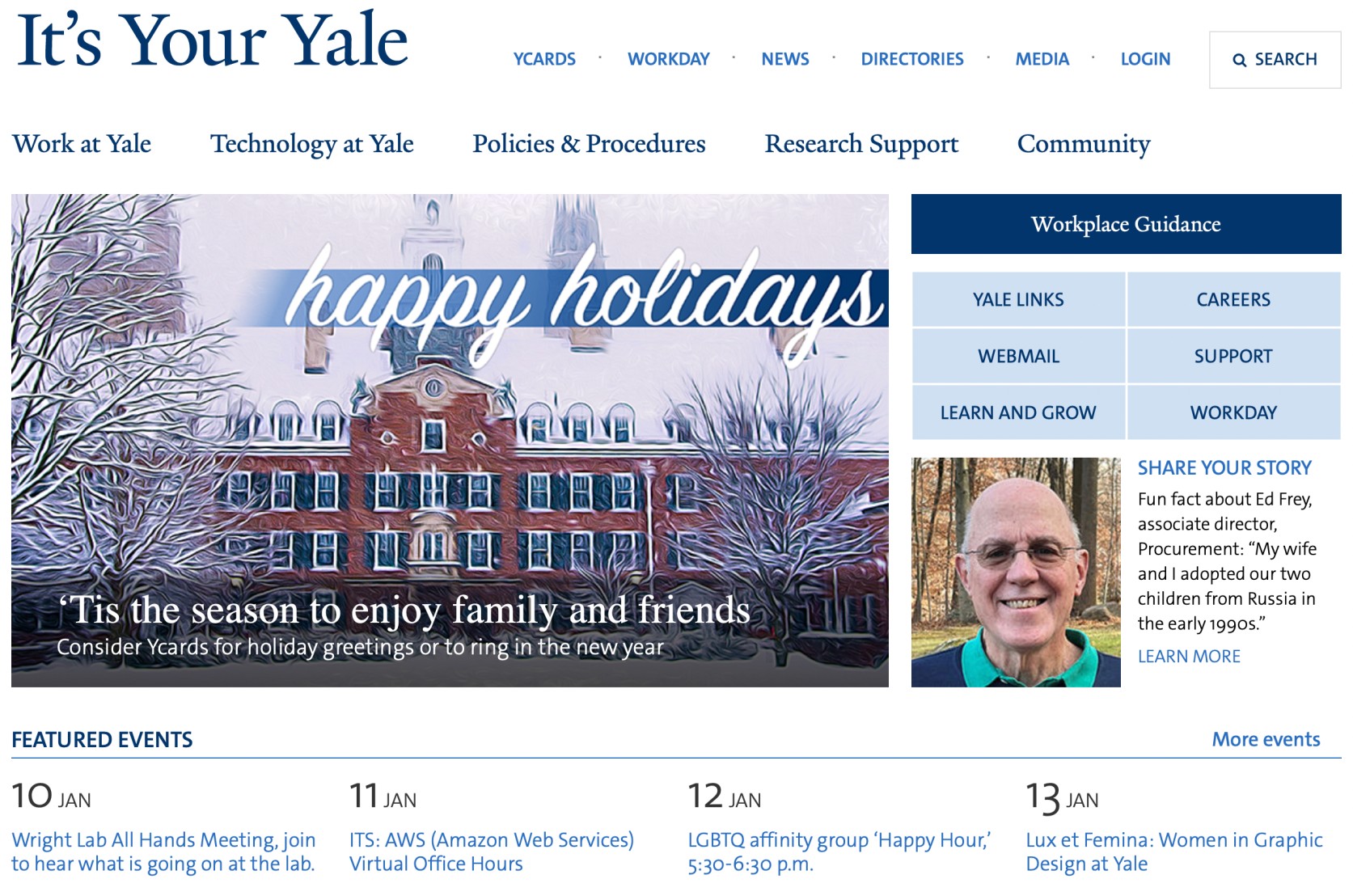
It’s Your Yale is 47 websites under one roof and is designed to be more inclusive and culturally relevant.
Strengthen the power of purpose
Education is seeing a rise of a more balanced attitude that's led to measures grades beyond just performance metrics. To serve the generation of today and tomorrows’ digital campuses are now bound to be more fun, social, purposeful where UX is more than slick aesthetics and fun pages. These are platforms to learn but on-the-top to find like-minded communities and share knowledge. Higher education institutes should make that experiential shift to more socially native narratives such as LGBTQ+, singing, dancing, mental wellness, environment, gender, and pronoun culture that address the evolving purpose of education within fast-changing GenZ minds.

A group of Harvard students marches down Boylston Street as a part of the Boston Pride Parade.
Pursuit positivity
The post-covid class has had all of its milestones canceled, rescheduled, or moved online, with video sessions, drive-in graduation ceremony experiences, and Instagram yearbooks. More attention is being placed on the value of hope, empathy, and UX that evokes optimism. During holidays and beyond higher education websites should focus on preserving the role of hope, positivity and make that more than just one act of kindness to an all-around-the-year experience. Holidays come the opportunity to provide access to online resources for those in need, keeping people connected and adding value that goes beyond enrollment and engagement to foster long-term loyalty and respect among the students.
University of Oxford’s scholarship program page for low-income students in the UK.
Turn to virtual
The next generation of higher education can’t be anything but immersive and leveraging virtual reality to put students in the world they’re studying. Higher education institutes will need to enhance learning experiences through smart technologies to meet the educational needs of their students. Create experiences based on AI for capturing, reading, and adapting to the student's behavior. Chatbots and personalized experiences could guide students to get the required information without rummaging through pages serving students’ reduced attention span and the emerging I want to learn it all attitude.
Engage through gamification
Blur the lines between education and entertainment through gamification to transform digital campuses into social, engaging, collaborative, and immersive experiences. In education, gamification is an approach that applies friendly competition beyond studies and curriculum that eventually becomes more engaging and entertaining. Holidays are the best time of the year for launching some gamified higher ed platforms that are set to have a positive impact on students' engagement and motivation, social connectivity, and crucially, their academic achievement.
About 2,700 Ball State University students use the app to engage via social streams, take little campus tours as a group, earn all the location achievements together.
In conclusion
Students enrolling in higher education are immersed in technology, leveraging it for all instant communication and already reaping the benefits that the online world can bring, that exposure makes them have had greater expectations around higher education platforms and their offers.
GenZs drive the shift in the education system through activism and purpose. In the post covid era when they choose an institute, it's more about learning models switching from structural and cultural, to engaging, visual, gamified, and omnichannel experiences. Experiential and personalized learning also offers hands-on experiences that engage students.
In addition to that handle their data with care, make sure regulations and laws on privacy are met. Communicate the use of data to the students with transparency, explaining with clarity the process behind data usage, protection, and cancellation.
Choose holidays to give the gift of power to the students while they actively participate on the website, rethink the role of higher education websites as the educator, mentor, inspiration, activist, and guide.
Talk to our team of design and technology experts to turn these holiday-centric UX strategies into digital experiences that go 2022 and beyond.

Share more joy with these 4 Holiday-centric strategies for Nonprofit Organizations
People today are more aware than they have been for decades that's why there’s a renewed focus on nonprofit organizations. Nonprofits are not only designed for happiness, they bring communities together and help people connect through social and immersive experiences. People reach out to them for hope, optimism, contentment, and communal support, to discuss issues and bring their personal experiences into the spotlight, to collaborate with nonprofits on activism projects, and mainly to connect over the purpose that drives them. It's a partnership for change and an era where nonprofit organizations build themselves for purposes beyond individual advantages and there is no better time than the holiday season to bring in that change.
We look at how nonprofit organizations can share more joy during holidays and beyond with people through these 4 fresh-out-of-the-oven digital experience strategies. These strategies can be broadened from only profits of the cause towards something that acts in the interests of everyone involved, which includes volunteers, donators, activists, participants, suppliers, artists, communities, society, and the environment.
Be basic
Being basic is the new festive. There is an immediate need to focus on highlighting basic information through the power of to-the-point digital experience strategies. As people begin to unplug from hustle culture, everything simpler becomes more essential.
A basic homepage update before the holidays with real-time photos helps to communicate the right message of the organization. Easy access to the navigation even as people top scroll down the site and a donate or help us button always handy on one side weaves in inclusive design practices for all users. Simple call-to-actions, with mobile responsiveness, help shed light on the right information and that's exactly the experience people need during the holidays and beyond.



Feeding America's real-life photos with appropriate holiday-centric call-to-actions.
Prioritize real connections over presents
Connections that feel real are all we need for Christmas. During the joyous time, shed light on both the negative and positive impacts of your cause. Increase engagement with messages that are impact-driven and drive actions for those in need.
Nonprofits can utilize holidays as an opportunity for rebuilding trust, acceptance, and community with real connections that come with transparency and clarity. It's the time of the year to build experiences that aim to make up for experiences people missed during the pandemic and spotlight a variety of messages that drive the need for forming a lifelong connection with the organization.
Kode with Klossy started by supermodel Karlie Kloss inspires women to pursue their passions in a technology-driven world.
Design unlike corporates
Nonprofit organizations are far from corporates, they are open to ideas that go beyond control, order, and processes. Their digital spaces are free to land for experiences that are experimental and expressive.
Nonprofits can thrive on distinctive aesthetics with heartfelt art that sends out purposeful messages and holidays are the best chance to introduce these changes while embracing aesthetic cohesion with a difference, in non-hierarchical modes, rooted in co-creation and play.
Upstream International brings people together to challenge poverty in creative ways with stunning imagery and a bright color palette.
Spread hope for the future
People are in search of hope and the holiday season is for nonprofits to inspire that spot. The Holidays welcome more meaningful gestures, acts of kindness, and hope for a good future. Hope is a feeling that people find helpful to manage situations they find stressful.
Nonprofits need to evoke the emotion of a hopeful future and give a glimpse of what lies ahead with a combination of optimism and acceptance. Purposeful strategies like these enable a sense of happy-all-days while organizations stand out valuing experiences over materialism.

Mend spreads its stories of hope by sharing real-time experiences.
In conclusion
Nonprofit organizations can adopt these digital experience strategies and step up with simple design solutions. Our findings here are not only about celebrations and causes, they are about bringing the happy vibe around the holiday season and beyond. The cues here are for using creativity in digital experience to bring in purposeful changes. These changes need to be done to continue creating a better community for all. Good communications are at the soul of change and bringing in changes that impact that communication with the people helps because connections can only be created about the cause when strategy and outcomes are clear, compelling, and motivational.
Brands that focus on creating emotional connections are clear about their cause, their vision, and the problem they intend to fix. It clears out their need to be built from a strong and motivating idea and have a soul. It was history when nonprofit organizations could work through traditional ways of engagement. Today, they need to give power with a cause, a sense of belongingness, and home to anyone who wants to engage with the organization.
.avif "Unwrapping 7 holiday-centric digital experience strategies for e-commerce businesses")
Unwrapping 7 holiday-centric digital experience strategies for e-commerce businesses
The holiday season is the absolute best time and the busiest time of the year for e-commerce businesses and customers alike. With growing customer expectations in digital shopping platforms, stores must strategize around fulfillment and happiness before quick profits.
We unwrap the future of the digital shopping experience with top-to-bottom makeovers and shine some light on 7-holiday design strategies for e-commerce that are relevant for 2022 and beyond, including the emergence of phygitial stores, metaverse malls, and placing human connections and communities at the heart of digital commerce. These holiday-centric design strategies ensure that the experiences are culturally relevant and engaging in the increasingly crowded digital space.
Digital stores could use these different design strategies to tap right into community-driven festive experiences with bold changes that meet the growing awareness within the users to drive conversion.
1. Conversational tech
Brands that are ready to go a step ahead to connecting with their customers with conversations that sit outside of the store’s framework are likely to create festive digital experiences. Even if it's just for a minute, warm and fuzzy personalized messages have the ability to alter widespread moods ensuring that the shoppers get a little bit more inclined to make those purchases.
60% of customers read texts within one to five minutes of receiving them, and unlike emails, they have a 98% rate of being opened. Data from Shopify suggests that 50.3% of store traffic is attained via mobile Therefore, SMS chatbots such as Postscript, Blueprint, and Attentive are not only a powerful tool for engagement but can also perform as complete e-commerce platforms in their own right while feeling casual, fun and personalized, as if the customer is speaking with a human and for the holidays there is nothing more important than the (almost) real human experience.
2. Mood-driven experiences
Mood-driven experiences are the experiences designed around how people feel and impact the path to purchase. As customers get more in touch with their emotions, new strategies, stores, and experiences are being designed around how digital stores make us feel. Thoughtful navigation that delights and adds emotional peaks or removes friction points is also key for mood-altering experience design.
Designing for emotional responses is a key strategy to respond to holiday needs. Emotive navigation cues and thematic wayfinding based around moods and senses create a more memorable experience that can translate to repeat visits and increased word-of-mouth sharing.
Engaging with customers must be about more than just fun – digital stores need to understand how they want to feel. Forming more personalized and emotional connections with consumers via data-driven intimacy, color therapy, or nostalgia taps into an increasing desire for real-life experiences, which bolster mood and happiness in a disconnected world.
3. Micro experiences
Don't ask them to shop, make them stop and do that for the shopper's benefit. Digital shopping experiences can be more than just about making sales. With rising questions around consumerism, offer fun alternatives to holiday shopping and create new traditions focused around simplicity and togetherness rather than excess.
Micro digital experiences are small or temporary digital programs online that aim to add unexpected value to the lives of customers. Well-crafted micro digital experiences can recreate the discovery, community, and connective tissue that has disappeared with the rise of online algorithms, digital transactional buying, and of course the pandemic lockdown. These experiences do not have to be robust programs. Often, what consumers want are experiences that cost them the least cognitive effort bring atmosphere and good cheer.
Use the power of good storytelling to keep the customer intrigued, engaged, and happy. Craft stories that generate enjoyment to get attention and emotional affinity to positively position your digital store.
By Malina's runway Livestream through bambuser
4. Phygital shopping
AR (augmented reality) has become a part of our lives as the metaverse matures, in the digital future it is likely to become even more central to our consumption habits. As social distancing remains, we expect AR storytelling to become a key investment area going forward. Brands are leaning on AR to delight customers in new creative ways to offer a safe, informative, and entertaining phygital experience and holidays are the best time to blur the line between virtual and physical experience.
Etsy made its virtual store debut with the launch of The Etsy House. The hyper-realistic and 3D virtual home with walls of a house decorated with items from Etsy sellers. Shoppers could navigate through the home and click for more information, photos, a link to purchase, and a 3D modeling tool to see an item from all angles.
Use the power of 3D, AR, and VR for the holiday season as these digital experiences are more accessible, affordable, and becoming more common than ever before as these immersive and entertaining experiences add value beyond the transaction. Phygital experiences are also seeing a rise of D2A commerce (Direct-to-avatar) as a retail model that unlocks new opportunities for brands in the powerful virtual world. Holiday-centric phygital experiences should be memorable and seamlessly meet the customer’s needs without the intention to attract attention, publicity, or business only.
Holiday-centric phygital experience by The Etsy House
5. Metaverse moments
The term 'metaverse' is not new, having first been coined in a 1992 sci-fi novel ”Snow Crash”. It now yields nearly 6m results in Google Search, as it still matures while creating new channels of growth and revenue for e-commerce stores.
Metaverse is a whole interconnected ecosystem where individuals jump from one world to the next, it's like living online which is why we star metaverse as the perfect holiday-centric design strategy, opportunity, and engagement channel as its likely to unlock experiences like never before, new product possibilities, commerce capabilities, and distribution channels.
Metaverse offers more freedom, creativity, accessibility, power engagement, and assist in brand scalability. Holidays in 2022 and beyond are the best time to bring in immersive virtual stores. Digital stores that looking to expand into the metaverse should consider an entire store design, overall customer experience, and an omnichannel strategy around communications and service to ensure the best outcomes for both customers and businesses alike.
While the pandemic may have normalized life online for the masses, the full potential of the metaverse will not be realized for decades down the road, though over time, it will gradually transform the consumer's entire life and shopping journey.
6. Holiday perks
The easy return and buy-now-pay-later features can help customers stretch paycheques in the holiday season. It can help customers stay organized and spread the cost of holidays across several weeks. It will be more important than ever for value brands and e-commerce stores to ensure they are serving customers facing a lack of funds.
the rising prices can make us and many others feel that crunch, brands that highlight easy return and buy-now-pay-later features, will calm some anxiety and help to recreate the magic for a new audience.
7. Filterless digital
The future is transparent and mostly "filterless". We have long entered an era where digital spaces are appreciated for being honest, flawed, and raw. As e-commerce stores move towards keeping an authentic representation online we are sure to see a shift in holiday digital experiences.
Holiday filterless digital strategies are about being recognized for values, honesty, and optimism. It's about clear and conscious messaging that is grounded in reality. This is how the digital stores help customers address their true human aspirations as they deepen their relationships with the brands through real filterless connections.
Filterless digital strategies are for brands that don’t just want to sell but touch lives, it's for brands that choose experience over materialism. This increasingly allows consumerism to fall by the wayside so that people come to brands based on their values, interests, and commonalities For this holiday and beyond link customers to your behind the product stories and people behind the company’s vision and allow them to become part of the community rather than just privy to your product and there is nothing more festive than that.

In conclusion
All holiday-centric design strategies must be balanced with accessibility and desirability. Brands must ensure that in-house teams get sufficient training to get to grips with the tech, the new technologies are for sure complex, most confusing, and evolve fast. Digital stores that want to incorporate phygital shopping experiences and take a step ahead with metaverse need digital agencies that ensure training programs for company-wide education down to the customer level.
According to a Deloitte digital report, 60% of long-term customers use emotional language to describe their connection to favored brands. Brands who are seeking ways to create that connection can achieve that with micro and mood-driven experience. Conversational tech, holiday perks, and filterless digital design strategies are designed to maximize communication effectively while building an authentic, valuable, and influential e-commerce store while also helping companies to build on more equitable, diverse, and inclusive businesses.
The aim in the holiday season should become less about selling and more about experiences that add value to customers and businesses alike. In addition to the above strategies e-commerce stores should also focus on being more culturally relevant, create more personalized experiences, be bold in experimenting with new formats to match the growing awareness and drive conversion.
Talk to us about elevating your space beyond the traditional store environment to a perfect festive vibe.

Why and how should you switch to Drupal 10?
Drupal has been around for 20 years, serving as one of the best open-source digital experience platforms (DXP). It boasts top-of-the-line content management tools and sophisticated functions to elevate your digital presence.
Well, its newest version, Drupal 10, is set to release soon! It may come as a surprise since Drupal 9 has only been around for a while, but it's undoubtedly a pleasant one.
While Drupal 9 was released five years after Drupal 8, the creators have sped up their processes this time around.
They are all set for a revamped Drupal version to go live in June 2022. There are already many tools and processes in place to ensure a smooth upgrade.
Let us look at everything you need to know before Drupal 10 goes live.
Drupal 10 is releasing soon—Want to know the reason why?
You might wonder why Drupal 10 is releasing much sooner compared to previous versions.
While there was a waiting time of almost four to five years between Drupal 7 and 8, version 9 and 10 kicked it pretty soon.
The primary purpose of bringing in new versions sooner is to ensure the security of the CMS system.
Drupal depends on multiple third-party elements that come with their own end-of-life dates.
When their release cycle ends, and they are no longer supported, their security cannot be fixed. As a result, nobody can guarantee that the website will remain secure.
The most prominent third-party elements in question are PHP 7, Symfony 4, and CKEditor, among others.
Since Symfony 4 will reach its end-of-life by November 2023, Drupal will have to adopt Symfony 5, or possibly an even higher version of Symfony by then.
Here are when some other third-party components will reach their end-of-life:
- jQuery UI: 2017
- PHP 7: 2022
- CKEditor: 2023
What upgrades will Drupal 10 bring?
There are plenty of crucial features that newer versions will replace with Drupal 10. Moreover, we will also see some new features. To know more about what’s included in Drupal 10 visit.
The following third-party components will be updated to newer versions:
- Symfony 4 to Symfony 5 or 6
- PHP 7 to PHP 8
- CKEditor 4 to CKEditor 5
- Composer 1 to Composer 2
Here are some of the other things that will change with Drupal 10:
- The Claro administration theme will replace Seve.
- The Layout Builder and Media will see improvements.
- Modern JavaScript components will replace jQuery UI, as well as some functions of jQuery.
- The default Olivero theme will replace Bartik.
- Site builder experience will be improved, especially for URL handling and menu.
- Theme starter kit tools will be added for bespoke theme creation.
Drupal 10 will be built-in Drupal 9
Instead of building Drupal 10 as its own branch with a complete code overhaul, Drupal is building it within Drupal 9 with new functionalities.
Every minor release up to Drupal 9.4.0. will be backward compatible. As a result, developers will have sufficient time to keep up with any API changes as they come.
This approach will enable Drupal to deliver fresh value every few months without disrupting your current site.
As soon as Drupal 10 is ready for release, Drupal will remove all the redundant code and automatically update their dependencies. Drupal used the same strategy for switching from Drupal 8 to Drupal 9.
The method proved highly successful, and as a consequence, modules and extensions were able to become compatible with Drupal 9 much quicker.
Why should you use Drupal 10?
Drupal has proven itself as one of the best open DXPs out there. Time and again, they have catered to the users' interests to ensure a seamless experience.
Their main goal is to make Drupal a lot more user-friendly content management system. They aim to ease the processes and maintenance for developers while allowing them to be flexible. The Drupal 10 Readiness Initiative places the focus on platform stability and components.
With Drupal 10, developers can use their creativity and innovation to create unforgettable digital experiences. This version will improve all the features of Drupal 9 and even include initiatives contributed by the global community.
If that doesn't convince you to move to Drupal 10, maybe the following points will:
- Enhanced user experience
- Implementation of automated updates
- Introduction of JavaScript components
- Addition of the new Olivero front-end theme
How can you switch to Drupal 10?
It's time to prepare! It would be best to switch to Drupal 10 as soon as its release because the older versions might be nearing their end of life.
So, how should users of different Drupal versions go about the upgrade? Let's find out.
Drupal 9 Users
Drupal 9 users can automate the process for upgrading to Drupal 10. You could check out the drupal-rector for help. There are several APIs that could be of use to you.
Check out the Upgrade Status on your Drupal 9 site to determine the amount of work that will be required.
Drupal 8 users
Drupal 8 has reached its end of life. Only users that have upgraded to Drupal 9 can switch to Drupal 10.
If you had upgraded to Drupal 9, you could use Upgrade Status in this case, too, to analyze your website. As it turns out, there are about 6000 contributed projects that are ready for Drupal 9.
Drupal 7 users
Drupal 7 will be around only till November 2022. Although it will end after the planned release of Drupal 10, it would be best if you upgraded earlier.
While Drupal 10 will feature migration tools from Drupal 7, a better idea would be to move to Drupal 9 first and then upgrade to Drupal 10.
Wrapping up
Open source DXPs are vital since they provide businesses with the tools required to satisfy their audience. Buyers today expect more customized experiences throughout sales channels. DXPs, such as Drupal, can help your business shine in this regard.
The release of Drupal 10 has created quite a buzz in the developer community. If you are still on one of the older versions, upgrade to Drupal 9 as soon as you can for a smooth shift to Drupal 10.
It will be interesting to see how Drupal improves its own stellar track record with its newest release!