

Challenges
Anything an educator posts becomes something the organisation presents to the world. The platform had to let thousands of contributors add content freely while making sure nothing reached the public until the right people had reviewed it. Open contribution and editorial control usually pull against each other. Here they had to hold together in one system.
The audience was global and uneven in digital familiarity. A school representative comfortable with digital tools and one who was not both had to find the platform usable on the first visit, in a layout that behaved the same way every time.
Accessibility was a standard, not a preference. As an intergovernmental body, the organisation needed the platform to meet WCAG 2.1 AA, so an educator using a screen reader or navigating without colour cues could read status and meaning as clearly as anyone.
The platform had to keep growing. New content types, interaction features, and sections would follow after launch, so the architecture had to absorb change without a rebuild each time. This was a build from the ground up, with no existing platform to improve on, so the structure decided at the start would govern everything the organisation could do later.
Approach
The team designed the contribution model before designing a single page. The relationship between an open submission and a governed publication is the architecture, not a feature added later. The team settled how content moves from a teacher's draft to a page the organisation stands behind, before designing any page. Page design followed from it.
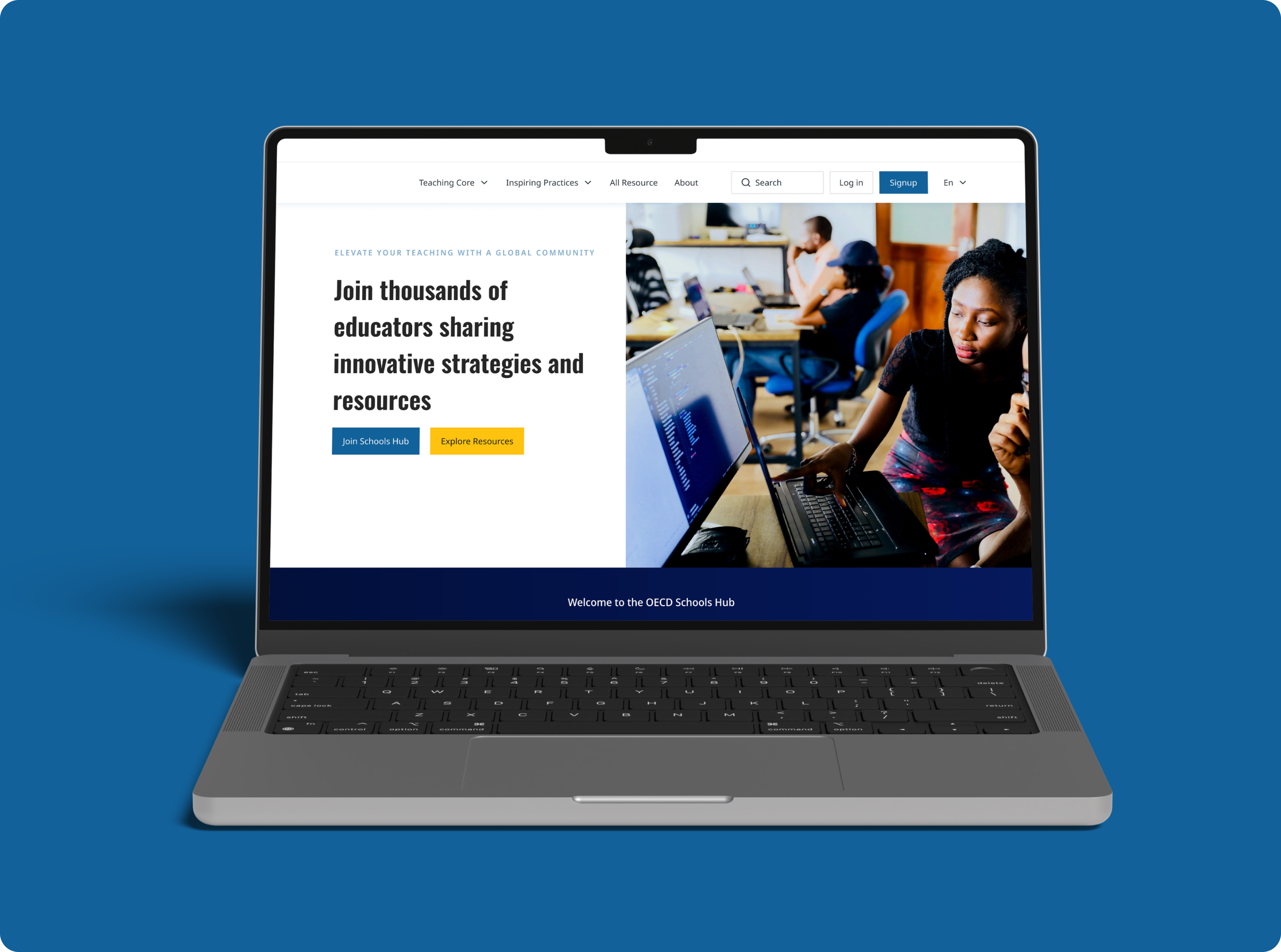
Solution
Governed publishing
Approval lives in how the platform works, not in a review habit staff have to remember. Registered educators submit their own initiatives through a front-end form, and never touch the site's back office. Each submission becomes a draft page that stays private until an administrator approves it, and every step from draft to published is a defined state a moderator controls. Anyone can propose. Only the organisation publishes. It runs on Drupal, using the content moderation and access controls proven in Drupal core.
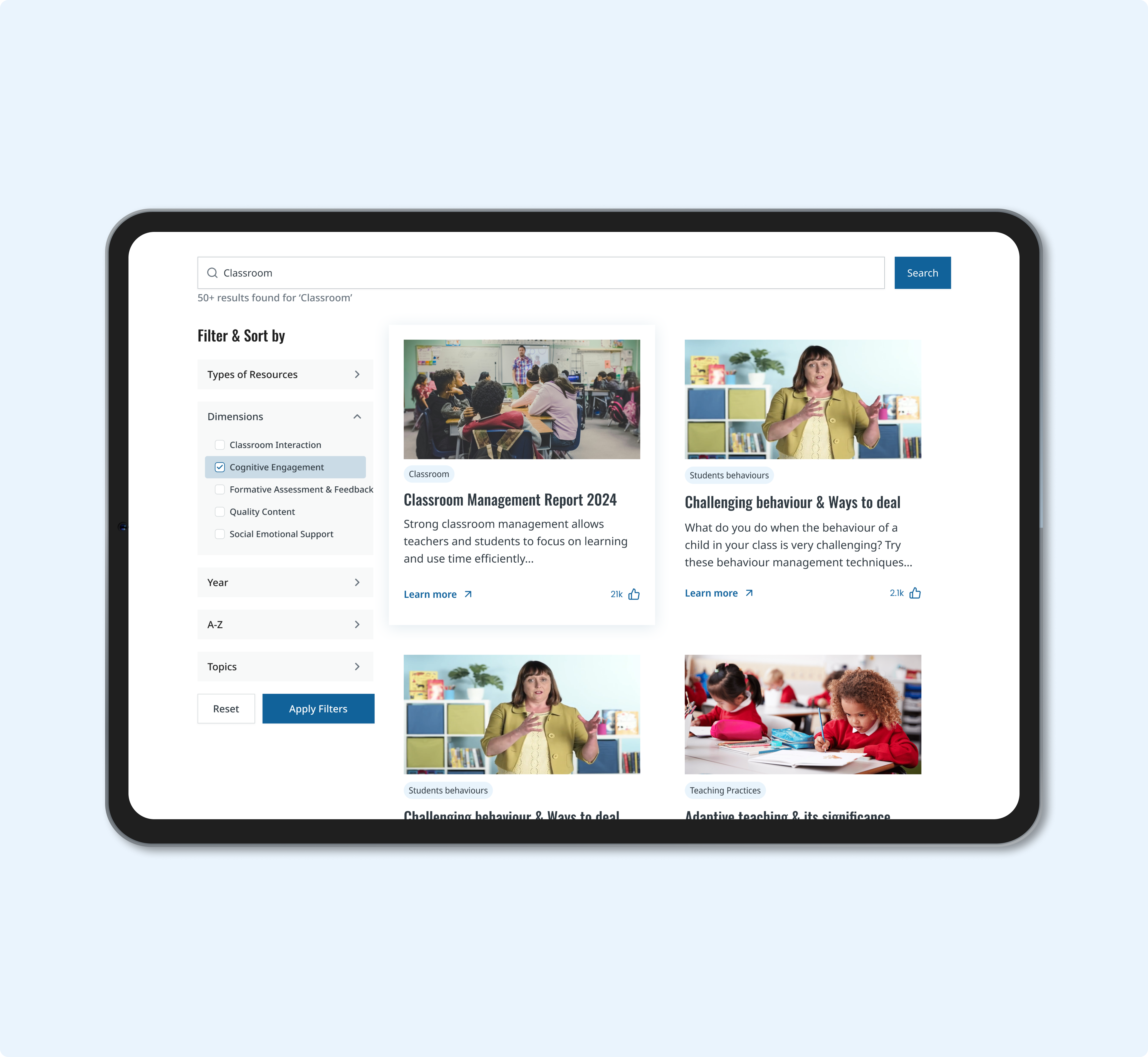
Built to grow
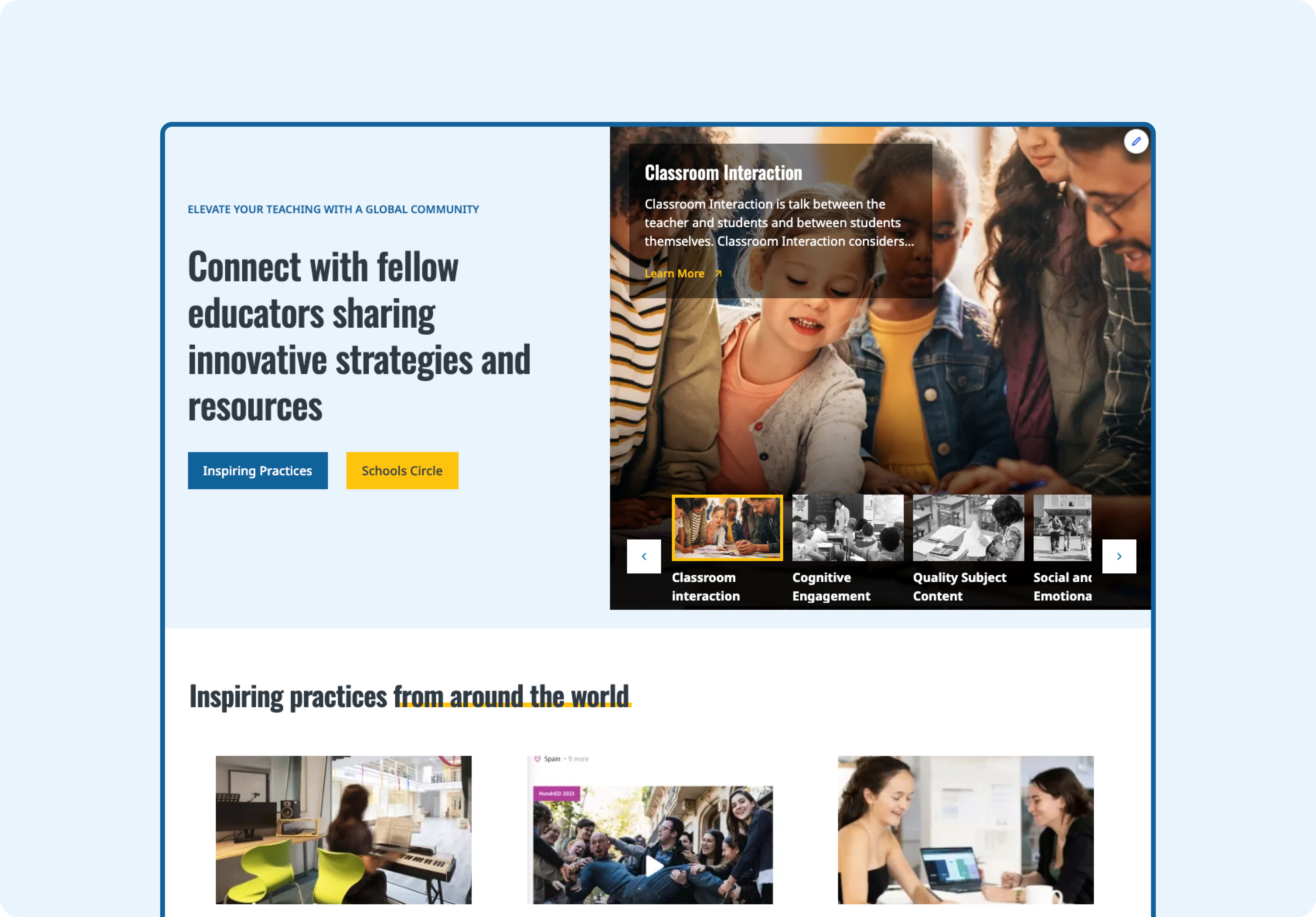
The content is modelled as reusable types (initiatives, evidence, resources) rather than one-off pages, so the same content can appear in more than one place without being copied, and the organisation's own editors compose and recompose pages themselves. As the network grows, the team adds new sections and content types on the structure already in place, rather than rebuilding it.
Community signal and leaderboard
Educators rate, like, and comment on initiatives and evidence, captured as structured data rather than loose feedback, using VotingAPI. A rating leaderboard surfaces what the community values most, which is the signal the organisation uses when deciding which good practice to elevate. Comments are moderated before they appear, held to the same editorial line as everything else.
Accessible by requirement
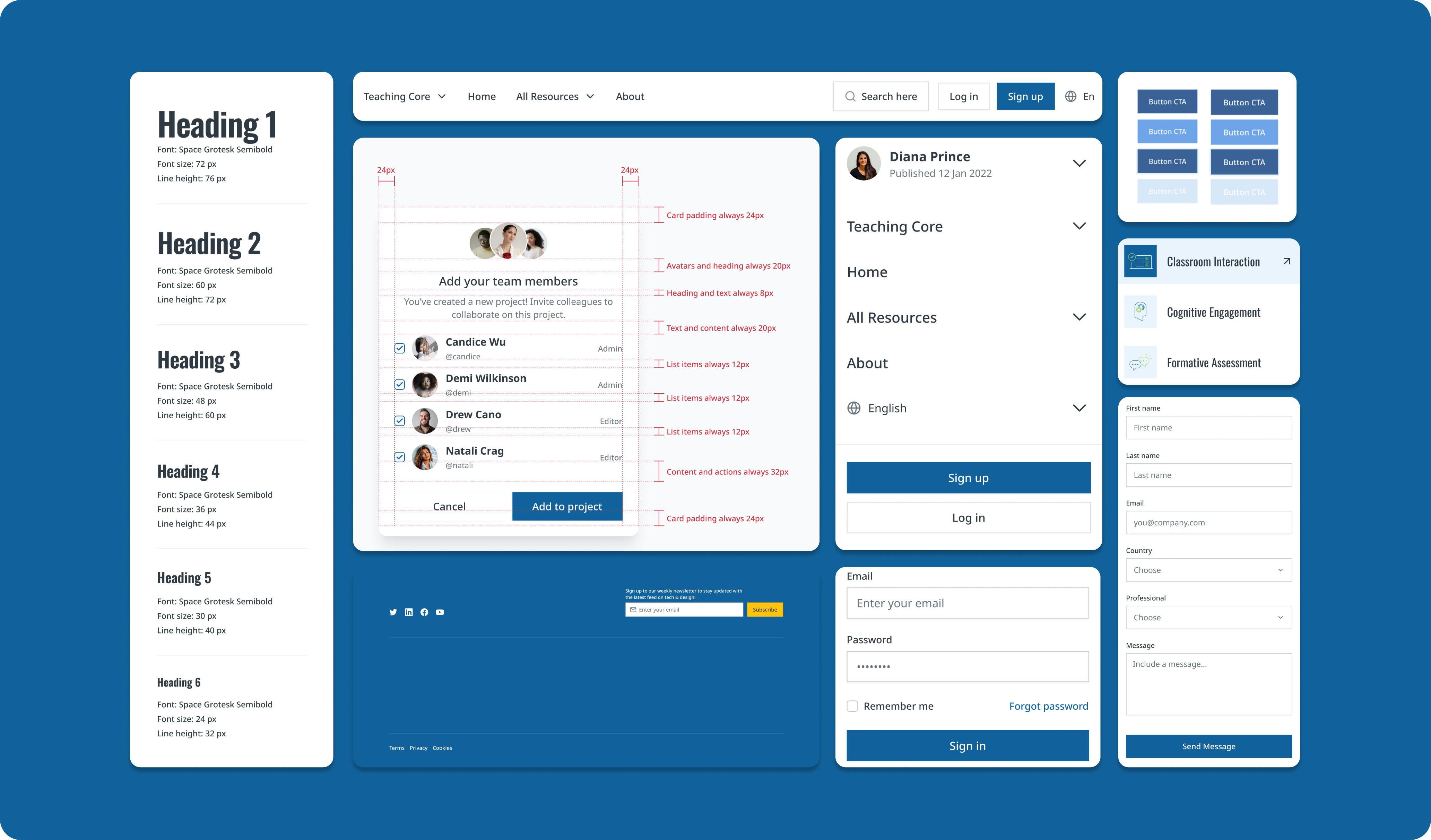
Accessibility went into the design system from the start, to WCAG 2.1 AA. Shape and label carry status and meaning, not colour alone, so an educator using a screen reader or navigating without colour cues reads the platform as clearly as anyone. Accessibility testing ran alongside development rather than as a final pass.
Teaching material migrated
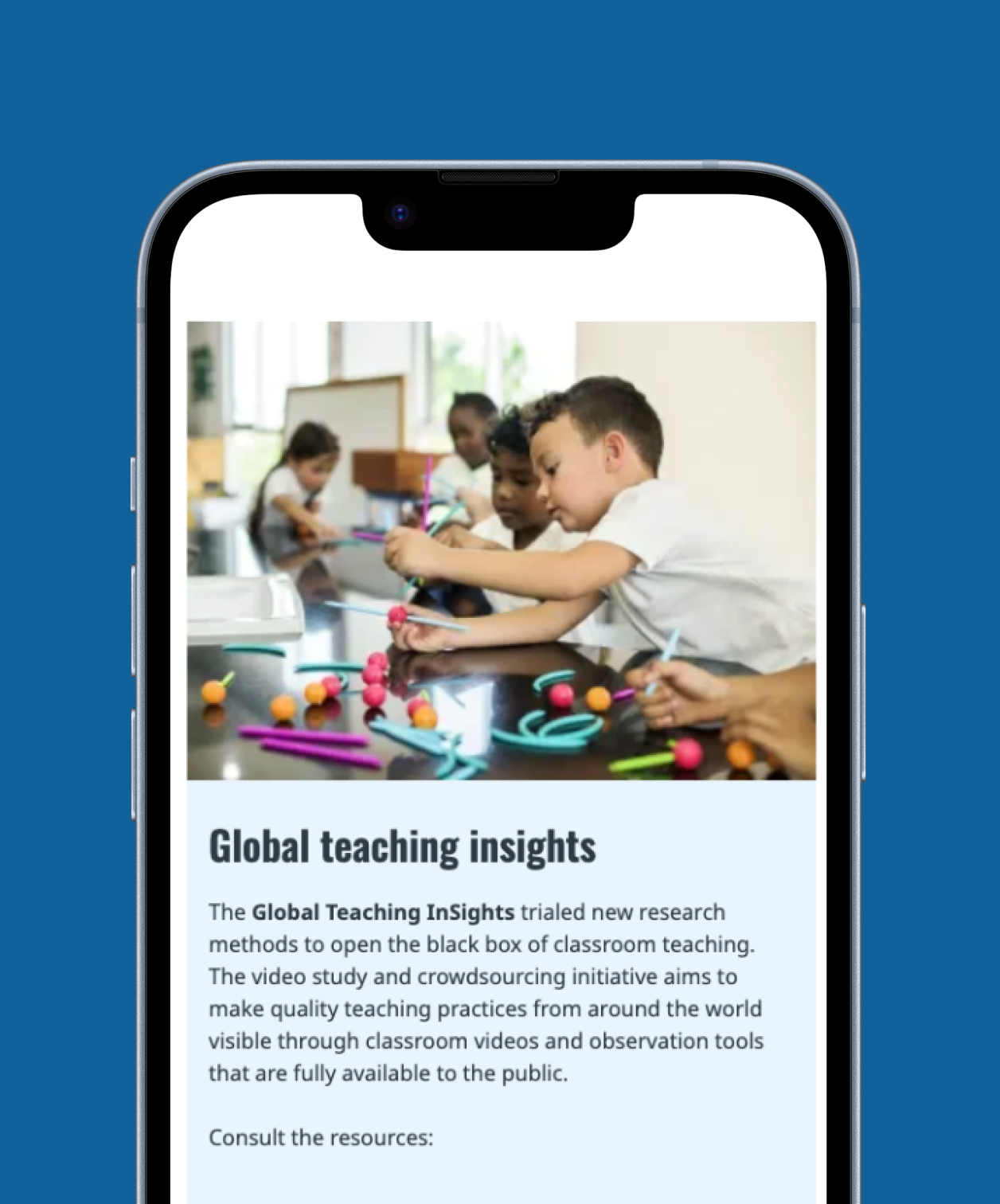
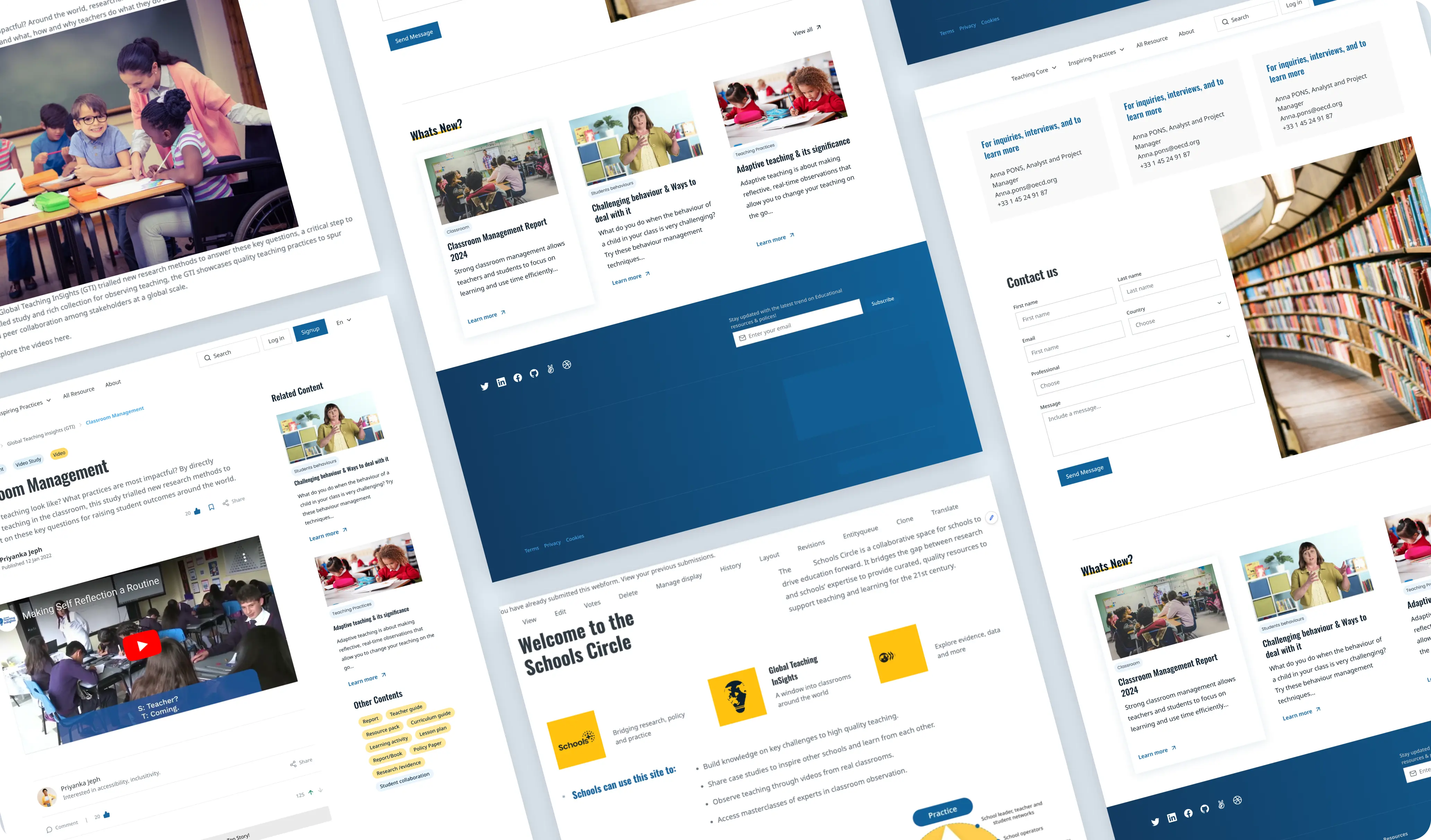
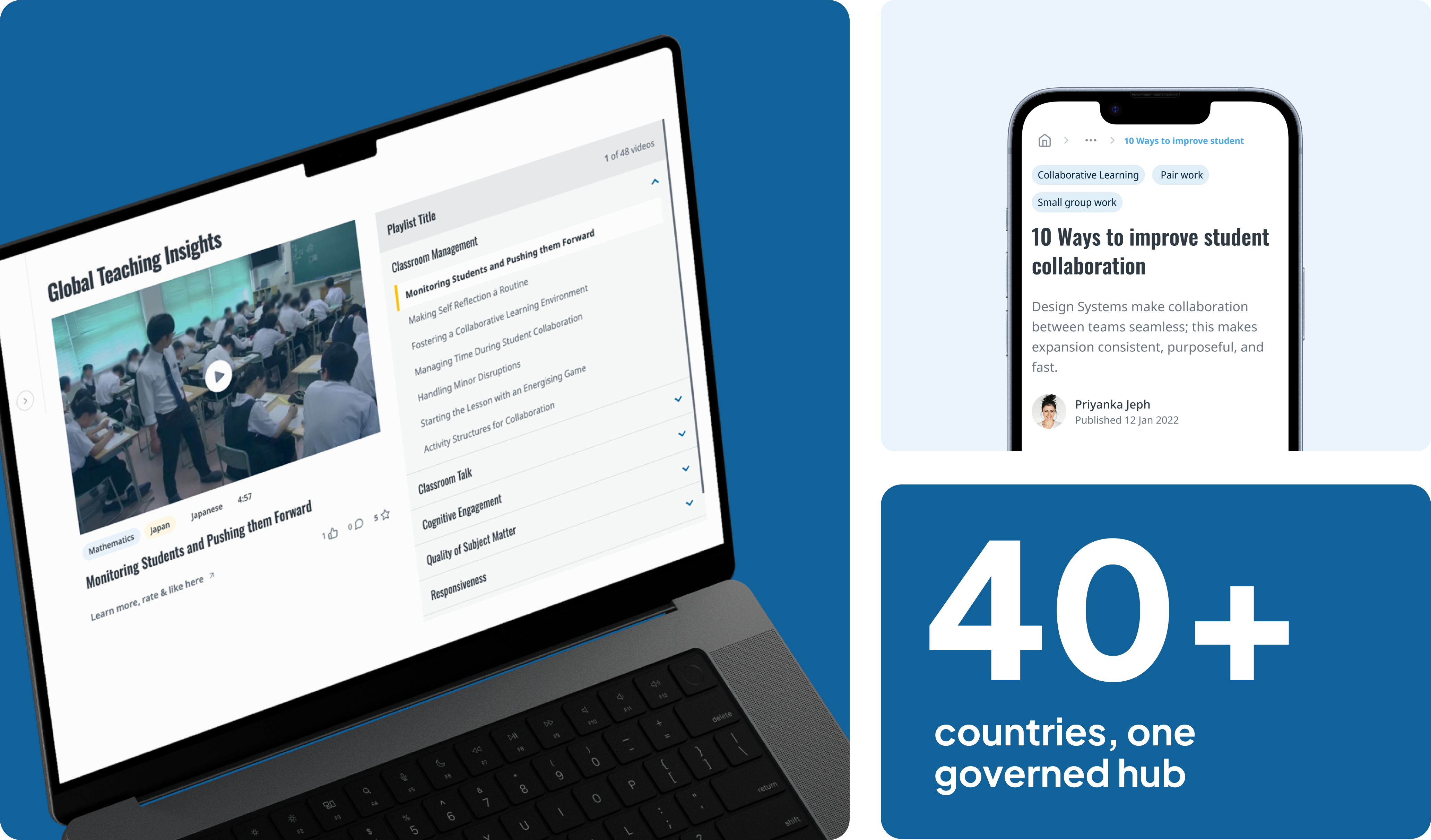
60 teaching videos moved from a separate legacy site into the new platform, embedded from YouTube, with a metadata structure that lets content authors make them searchable by title and description. The teaching material educators already relied on now sits alongside everything the community contributes.
Training and handover
The project opened with a grooming sprint where the team settled requirements, technical approach, and acceptance criteria before the build, and work-in-progress demos every two weeks let the organisation's team shape the platform as it took form. CMS training and a full handover left the organisation managing the platform on its own.
Outcome
The intergovernmental economic organisation is now a self-owned, governed platform where educators across 40+ member countries publish their own classroom practice, and the organisation now runs it independently, approving and releasing contributions without a developer in the loop.
Before this, a good classroom idea in one country had no way to reach a classroom in another. The organisation now owns that connection. Openness and editorial control hold together instead of trading off: thousands of educators can contribute, and nothing carries the organisation's name until the organisation stands behind it.
The platform also gives the organisation a live, structured read on what educators across its membership find most useful. The strongest practices surface through the community's own ratings, which is the signal the organisation uses to decide what to elevate into shared practice and, over time, into policy. A place to publish became the organisation's instrument for turning distributed classroom experience into cross-border education policy, its core mandate.
Frequently asked questions
How do you moderate a site with a lot of user-generated content?
Can you let a whole community contribute without giving everyone access to the CMS backend?
How do you let our own team publish and update pages without a developer?
How do you know which contributions are actually worth surfacing?
Bring us your challenge
We’ll help you get clear on what needs solving, that’s where we begin