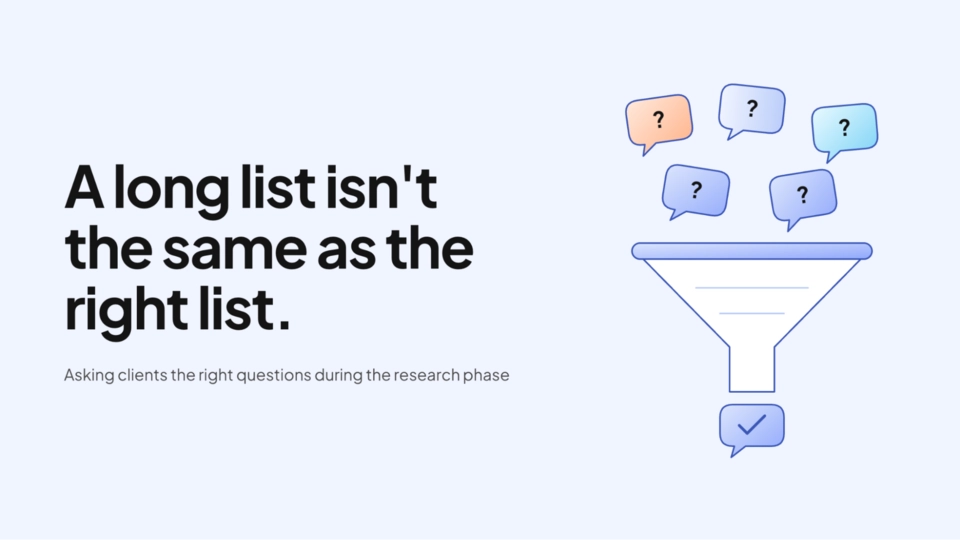
These days, a client brief and an AI tool can give you a tidy list of discovery questions before your coffee cools. It's a helpful start. But a long list isn't the same as the right list, and AI can't sit across the table and sense what the client hasn't put into words.
I felt this most when I moved from product-based work to a service-based team. With products, my questions explored how things should work. With marketing sites and landing pages, clients often arrive well prepared, sometimes with an eight-page requirement document (yes, 8 whole pages 😅). The obvious questions are already answered. What's left is spotting the gaps that will shape the design, and that still comes down to a designer's instinct.
Here's how I prepare for that first call, and the simple test I use to pick the questions worth asking.
The short version: read the brief closely, mark the gaps, study the references, and keep only the questions whose answers will change the design.
Key takeaways
- Marketing sites need different questions from products. Their job is to persuade and drive one or two actions, so the useful questions uncover priority, intent and identity.
- Skip what the brief already answers. Open the call by playing back what you understood, then ask about what still needs clarity.
- Prepare in three moves. Read the brief end to end, mark what's unclear, and study every reference the client shared.
- Test every question with one line: what will change in the design if I get an answer to this?
- The test sharpens the list. It usually takes my 15 to 20 draft questions down to around 8 to 10, and each one leads somewhere.
Products need to work, marketing sites need to persuade
In product-based UX research, functionality is the core. Questions help us uncover how users move through the product, what each feature must do, and where the edge cases are. The answers map directly to flows and screens.
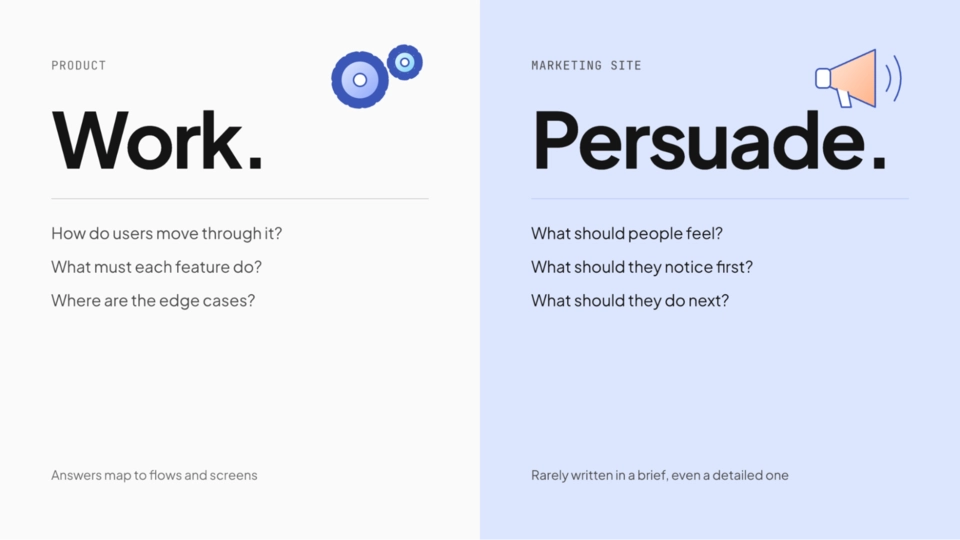
A marketing site or landing page has a different job: to persuade, inform, and drive one or two actions. The "how it works" is usually simple. What's harder to pin down is what the client wants people to feel, notice first, and do next. Those things are rarely written in a brief, even a detailed one, so the questions have to work harder to surface them.
Skip the questions the brief already answers
When a client has written a detailed brief, asking "Who is your target audience?" or "How many pages do you need?" tells them one thing: we didn't read it. It wastes their time and weakens their trust in us before the work has started.
The first interaction should feel balanced. Play back what you understood from the brief, then ask about what still needs clarity. Something like: "From your brief, this landing page is for your new summer collection, and the main goal is early-access sign-ups. What we'd like to understand better is…" This shows the client you've done your homework, and it moves the conversation straight to what matters.
Step 1: Read the brief before you write a single question
Good questions come from preparation, not from a template. Before the first call, I do three things:
- Read the brief end to end. Don't skim it. Read it the way you'd read a contract.
- Mark what's unclear. Highlight anything vague, contradictory, or missing: a goal without a metric, a page without a clear purpose, two sections that seem to compete for the same message.
- Study the references. If the client has shared sites they like, visit each one. Note the layout, tone, imagery, and interactions, and think about why they might have picked it.
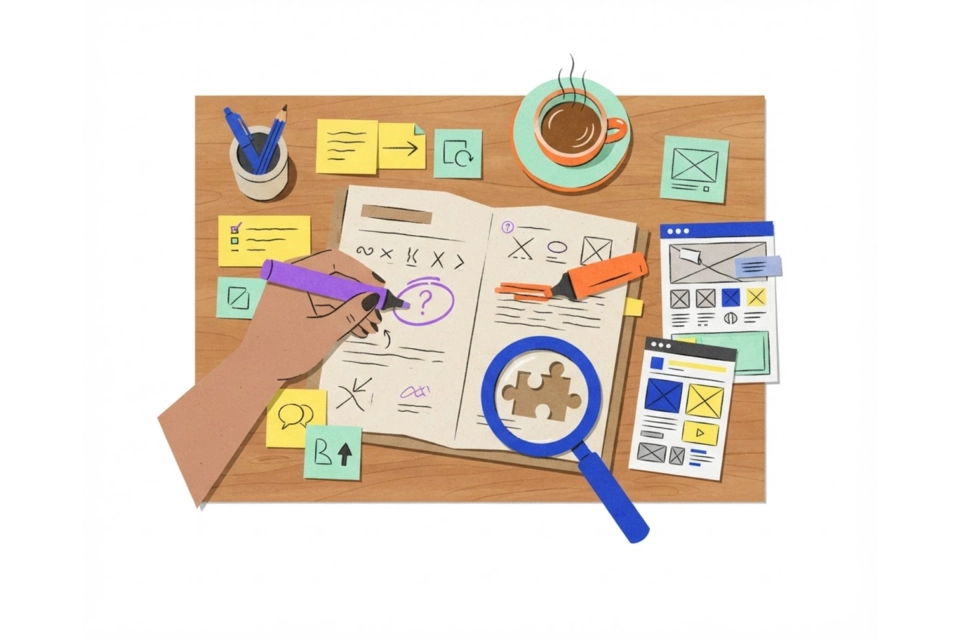
By the end of this, you'll usually have 15 to 20 questions. That's a good start, but not every one of them deserves a place in the meeting.
Step 2: Put every question through a simple test
This exercise has sharpened my discovery calls more than anything else. For each question on your list, write down:
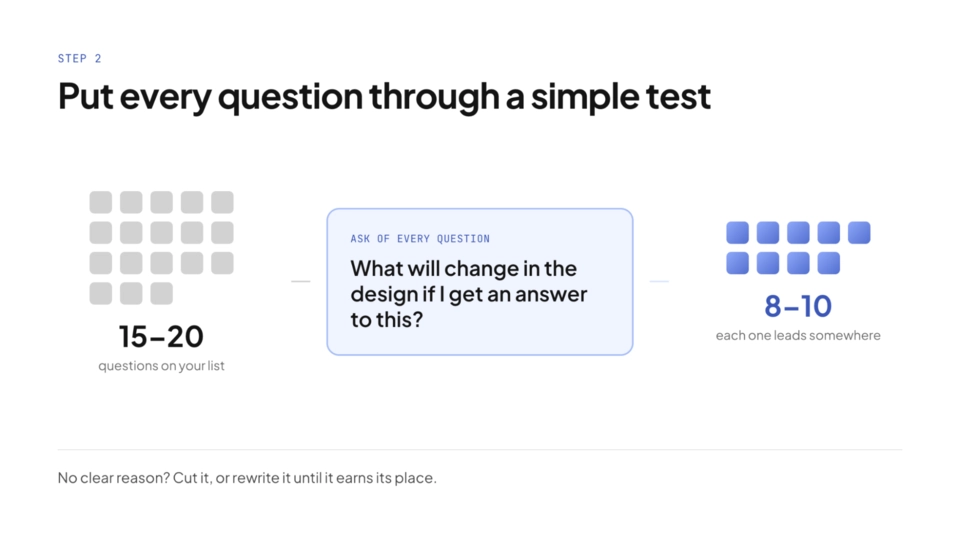
What will change in the design if I get an answer to this?
If you can't give a clear reason, the question probably won't help you in the design phase. Cut it, or rewrite it until it earns its place.
| Question | What it influences in design | Keep? |
|---|---|---|
| What's the one action you want visitors to take? | CTA placement, hierarchy, page flow | Yes |
| Which section matters most on the home page? | Above-the-fold content, visual weight | Yes |
| Do you have brand guidelines or a design system? | Type, colour, components, effort estimate | Yes |
| Who is your target audience? (already in the brief) | Nothing new | No |
After this filter, my list of 15 to 20 usually drops to around 8 to 10 questions. Each one leads somewhere.
Questions that are worth asking
Without features and flows to anchor the conversation, it can be hard to work out what a marketing client really wants. These are the areas where the right question pays off most.
Ask about priority, not structure
If the client has already shared the information architecture or content structure, don't ask them to explain it again. Ask what matters most within it:
- What is the one action you want users to take?
- If a visitor reads only one section of this page, which should it be?
- Which pages do you expect to get the most traffic, and from where?
The answers decide visual hierarchy, CTA placement, and where to spend design effort.
Ask what they like about the references
References are useful, but "we like this site" doesn't tell you much. Get specific:
- What exactly do you like about [reference], and where should [your site] look clearly different?
The first half tells you what to borrow, whether that's the layout, the tone, or the motion. The second half protects the client's own identity and stops the design from becoming a copy.
Ask about the design system first
Bring this up in the first conversation, not halfway through the project:
- Do you have brand guidelines, a design system, or a component library we should work within?
- How strict are they, and where do we have room to explore?
The answer tells you whether you're extending an existing system or creating a new visual direction. That changes your approach, your timeline, and what you present first.
Frequently asked questions
What are discovery questions in UX design?
Discovery questions are what a designer asks a client before design work starts, to understand goals, priorities and constraints. For a marketing site or landing page, the most useful ones uncover what the client wants visitors to feel, notice first and do next.
Can AI write discovery questions for a client project?
Yes, AI can turn a client brief into a tidy first list of questions in minutes, and that's a helpful start. The designer's job is to pick the right ones, using a close reading of the brief, the client's references and what the client hasn't put into words.
How many discovery questions should I ask in a first client call?
Around 8 to 10 works well for me. Preparing from a detailed brief usually gives me 15 to 20 questions, and testing each one for design impact brings the list down to the ones that lead somewhere.
How do discovery questions for marketing sites differ from product design?
Product discovery questions explore how things should function: user flows, features and edge cases. Marketing site questions explore priority, intent and identity, because the site's job is to persuade, inform and drive one or two actions.
How do I know if a discovery question is worth asking?
Ask yourself what will change in the design if you get an answer. A question that shapes CTA placement, hierarchy, visual weight or effort estimates earns its place. A question the brief already answers can go.
What should I ask a client about reference websites?
Ask what exactly they like about each reference, and where their own site should look clearly different. The first answer tells you what to borrow, and the second protects the client's identity.
When should I ask a client about brand guidelines or a design system?
Ask in the first conversation. Knowing whether you're extending an existing system or creating a new visual direction shapes your approach, your timeline and what you present first.
What changed for me
Moving from product to services taught me that the way you ask questions depends on what you're building. In product work, questions uncover how something should function. In marketing work, they uncover priority, intent, and identity, which are the things a brief can't fully capture.
So before your next discovery call, read the brief properly, mark the gaps and study the references. Then ask one thing about each question: how will the answer shape the design? Questions that pass this test lead to better conversations, a clearer design direction and a client who feels truly heard.